
Best Underwater Pool Sealant: 5 Options Compared

Underwater Magic Sealant, White is the best fit for most pool owners who need an underwater sealant in a standard-size tube; it comes in a 290 mL (9.8 oz) tube. Choose a putty instead for a hand-molded repair or a kit that names specific surfaces.
Pool sealants fill joints and gaps, while putties are molded into a patch. For structural cracks or a leak that keeps growing, get the pool surface assessed rather than relying on a surface seal.
We earn a commission if you buy through links on this page. As an Amazon Associate I earn from qualifying purchases. Products are compared on manufacturer specifications, not hands-on testing.
- Best overall: Underwater Magic Sealant, White – A 290 mL (9.8 oz) tube of underwater sealant suits common small sealing jobs.
- Best for molded patches: Epoxybond Pool Putty, 14 oz – Two-part putty mixes 1-to-1 and is intended to harden underwater.
- Best for small repairs: AQUABOND Pool Epoxy Repair Kit, 50 mL – The 50 mL epoxy putty kit is a compact option for repairs on named pool materials.
| Product | Best for | Format | Size | Color | Shop |
|---|---|---|---|---|---|
| Underwater Magic Sealant, White | Tube sealant | Tube sealant | 290 mL (9.8 oz) | White | Check Price on Amazon |
| Underwater Magic Horizon Sealant, Blue | Blue tube sealant | Tube sealant | 9.8 oz | Blue | Check Price on Amazon |
| Epoxybond Pool Putty, 14 oz | Molded leak patches | Two-part putty | 14 oz | White or black | Check Price on Amazon |
| AQUABOND Pool Epoxy Repair Kit, 50 mL | Small epoxy repairs | Epoxy putty kit | 50 mL (1.7 oz) | White | Check Price on Amazon |
| BOSS 802 Clear Silicone, 2-Pack | Clear silicone joints | Silicone sealant | 560 mL total | Clear | Check Price on Amazon |
Underwater Pool Sealant Options
Choose by the repair format and whether the product’s application matches the surface and conditions.
Underwater Magic Sealant, White

Underwater Magic Sealant, White is a tube sealant, rather than a hand-molded putty, in a 290 mL (9.8 oz) size. The product is identified as Underwater Magic Sealant and comes in white. That format suits a buyer looking to apply sealant along a gap or joint instead of shaping a solid patch. Its limitation is the single stated color, which may stand out against darker plaster or tile; consider appearance when a visible repair matters. Confirm that the repair location and surface are compatible before applying.
Bottom line: Choose this for a white tube sealant in a 290 mL size.
Underwater Magic Horizon Sealant, Blue

Underwater Magic Horizon Sealant, Blue differs from the white tube option by its blue color and Horizon name; it is also a 9.8 oz tube. That makes it a candidate when a blue finish is preferable for the repair area. The product name identifies it as an underwater sealant, but the facts here do not give application surfaces or cure time, so do not assume those match another sealant. The color is the clearest practical distinction, and it may not blend with white or light-colored pool finishes.
Bottom line: Pick this when a blue 9.8 oz tube matches the repair need.
Epoxybond Pool Putty, 14 oz
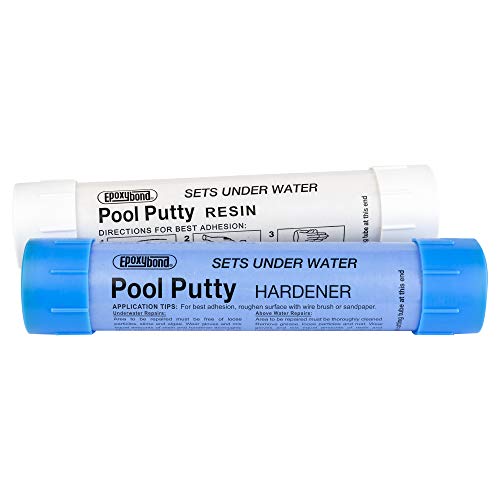
Epoxybond Pool Putty, 14 oz is a hand-moldable, two-part putty, not a tube sealant. The maker says to mix equal parts and says the putty hardens underwater without shrinking or sagging; the uses include concrete, fiberglass, and tile repair. Its 14 oz size offers more material than the smaller kit. A molded patch can suit a localized crack, leak, or chipped tile, but it is less suited to someone who needs a neatly applied bead along a long joint. The product comes in white or black.
Bottom line: Choose this for a hand-shaped patch or chipped-tile repair.
AQUABOND Pool Epoxy Repair Kit, 50 mL

AQUABOND Pool Epoxy Repair Kit, 50 mL is a compact epoxy repair kit rather than a tube of flexible sealant. The maker says it is designed for underwater application and names concrete, fiberglass, and PVC among its uses. At 50 mL (1.7 oz), it is the smallest repair quantity here, which may suit a limited patch but can be restrictive for a larger repair. The material range is useful when matching a kit to a surface, but verify compatibility with the specific pool finish before starting.
Bottom line: Pick this for a small underwater epoxy repair on a named surface.
BOSS 802 Clear Silicone, 2-Pack

BOSS 802 Clear Silicone, 2-Pack is a clear silicone sealant sold as two 280 mL tubes, for 560 mL total. Its uses include pool tiles and spa components as well as household surfaces, making it a broader-purpose sealant than the dedicated underwater products. It may suit a clear pool or spa joint when the application conditions are confirmed first.
Bottom line: Choose this for clear pool or spa sealing when application conditions are confirmed.
How to choose an underwater pool sealant
Match the product format to the repair: tube sealant is suited to a bead along a joint, while epoxy putty can be shaped into a localized patch. Pool repairs depend on the surface material and whether the repair must be applied underwater; the product claims here differ on those points. With a damaged tile or small isolated crack, compare a moldable putty’s named uses against the pool material. With a long joint, favor a sealant format and confirm the application instructions permit the conditions at the repair site. If a crack is widening or crosses a structural area, surface sealant is not a substitute for diagnosing the pool shell.
Pool repair formats and where they fit
Sealant and putty are not interchangeable just because both can address leaks. A tube dispenses a bead, while two-part putty is mixed and pressed into shape; that distinction affects control, area, and finish. Water-resistant wording also does not necessarily mean a product can be applied while submerged. Use this comparison to narrow the format, then check the compatibility and application conditions for the exact surface.
| Repair need | Format to consider | Why |
|---|---|---|
| Gap or joint | Tube sealant | Dispenses as a bead |
| Small localized patch | Two-part putty | Can be molded to shape |
| Clear pool or spa joint | Silicone sealant | Clear finish; verify use conditions |
For a crack that is growing or runs through the pool shell, stop at product comparison and seek a qualified assessment.
Preparing an underwater pool repair
Preparation matters because algae, scale, loose plaster, and old sealant can interfere with a repair’s contact with the surface. Remove loose debris and algae from the work area, and avoid sealing over material that moves or flakes away. A submerged repair also has less visibility and control than a dry one, so identify the full leak boundary before beginning. For a two-part putty, measure and mix equal portions only where the product calls for a 1-to-1 mix; keep the rest of the work area ready before mixing. Wear eye protection and gloves when handling repair compounds, and keep them away from children.
When a pool leak needs more than sealant
A small surface leak and a structural pool crack are different problems. A crack that widens, shifts, or returns after patching can signal movement or a shell issue, not just a failed bead. Check whether water loss continues after the repair has cured according to the product instructions; persistent loss calls for leak diagnosis rather than repeated layers. Avoid applying an ordinary water-resistant sealant underwater unless its instructions specifically allow submerged application. For plumbing leaks, identify whether the leak is at a fitting, pipe, or pool surface first, since a surface patch cannot repair a damaged line behind the finish.
Frequently Asked Questions
Can pool sealant be applied underwater?
Only use a product whose instructions allow underwater application. Water-resistant wording alone does not establish that it can be applied while submerged; check the application conditions before starting.
How is pool putty different from sealant?
Pool putty is mixed and molded into a patch, while tube sealant is dispensed as a bead. A joint or gap generally calls for a bead format, while a localized chip or crack may suit a moldable patch.
Can epoxy putty repair a pool tile?
Some pool putties name tile repair as a use, including restoration of chipped or broken tile. Match the product’s surfaces to the tile and use it only under the application conditions its maker permits.
What should I do if a pool crack keeps growing?
A growing or recurring crack should be assessed before applying more sealant, because shell movement or structural damage may be involved. A surface patch cannot correct a moving pool structure.
Does water-resistant silicone work below the waterline?
Water resistance does not by itself mean silicone can be applied underwater. Confirm the product permits submerged application and is compatible with the pool surface before using it below the waterline.