
Best UV Resin Light: 3 Lamps Compared by Coverage

48-LED 360° UV Resin Light suits most resin crafters because its maker describes 360-degree illumination from 48 LEDs and gives four timer options. Choose KISREL 24-LED 36W Double-Sided Lamp for a detachable lamp with a separate flashlight, or LET’S RESIN 36-LED Two-Sided Light if you want two-sided curing with a 2-, 3-, or 5-minute timer.
A UV resin light emits ultraviolet wavelengths to cure resin formulated for that range.
We earn a commission if you buy through links on this page. As an Amazon Associate I earn from qualifying purchases. Products are compared on manufacturer specifications, not hands-on testing.
- Best overall: 48-LED 360° UV Resin Light – The maker describes top, bottom, and side illumination, plus 1-, 3-, 5-, and 10-minute timers.
- Best for separate spot curing: KISREL 24-LED 36W Double-Sided Lamp – Its two-sided 36W lamp detaches, and the kit includes a UV flashlight for small areas.
- Best for timed two-sided curing: LET’S RESIN 36-LED Two-Sided Light – It combines 36 LEDs and top-and-bottom illumination with 2-, 3-, and 5-minute timer settings.
| Product | Best for | LEDs | Wavelength | Timer settings | Shop |
|---|---|---|---|---|---|
| 48-LED 360° UV Resin Light | All-around coverage | 48 | 365–405 nm | 1, 3, 5, 10 min | Check Price on Amazon |
| KISREL 24-LED 36W Double-Sided Lamp | Spot curing | 24 | 365 + 405 nm | — | Check Price on Amazon |
| LET’S RESIN 36-LED Two-Sided Light | Timed curing | 36 | 365–395 nm | 2, 3, 5 min | Check Price on Amazon |
Best UV Resin Lights Compared
Compare coverage, wavelength, and timer controls against the resin and project you plan to cure.
48-LED 360° UV Resin Light

For molds that need light from several directions, this lamp stands out for its advertised 360-degree coverage rather than only top-and-bottom exposure. Its 48 LEDs emit 365–405 nm light, and the timer offers 1-, 3-, 5-, and 10-minute settings. The maker says it is intended for jewelry, small-to-medium flat projects, and thick pours. Its footprint is 9.72 by 4.52 inches, so check that the piece fits within the working area. The product’s broad coverage does not remove the need to match the wavelength and curing guidance on your resin.
Bottom line: Choose this if your priority is multi-angle coverage and several timer choices.
KISREL 24-LED 36W Double-Sided Lamp
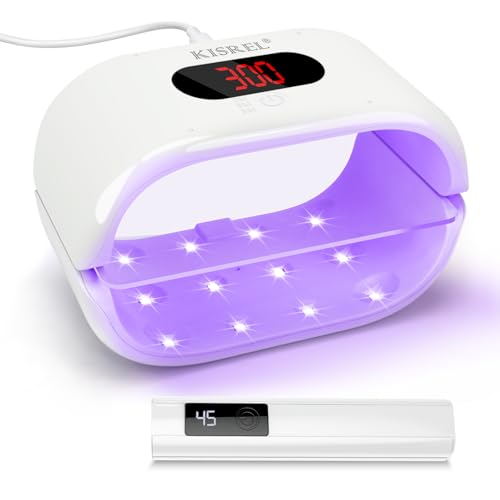
The detachable design and included flashlight distinguish this lamp from the other standalone lights here. Its 24 LEDs provide two-sided illumination, with 36W power and 365 nm plus 405 nm wavelengths. The maker describes the flashlight as useful for crevices and small curing tasks; the lamp can also separate into individually usable sides. That flexibility may suit jewelry makers who alternate between a mold and a small detail. A timer setting is not among the product facts, so this is less suited to buyers who specifically want preset timed cycles.
Bottom line: Pick this for a detachable two-sided lamp and a separate flashlight.
LET’S RESIN 36-LED Two-Sided Light

Three fixed timer choices make this a straightforward option for makers who want timed cycles without a longer list of settings. The 36-LED light shines from both sides and uses a 365–395 nm range. Its 10.08-by-6.14-inch length and width provide a larger stated footprint than the compact flashlight-style approach. The maker positions it for resin jewelry, molds, and DIY crafts. It does not include the separate flashlight feature of KISREL 24-LED 36W Double-Sided Lamp, and its wavelength range differs from 48-LED 360° UV Resin Light; confirm compatibility with your resin before choosing.
Bottom line: Choose this if two-sided illumination and three timer presets fit your workflow.
How to Choose a UV Resin Light
Match the lamp’s wavelength to the range printed on the UV resin before comparing LED counts or timer settings. These lamps cover 365–395 nm, 365–405 nm, or 365 nm plus 405 nm, so a wider range is useful only when it overlaps the resin’s required range. Coverage also matters: top-only lamps require repositioning, while two-sided or multi-angle designs can expose more surfaces at once. For a deep or opaque piece, use a resin intended for that project and cure in thin layers; light cannot reliably cure resin that it cannot reach. A practical rule: choose a multi-angle design for intricate molds with hidden surfaces, and a simple two-sided lamp for flat pieces.
UV Resin Light Coverage and Timers
Two-sided lamps direct light at the top and bottom, while multi-angle coverage can reach sides that a flat lamp may miss. The designs here range from 24 to 48 LEDs, but LED count alone does not establish curing speed: wavelength, distance, resin color, layer thickness, and lamp output all affect the result. Timer settings help repeat a cycle, but a preset does not guarantee a fully cured piece. Use the resin maker’s cure guidance, and inspect a piece for soft or tacky areas before handling it extensively. For a piece with shaded recesses, rotate it or expose those areas separately rather than assuming a top-and-bottom cycle reached every surface.
Safe Setup for Resin Curing
Keep UV light off bare skin and avoid looking directly at illuminated LEDs; use eye protection rated for the lamp’s UV output and cover exposed skin. Uncured resin can irritate or sensitize skin, so wear nitrile gloves and keep resin away from children and pets. Ventilation matters while handling resin, particularly during mixing and cleanup. Protect the work surface from drips, and follow the resin’s handling and disposal directions. A common mistake is touching a piece because its surface looks hard: cure appearance alone does not establish that every layer or shaded area has cured. If the resin remains tacky, check the wavelength match and exposure guidance before extending the cure.
Frequently Asked Questions
Can any UV resin cure under any UV lamp?
No; the lamp’s wavelength needs to overlap the resin’s curing range. Compare the range on the resin label with the lamp’s wavelength before starting.
Why does UV resin stay sticky after curing?
A tacky surface can result from insufficient exposure, an incompatible wavelength, or light blocked by pigment or mold geometry. Check the resin’s cure guidance and expose shaded areas from another angle.
Can a UV lamp cure thick resin pours?
UV light has limited reach through resin, especially when the pour is thick or opaque. Use a resin formulated for the project and build depth in thin layers when its directions call for layering.
Should I wear protection when using a UV resin lamp?
Yes; avoid direct eye and skin exposure to UV LEDs, and wear suitable UV-blocking eye protection and gloves when handling resin. Keep the work area ventilated and inaccessible to children and pets.