
Best Walking Boot for Broken Ankle: 4 CAM Boots Compared

For most people, the United Ortho Short Air Cam Walker is the leading choice because it has adjustable straps for swelling and bandages and fits either foot. If you need a different size or a more rigid frame, compare the other CAM walkers and confirm the fit with your medical professional; the post-op shoe is a different, lower-support type.
We earn a commission if you buy through links on this page. As an Amazon Associate I earn from qualifying purchases. Products are compared on manufacturer specifications, not hands-on testing.
- Best overall: United Ortho Short Air Cam Walker, Large – Its adjustable straps accommodate swelling and dressing changes, and the universal design fits either foot.
- Best for medium sizing: Jewlri Short Air CAM Walker, Medium – A removable liner and soft insole pair with a rigid frame for support.
- Best for shoe-size guidance: kefit Fracture Boot, Medium – Its medium size is matched to men’s 6–9 and women’s 7–10 shoe sizes.
| Product | Best for | Size | Height | Weight | Shop |
|---|---|---|---|---|---|
| United Ortho Short Air Cam Walker, Large | Adjustable fit | Large | 5.3 in | 2.5 lb | Check Price on Amazon |
| Jewlri Short Air CAM Walker, Medium | Removable liner | Medium | 11 in | 1.7 lb | Check Price on Amazon |
| kefit Fracture Boot, Medium | Shoe-size match | Medium | 4.6 in | 2.1 lb | Check Price on Amazon |
| Honprodu Air Walking Boot, Medium | Adjustable air cushion | Medium | — | 1.9 lb | Check Price on Amazon |
Walking Boots for a Broken Ankle
Compare the boot styles and sizing cues, then confirm the right option with your clinician.
United Ortho Short Air Cam Walker, Large

Adjustable straps for swelling, bandages, or dressing changes distinguish this CAM walker, and its universal design fits either foot. The black, large-size boot measures 14.6 inches long and comes with a user guide for securing the liner and adjusting the air bladder. United Ortho says its extra-small size weighs 1.8 pounds, but that figure does not apply to this large boot. Compare your foot length with the maker’s size chart before choosing; the large size alone does not establish fit for every wearer.
Bottom line: Choose this if adjustable straps and either-foot use are priorities.
Jewlri Short Air CAM Walker, Medium
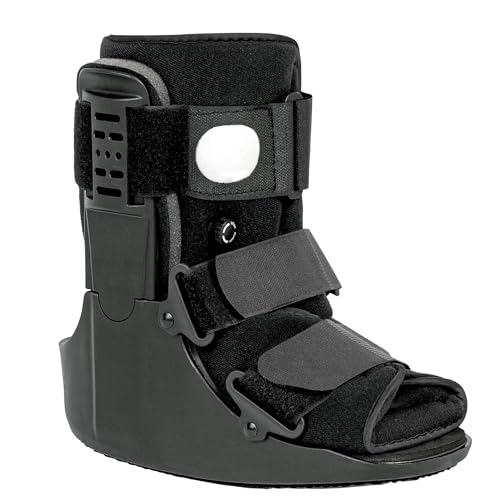
A removable liner sets this medium CAM walker apart for buyers who want a washable interior; the maker says it can be washed in cold water. It has a soft, thick insole, adjustable straps, a rigid plastic frame, and fits either foot. The boot measures 12 inches long and 5 inches wide. Its frame and dimensions do not by themselves confirm a fit for a particular ankle injury, so measure the injured foot and ankle and consult a medical professional before ordering.
Bottom line: Choose this if a removable liner matters and medium sizing fits.
kefit Fracture Boot, Medium
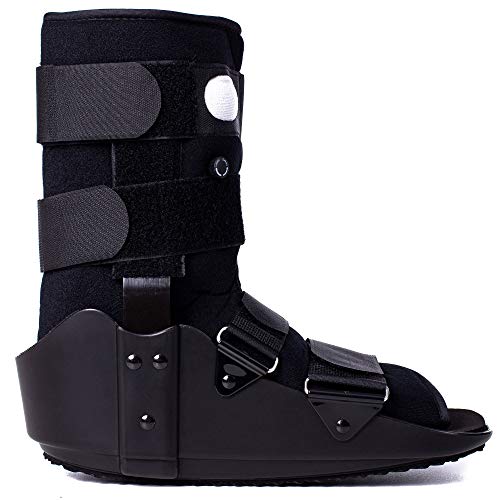
The medium size is paired with a specific shoe-size range: men’s 6–9 and women’s 7–10. This boot uses aluminum brackets shaped to the leg contour, a built-in inflatable bag for adjustable compression, and a rocker bottom intended to support a smoother gait. Those features distinguish it from the other medium CAM walkers here. Check that your shoe size falls in the range and ask your clinician whether this support style suits the injury; the maker’s recovery claims are not a substitute for medical advice.
Bottom line: Choose this if your shoe size matches its medium range.
Honprodu Air Walking Boot, Medium

Customizable air pressure is the defining feature of this medium CAM walker, which also has adjustable straps and a non-slip sole. The maker says the air pressure can be adapted as swelling changes, and the boot fits either foot. Its weight is about 1.9 pounds. Confirm the fit using the maker’s size chart before ordering, especially if swelling or a cast changes the amount of room you need.
Bottom line: Choose this if adjustable air pressure is the feature you need.
How to choose a walking boot for a broken ankle
Match the boot to the injury and clinician’s instructions before comparing comfort features. CAM walkers use a rigid shell and straps to limit movement; air bladders can add adjustable pressure, but they do not establish that a boot is appropriate for a particular fracture. Check the fit with the injured foot, any dressing or cast, and likely swelling in mind. Use a boot’s shoe-size range only when your size falls inside it; otherwise, consult its sizing chart. If your treatment plan calls for ankle stabilization, do not substitute a post-op shoe simply because it is lighter or has a roomy toe box.
How to size a walking boot around swelling
Measure the injured foot rather than relying on your usual shoe size, because swelling, bandages, and casts can change the space needed. The United Ortho sizing guidance calls for comparing foot length with its chart and choosing the larger size when between sizes. Jewlri also advises measuring ankle width, a useful check when swelling affects strap placement. A boot should secure the foot without forcing the toes against the front or leaving the heel sliding inside. Recheck strap tension when swelling changes, and ask a clinician to assess fit if numbness, skin color changes, or increased pain develops.
CAM walker versus post-op walking shoe
A CAM walker and a post-op shoe serve different support needs. A CAM walker has a rigid frame and straps; some include an inflatable bladder or air cushion. A closed-toe post-op shoe is lower and lighter, with a wider toe area for dressings or swelling, but it is not the same style of ankle support. Choose according to the care plan, not weight alone. The comparison below summarizes the practical distinction.
| Type | Typical use | Fit consideration |
|---|---|---|
| CAM walker | Rigid foot and ankle support | Measure foot and account for wraps |
| Post-op shoe | Foot protection after surgery or injury | Allow room for toes, swelling, or dressing |
Walking boot safety and fit checks
A walking boot should be used as directed by the treating clinician, since ankle fractures differ in stability and permitted weight-bearing. Do not assume that an air bladder should be inflated fully: pressure should not cause tingling, numbness, or color change in the toes. Keep the sole clean and check straps and shell for damage before walking. A boot can change leg height and gait; if it makes you feel unsteady, ask about a contralateral shoe lift or walking aid rather than compensating with an uneven stride. Seek prompt medical advice for worsening pain or new loss of sensation.
Frequently Asked Questions
Can I wear a walking boot on either foot?
Some CAM walkers are designed for either foot, including several options here. Check that the particular model fits the injured side and that straps and liner sit correctly before walking.
How tight should an air walking boot feel?
The boot should feel secure without causing tingling, numbness, or a change in toe color. Avoid increasing air pressure to the point of discomfort, and ask a clinician to check concerning symptoms.
Should I wear a sock inside a fracture boot?
A clean, close-fitting sock can reduce friction and help protect skin inside a boot. Make sure the sock does not bunch beneath the heel or toes, and account for its thickness when checking fit.
Can I drive while wearing a broken ankle boot?
Do not drive in a boot on the operating foot unless your clinician says it is safe and you can control the vehicle. A boot can limit ankle movement and braking ability.
How do I avoid slipping in a walking boot?
Use the boot’s intended sole on dry, stable surfaces and take short, deliberate steps. Ask a clinician whether a cane or crutches are appropriate if balance or weight-bearing is limited.