
Best Waterproof Adhesive for Plastic: 3 Glues Compared

WoldoClean Super Glue for Plastic is the best fit for many plastic repairs because its compatibility spans PVC, ABS, acrylic, vinyl and other plastics. Choose Dreahlife Super Glue for Plastic 30g if its shorter 10–30-second set claim suits your repair; check the plastic’s resin type first, since some plastics resist ordinary adhesives.
We earn a commission if you buy through links on this page. As an Amazon Associate I earn from qualifying purchases. Products are compared on manufacturer specifications, not hands-on testing.
- Best overall: WoldoClean Super Glue for Plastic 50g – Its thin formula and stated compatibility cover several common plastics, including PVC, ABS and acrylic.
- Best for quick repairs: Dreahlife Super Glue for Plastic 30g – The maker says it bonds in 10–30 seconds.
- Best for general-purpose use: Super Glue All-Purpose Liquid 1.75 oz – Its product name and features specify plastic alongside several other materials.
| Product | Best for | Bottle size | Plastic compatibility | Set time | Shop |
|---|---|---|---|---|---|
| WoldoClean Super Glue for Plastic 50g | Multi-plastic repairs | 50 g | PVC, ABS, acrylic, vinyl, more | Seconds; press 30 seconds | Check Price on Amazon |
| Dreahlife Super Glue for Plastic 30g | Fast small repairs | 30 g | Acrylic, PLA, ABS, PVC, more | 10–30 seconds | Check Price on Amazon |
| Super Glue All-Purpose Liquid 1.75 oz | Mixed-material fixes | 1.76 fl oz | Plastic; wood, glass, metal | Seconds; maximum handling claim | Check Price on Amazon |
Waterproof Adhesive for Plastic
Compare the plastic compatibility and format, then match the adhesive to the resin and joint you need to repair.
WoldoClean Super Glue for Plastic 50g

Among these options, WoldoClean Super Glue for Plastic 50g names the widest range of compatible plastics, including PVC, ABS, acrylic, plexiglass, vinyl, rubber, nylon and polystyrene. The maker says the thin cyanoacrylate formula is waterproof and heat resistant once cured, and recommends applying one thin drop, pressing the parts for 30 seconds and closing the cap after use. Its 50 g bottle suits repeated small repairs, model work or trim fixes. The limitation is the thin formula: it is best for close-fitting surfaces, not a large gap or a joint that must flex.
Bottom line: Choose it for close-fitting repairs across several compatible plastic types.
Dreahlife Super Glue for Plastic 30g
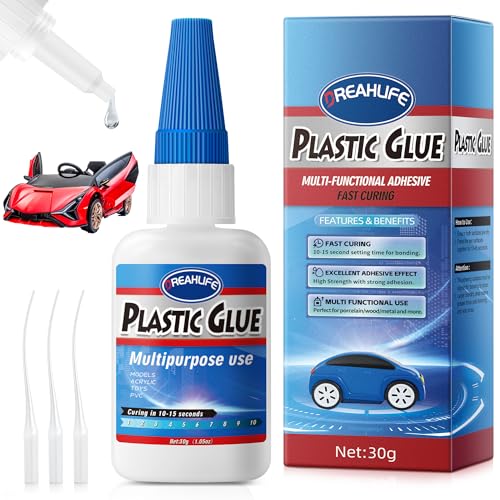
For a plastic repair where a short initial set matters, Dreahlife Super Glue for Plastic 30g is the only option here with a 10–30-second drying time. Its product name and features target plastic, and the maker identifies acrylic, PLA, ABS and PVC among the intended materials. The 30 g clear tube is suited to small household fixes and DIY kits. The maker recommends clean, dry, dust-free surfaces before applying glue. Its compatibility list is narrower than WoldoClean Super Glue for Plastic 50g’s, so confirm the resin type when repairing an unlisted plastic rather than assuming one glue fits every polymer.
Bottom line: Pick it for a small repair when its plastic types and quick set match the job.
Super Glue All-Purpose Liquid 1.75 oz

Unlike the plastic-specific tubes, Super Glue All-Purpose Liquid 1.75 oz is positioned as a general-purpose liquid adhesive for plastic and several other household materials. The clear 1.76 fl oz bottle may suit a repair that crosses material types or needs a larger supply than Dreahlife Super Glue for Plastic 30g. Its features describe rapid drying and maximum handling durability in seconds, but give no exact interval to compare with a 10–30-second set. The product’s broad plastic wording also does not identify specific resin types, so this is a less certain match than a glue that names the plastic you are bonding.
Bottom line: Choose it for mixed-material repairs when the plastic type is confirmed compatible.
How to choose waterproof adhesive for plastic
Choose by resin type and joint fit, not by the word “waterproof” alone. Cyanoacrylate, the family commonly sold as super glue, can bond many rigid plastics such as ABS, acrylic and PVC, but polyethylene and polypropylene resist ordinary adhesives and may need a specialty adhesive or surface treatment. Thin cyanoacrylate works best when two clean surfaces meet closely; it is not a good gap filler. For a gap or a joint that flexes, look for an adhesive specifically made for that material and joint. A measurable rule: if the plastic is labeled PE or PP, do not assume a general plastic super glue will hold without confirming compatibility.
Plastic types and surface preparation
Identify the plastic before gluing; resin markings often appear as a number inside a recycling triangle, though the number alone does not guarantee adhesive compatibility. ABS is commonly marked 7 or identified by letters, while PVC is marked 3; packaging or the part itself may provide a clearer resin name. Wash away oil and dirt, then let the surfaces dry fully because moisture and contamination can weaken contact. Lightly abrading a smooth surface can help some adhesives grip, but avoid sanding thin, clear parts if scratches will show. Keep glue away from skin and eyes, use ventilation, and avoid touching the bond while it sets; cyanoacrylate can bond skin rapidly.
Water exposure and bond limits
Waterproof claims do not mean every glued plastic joint can stay submerged indefinitely. Bond strength depends on the exact resin, surface preparation, joint shape and full cure, so let the adhesive cure as directed before exposing a repair to water. Cyanoacrylate forms a hard bond that can be brittle under repeated bending or impact; a flexible part or vibrating joint may need a flexible adhesive instead. Use only a thin layer where parts fit closely, since excess glue can slow a neat repair and spill beyond the joint. For a container that holds drinking water or a repair exposed to high heat, verify that the adhesive is specifically approved for that use before applying it.
Frequently Asked Questions
Can super glue bond polyethylene or polypropylene plastic?
Ordinary cyanoacrylate often bonds PE and PP poorly because their low-energy surfaces resist adhesion. Choose a product specifically made for those plastics or confirm that a primer is required.
How long should plastic glue cure before getting wet?
Wait for the adhesive’s full cure, not merely its initial set, before exposing the joint to water. Set time can be seconds while full cure may take longer, so follow the product’s cure directions for that specific formula.
Should I sand plastic before applying adhesive?
Lightly roughening a smooth, opaque surface can improve mechanical grip for some adhesives. Skip sanding transparent plastic or any visible area where scratches would matter, and clean off dust before gluing.
Why does glue fail on a plastic repair?
A wrong resin match, oily surface, loose fit or flexing joint can cause failure. PE and PP are especially resistant to ordinary super glue, while thin cyanoacrylate works best on close-fitting rigid parts.
Is cyanoacrylate safe to use indoors?
Use cyanoacrylate with good ventilation and keep it away from eyes and skin, since it can bond skin rapidly and its fumes may irritate. Avoid cotton or wool contact because cyanoacrylate can react with these materials and generate heat.