
Best Weather Stripping for Doors: 5 Types Compared

For most people, Bantie EVA Foam Tape, 33 ft is the most flexible choice because its foam tape can be cut to length for door-frame gaps. Choose a different style if you have a measured large gap, a kerf groove in the frame, or a draft under the door.
Weather stripping seals gaps around a closed door; the right type depends on where the gap is and how the strip attaches.
We earn a commission if you buy through links on this page. As an Amazon Associate I earn from qualifying purchases. Products are compared on manufacturer specifications, not hands-on testing.
- Best overall: Bantie EVA Foam Tape, 33 ft – Cut-to-fit foam tape suits door-frame gaps and comes in a 33-foot roll.
- Best for large frame gaps: VITAM AMO EPDM Seal, 18 ft – Its EPDM strip is sized for gaps from 5/16 to 15/32 inch.
- Best for door bottoms: Ormein Silicone Door Sweep, 39 in – The 39-inch silicone sweep is made to seal beneath the door.
- Best for kerf frames: Litaibai Large-Gap Kerf Seal, 40 ft – The press-in seal fits kerf grooves and 3/8- to 5/8-inch gaps.
| Product | Best for | Application | Gap fit | Length | Shop |
|---|---|---|---|---|---|
| Bantie EVA Foam Tape, 33 ft | Flexible frame gaps | Door and window frames | — | 33 ft | Check Price on Amazon |
| VITAM AMO EPDM Seal, 18 ft | Larger frame gaps | Door and window frames | 5/16–15/32 in | 18 ft | Check Price on Amazon |
| Ormein Silicone Door Sweep, 39 in | Under-door drafts | Door bottom | — | 39 in | Check Price on Amazon |
| Litaibai Large-Gap Kerf Seal, 40 ft | Wide kerf gaps | Exterior door frame | 3/8–5/8 in | 40 ft | Check Price on Amazon |
| Bantie Kerf Door-Frame Seal, 40 ft | Kerf frame replacement | Door frame | — | 40 ft | Check Price on Amazon |
Weather Stripping for Doors
Match the seal type to the gap location and the way your door-frame accepts weather stripping.
Bantie EVA Foam Tape, 33 ft

For adaptable coverage around a frame, this EVA foam tape comes in a 33-foot self-adhesive roll that can be cut to length. Its 1/2-by-1/4-inch profile suits buyers looking for a flexible strip rather than a rigid press-in seal or a door-bottom sweep. The maker says the tape is waterproof and provides thermal insulation. Choose it for frame gaps where adhesive-backed foam can sit without interfering with the door closing. Foam tape is not the right format for a gap beneath the door or for a frame that requires a kerf insert.
Bottom line: Pick this if you need cut-to-length foam tape for a door-frame gap.
VITAM AMO EPDM Seal, 18 ft

The VITAM AMO seal is the clear fit when the measured frame gap falls between 5/16 and 15/32 inch, a range printed for this self-adhesive EPDM strip. The 18-foot length can cover multiple sections, and the flexible material is intended for door and window frames. The maker says the rubber resists low temperatures and helps block wind, water, light, and sound. Its gap range is narrower than the larger kerf option, so measure the closed door rather than choosing by appearance alone; this adhesive strip is not a bottom sweep.
Bottom line: Choose this when the frame gap measures 5/16 to 15/32 inch.
Ormein Silicone Door Sweep, 39 in

Unlike frame tape and kerf seals, this 39-inch silicone draft stopper is made for the bottom of an interior or exterior door. Its flexible silicone construction is intended to bend along an uneven floor, which may suit doors that do not meet a perfectly level surface. The maker says the sweep resists heat and cold and can reduce air leakage. Measure the door width and check floor clearance before choosing a bottom seal: a sweep that drags can impede movement, while one that sits too high can leave a draft path.
Bottom line: Pick this for a draft entering beneath a door, after checking width and clearance.
Litaibai Large-Gap Kerf Seal, 40 ft
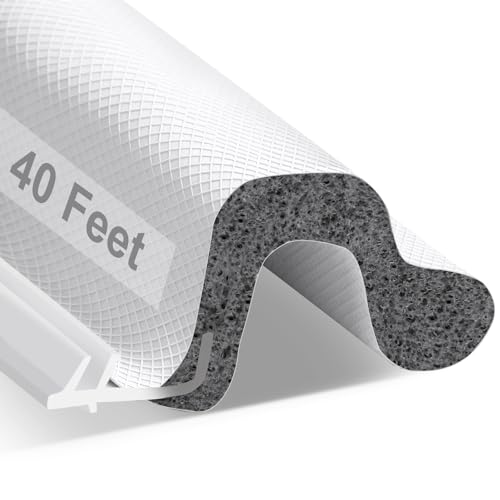
The Litaibai seal handles the widest frame gap here—3/8 to 5/8 inch—but only when the exterior frame has a kerf groove. Its 40-foot length uses a flexible, PE-clad foam profile with a PVC flange that presses into the slot; it is not self-adhesive. The maker says it helps reduce drafts, dust, light, and some outside noise. This is a poor match for a flat frame or the bottom edge of a door. Test a short section and confirm the door still closes and latches normally.
Bottom line: Choose this for a matching kerf frame with a 3/8- to 5/8-inch gap.
Bantie Kerf Door-Frame Seal, 40 ft

For a frame that already takes a kerf insert, this Bantie seal offers a 40-foot replacement roll rather than adhesive-backed tape. Its format makes it a different option from the frame tapes and under-door sweep: the frame needs the matching groove for installation. The package also includes four foam gaskets, which the maker says can be used if the door does not close normally or as cushioning. Because no gap range is supplied for this option, measure the opening and verify the profile fits the groove before replacing an existing seal.
Bottom line: Pick this to replace a kerf seal when its profile and frame groove match.
Choose Weather Stripping by Gap Location
Start by finding whether the draft comes around the frame or beneath the door, because those openings take different seal types. Foam or rubber strips attach around the jamb; a sweep or draft stopper seals the bottom edge. Measure with the door closed at the top, middle, and bottom of each side, since a frame can be uneven. A feeler gauge or a ruler helps distinguish a narrow crack from a larger opening. For a measured 3/8- to 5/8-inch frame gap, consider a compatible large-gap seal; for gaps below that, use a strip whose range covers the measurement. Do not add thick foam merely to fill space: excessive compression can stop the door from latching.
Match the Seal to the Frame
Adhesive-backed foam and rubber go on clean, flat surfaces, while kerf weather stripping presses into a narrow groove cut in the frame. A kerf seal is not interchangeable with tape: check that the frame has a kerf slot before choosing a press-in design. The large-gap kerf option fits a 3/8- to 5/8-inch opening, but the slot must also accept its flange. For adhesive products, remove dust and grease, dry the surface, and apply at room temperature when practical; cold surfaces can weaken initial adhesion. Test a short section first, then close the door to confirm it latches without forcing it.
Compare Door Seal Types by Use
Use the opening’s location and frame construction to narrow the format before comparing materials. A door sweep addresses the threshold line; frame seals address the jamb perimeter, and a kerf insert requires a grooved frame. This quick guide separates those jobs.
| Opening or frame | Seal type | Fit check |
|---|---|---|
| Flat frame gap | Self-adhesive foam or rubber strip | Measure closed-door gap |
| Grooved frame | Kerf insert | Match groove and gap |
| Gap beneath door | Door sweep or bottom stopper | Check door width and floor clearance |
Door material and finish also matter: adhesive products need a surface the backing can grip, while a kerf product depends on an intact slot. A door that binds after installation needs a thinner or differently positioned seal, not more pressure against the latch.
Measure and Install a Door Seal
Measure the gap with the door shut at several points instead of assuming the opening is uniform. Use the largest relevant frame measurement when selecting a strip, and measure door width separately for a bottom sweep. Cut strips slightly long, position them without stretching, then trim the ends for a neat joint; stretched foam can pull back and expose a gap. For kerf inserts, cut to the frame section and press the flange into the groove without damaging it. Close and latch the door after each section. If the latch needs force or the door rubs, adjust or remove the seal before finishing the remaining sides.
Frequently Asked Questions
How do I measure a gap for door weather stripping?
Close the door and measure the space between the door and frame at the top, middle, and bottom of each side. Use the relevant largest measurement to check whether a strip’s gap range covers the opening.
Should weather stripping go on the door or the frame?
Frame strips usually attach to the jamb or fit a groove in the frame, while a sweep attaches along the door bottom. Choose based on where air passes through, and confirm the door still closes and latches after installation.
Can weather stripping seal a gap under a door?
A door sweep or bottom stopper is made for the gap under a door; frame tape is intended for the perimeter. Measure the door width and floor clearance so the seal does not drag or leave an opening.
What is the difference between kerf and adhesive weather stripping?
Adhesive weather stripping sticks to a flat, clean frame surface, while kerf weather stripping presses into a pre-cut groove. Check the frame for that slot before buying a kerf style, and verify its gap range.
Why will my door not latch after adding weather stripping?
A seal that is too thick or compressed can interfere with latching. Check the gap at several points and use a profile sized for the opening; test the latch after fitting each section.