
Biggest 3-Ring Binder: 6-Inch and 5-Inch Picks

6-Inch Locking D-Ring Binder is the biggest 3-ring binder here, with a 6-inch ring size and a maker-stated capacity of more than 1,100 sheets. Choose a 5-inch binder instead if a smaller spine better suits your shelf or document load.
Three-ring binders use opening rings to hold punched sheets; D-rings generally give pages a straighter edge than round rings of the same diameter.
We earn a commission if you buy through links on this page. As an Amazon Associate I earn from qualifying purchases. Products are compared on manufacturer specifications, not hands-on testing.
- Best overall: 6-Inch Locking D-Ring Binder – Its 6-inch ring size and maker-stated capacity of more than 1,100 sheets lead this group.
- Best for two binders: Amazon Basics 5-Inch D-Ring Binder, 2-Pack – The package includes two 5-inch binders, each sized for letter paper.
- Best for a stated capacity: Ring Binder Depot 5-Inch D-Ring – The maker gives a capacity of more than 950 sheets in a 5-inch binder.
| Product | Best for | Ring size | Sheet capacity | Package count | Shop |
|---|---|---|---|---|---|
| 6-Inch Locking D-Ring Binder | Largest paper loads | 6 in | 1,100+ sheets | 2 | Check Price on Amazon |
| Ring Binder Depot 5-Inch D-Ring | Capacity figure | 5 in | 950+ sheets | 1 | Check Price on Amazon |
| Amazon Basics 5-Inch D-Ring Binder, 2-Pack | Two-binder set | 5 in | — | 2 | Check Price on Amazon |
Biggest 3-ring binders compared
Compare ring diameter and stated capacity to match a binder to your paper load and storage space.
6-Inch Locking D-Ring Binder

The 6-inch ring size is larger than the 5-inch alternatives, making this the capacity-focused choice in this group. The maker says each binder holds more than 1,100 sheets and has a locking D-ring mechanism; the pair is designed for 8.5-by-11-inch paper. It also has two interior pockets and a clear customizable cover. Choose it when consolidating a very large set of documents matters more than keeping the spine compact. Its white cover may not suit buyers who want a dark binder.
Bottom line: Pick this when the largest ring size and a capacity above 1,100 sheets matter most.
Ring Binder Depot 5-Inch D-Ring

This 5-inch binder stands out among the smaller options with a maker-stated capacity of more than 950 sheets. It fits 8.5-by-11-inch paper and has locking D-rings, two opaque interior pockets, and a customizable cover and spine. The maker also identifies it as PVC-free and made in the USA. It suits a substantial document set when a 6-inch spine is more binder than needed. Its single-binder format offers less package quantity than the two-binder alternative.
Bottom line: Choose this for a 5-inch format with a capacity above 950 sheets.
Amazon Basics 5-Inch D-Ring Binder, 2-Pack
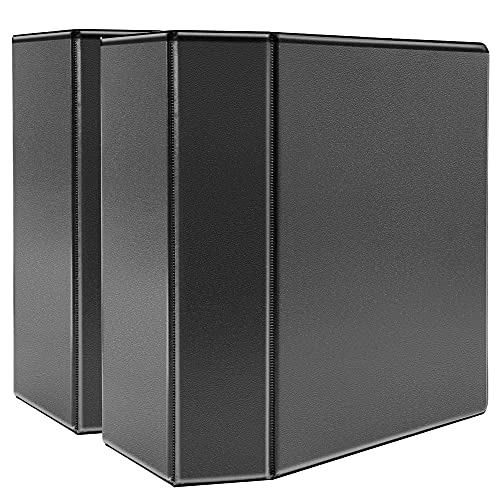
The two-binder package distinguishes this option from the single-binder 5-inch choice. Each binder has a 5-inch capacity for 8.5-by-11-inch punched paper, a heavy-duty cover with reinforced edges, and four interior pockets for loose sheets or cards. A clear cover and spine overlay allows custom labels. The product suits buyers dividing documents into two volumes or keeping separate projects together. The maker does not give a sheet count, so a buyer who must fit a precise paper quantity should compare the binder’s usable capacity with that load before choosing.
Bottom line: Pick this when having two customizable 5-inch binders is more useful than a 6-inch spine.
How to choose a large 3-ring binder
Choose by ring diameter first, then consider how heavy a full binder will be to move. A 6-inch ring is larger than a 5-inch ring, but the number of sheets each holds also depends on paper thickness and whether you add dividers or sheet protectors. Standard letter paper measures 8.5 by 11 inches, the size these options are designed to hold. A ream contains 500 sheets, so a capacity above 1,100 sheets represents more than two reams before adding covers, dividers, or protectors. For a frequently carried binder, split a large archive into volumes rather than filling one spine to its limit.
| Need | Choice |
|---|---|
| Largest ring size | 6-inch binder |
| 5-inch binder with a sheet capacity | 950+ sheet option |
| Two-binder package | 5-inch 2-pack |
Ring size and page capacity
Ring diameter is a useful first comparison, not a guarantee that every stack of the same sheet count will fit equally well. Thick paper, tabbed dividers, and plastic sheet protectors take up more room than ordinary loose sheets. A typical ream has 500 sheets, and standard 20-pound copy paper weighs about 5 pounds per ream; a binder holding multiple reams can become cumbersome even before its cover and hardware are counted. For an archive you rarely move, a larger binder can consolidate volumes; for regular carrying, divide the contents into smaller sections. Leave room for pages to turn freely instead of packing the rings so tightly that turning becomes difficult.
Paper fit and organizing a full binder
These binders are made for 8.5-by-11-inch paper, the common US letter size. Sheets need matching three-hole punches to sit securely on the rings; loose pages can go in interior pockets where provided, but pockets are not a substitute for ring storage. Large document sets are easier to navigate when split with labeled dividers, and a consistent label on the cover or spine makes a stored volume easier to identify. Keep frequently accessed sections near the front and avoid placing bulky items in pockets if they interfere with closing the cover. For documents with mixed paper sizes, verify the smaller or larger sheets will remain contained before filing them.
Frequently Asked Questions
How many pages fit in a 6-inch binder?
The maker of the 6-inch option says it holds more than 1,100 sheets. Paper thickness, dividers, and protectors can affect how much fits comfortably.
Is a 6-inch binder larger than a 5-inch binder?
Yes, a 6-inch ring size is one inch larger in diameter than a 5-inch size. The larger size is useful for a bigger paper load, but a full binder can be heavy to carry.
How much does a ream of copy paper weigh?
A ream of 500 sheets of typical 20-pound copy paper weighs about 5 pounds. A binder holding multiple reams will weigh more once the cover, rings, and any dividers are included.
What size paper do these binders hold?
The three options are designed for 8.5-by-11-inch paper. Use a matching three-hole punch so sheets sit correctly on the rings.
Should I use sheet protectors in a full binder?
Sheet protectors add thickness, so fewer protected pages fit than loose sheets in the same ring space. For a binder near capacity, use protectors only for pages that need them or divide the documents between volumes.