
Bike Protector Cover Chain: 4 Guard Types Compared

For a full chain cover, start with WRUIOY 48–52T Chain Guard if your bike has a 48–52T crankset; that tooth range is the clearest fit criterion among these guards.
We earn a commission if you buy through links on this page. As an Amazon Associate I earn from qualifying purchases. Products are compared on manufacturer specifications, not hands-on testing.
- Best overall: WRUIOY 48–52T Chain Guard – Its 48–52T size gives a concrete crankset-fit range.
- Best for dimension-specific fit: JISADER 15.16-Inch PP Chain Guard – The PP cover measures 15.16 × 3.54 × 0.79 inches.
| Product | Best for | Type | Material | Size or fit | Shop |
|---|---|---|---|---|---|
| WRUIOY 48–52T Chain Guard | 48–52T cranksets | Crankset guard | — | 48–52T | Check Price on Amazon |
| JISADER 15.16-Inch PP Chain Guard | Measured crankset fit | Crankset cover | Polypropylene | 15.16 × 3.54 × 0.79 in | Check Price on Amazon |
| VOSAREA 39-cm Chain Cover | Fixed-size cover | Chain cover | Plastic | 15.35 × 3.94 × 0.98 in | Check Price on Amazon |
| NUOBESTY Plastic Chain Guard | Road and mountain use | Plastic chain guard | Plastic | — | Check Price on Amazon |
Bike Protector Cover Chain Options
Match the guard’s coverage style and fit dimensions to your crankset or frame before choosing.
WRUIOY 48–52T Chain Guard

WRUIOY is the only rigid guard here with a crankset tooth range: 48–52T. The black cover is intended to shield the chain from oil and grime, and the maker says installation is simple. That makes it the most direct match for a bicycle whose chainring falls inside that range. The limitation is fit: mountain-bike or road-bike labels alone do not confirm compatibility, so count the chainring teeth before choosing it. The specifications do not establish mounting hardware or adjustment range.
Bottom line: Choose this if your chainring has 48–52 teeth and you want a rigid cover.
JISADER 15.16-Inch PP Chain Guard

JISADER gives the clearest physical dimensions, making it useful when measuring the available space around a crankset matters more than a tooth-count range. Its polypropylene cover is described as shielding against dust, water, and trail debris, while also helping keep chain oil and loose clothing away from the moving chain. At about 15.16 × 3.54 × 0.79 inches, it needs a frame and crankset with compatible clearance; measure before ordering. Unlike a full chaincase, this is a crankset-area guard, so it does not promise complete chain enclosure.
Bottom line: Pick this when its measured dimensions clear your crankset and frame.
VOSAREA 39-cm Chain Cover
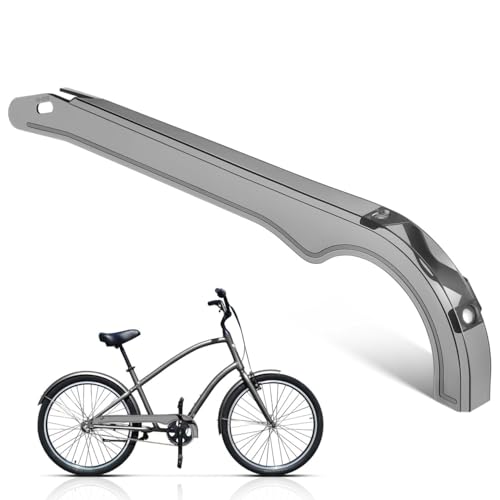
VOSAREA is a fixed-size plastic shell, measuring 15.35 × 3.94 × 0.98 inches, slightly longer and wider than the JISADER cover. Its oil-resistant surface is intended to keep the chain area cleaner, and the black finish suits buyers who want a conventional rigid cover rather than a frame wrap. The maker calls it easy to install, but the fields provide no chainring tooth range; compare its dimensions with your frame and crankset, and verify clearance before ordering. Its fit is therefore less specific than a guard with a tooth range.
Bottom line: Choose this if its shell dimensions suit your bike’s chain area.
NUOBESTY Plastic Chain Guard

NUOBESTY is a plastic chain guard framed for mountain- and road-bike use, with clothing protection from chain grease emphasized in its product name. The maker says it installs without tools, a potentially useful distinction when comparing a fixed shell with guards whose installation approach is not described. No dimensions or tooth-count range are supplied in the specifications, so bike category alone cannot confirm fit. Measure the chainring area and compare mounting points before choosing it; buyers who need a known size should consider a dimensioned guard instead.
Bottom line: Choose this if its mounting points fit and tool-free installation matters.
How to choose a bike chain protector
Choose a chain protector by what you need to shield: chain and clothing, or frame paint at the chainstay. A rigid chainring guard reduces contact with chain grease and moving links, while a chainstay wrap cushions chain slap but leaves the chain exposed. Count chainring teeth for a guard specified by tooth range; compare length, width, and depth for a dimensioned shell. Measure with the crank turned through a full rotation, because the guard must clear the crank arm as well as the frame. A chain guard is not a substitute for a correctly adjusted drivetrain or a trouser clip when clothing can reach an exposed chain.
Chain guard fit and clearance
Fit depends on chainring size, mounting points, and the space around the crankset, not just whether a bike is called a road or mountain bike. Chainrings are measured by tooth count, and guards built around one chainring size can miss or rub if the ring falls outside their intended range. For dimensioned covers, compare the guard’s full length, width, and depth with the bike and allow room for crank rotation and chain movement. A practical decision rule is to reject any cover that contacts the crank arm during a complete pedal revolution. Follow the bike maker’s torque guidance for crank bolts if installation requires removing crank hardware.
Rigid chain covers versus chainstay wraps
Rigid covers and chainstay wraps protect different parts of a bicycle, so choose based on the hazard. A shell around the crankset can reduce grease transfer to pants and help block debris from the chain area; a fabric wrap protects paint where the chain may strike the frame. The table separates coverage style from fit clues so a buyer can narrow the type before measuring a bike.
| Need | Protection type | Fit check |
|---|---|---|
| Reduce chain contact and grease | Rigid crankset or chain cover | Tooth range, dimensions, clearance |
| Limit chainstay scuffs and oil marks | Removable fabric wrap | Wrap length and secure closure |
Neither style removes the need to keep fabric, laces, and fingers away from a moving drivetrain.
Installing and maintaining a chain protector
Install a guard only when it stays clear of the crank and chain throughout a full rotation. Rigid plastic covers should be checked after fitting for rubbing, loose fasteners, or trapped grit; abrasion can damage both a cover and nearby parts. A chainstay wrap should sit securely without covering moving components or slipping toward the chain, and washable fabric should be cleaned when grease or grit accumulates. Bicycle chains themselves need regular cleaning and lubrication, especially after wet or dusty rides; excess oil attracts grit, so wipe the chain after lubricating. Recheck attachment after the first ride and whenever a guard is removed.
Frequently Asked Questions
How do I measure a chainring for a guard?
Count the teeth around the chainring, or read the tooth count printed on it if available. A guard specified for 48–52 teeth should be considered only when the ring falls within that range.
Will a chain guard fit any mountain bike?
No; frame style alone does not confirm fit. Compare chainring tooth count or cover dimensions and verify crank and frame clearance through a full pedal rotation.
What does a chainstay protector cover?
A chainstay protector covers the frame tube beneath the chain, not the chain itself. It helps limit paint scuffs from chain slap, while a rigid chain guard is the option for reducing chain contact and grease transfer.
How often should a bicycle chain be cleaned?
Clean a bicycle chain when it becomes visibly gritty or after wet, muddy, or dusty rides; dry-road riding generally needs less frequent cleaning. Apply bicycle-chain lubricant sparingly and wipe away excess so it does not collect grit.
Can I use a chain cover if it rubs while pedaling?
No; rubbing during a full crank revolution indicates inadequate clearance or misalignment. Stop and correct the fit before riding, since contact can wear the guard or interfere with the drivetrain.