
Bio Clean Hard Water Stain Removers Compared

Bio Clean Hard Water Stain Remover, 20.3 oz is the closest match for a Bio Clean hard water stain remover if you want an aerosol listed for windows, tile, grout and glass. Choose Bio Clean WSR10 Hard Water Stain Remover, 10 oz instead for a jar you can apply with a cloth, sponge or soft-bristled brush, or Bio Clean Eco Friendly Hard Water Stain Remover, 40 oz if a two-pack format suits your cleaning needs.
Hard water stains are mineral deposits, commonly involving calcium and magnesium. Check the cleaner’s surface directions and test a small, inconspicuous area first, especially on delicate or coated finishes.
We earn a commission if you buy through links on this page. As an Amazon Associate I earn from qualifying purchases. Products are compared on manufacturer specifications, not hands-on testing.
- Best overall: Bio Clean Hard Water Stain Remover, 20.3 oz – The 20.3-ounce aerosol is listed for windows, tile, grout and glass.
- Best for application options: Bio Clean WSR10 Hard Water Stain Remover, 10 oz – The 10-ounce jar can be applied with a cloth, sponge, soft-bristled brush or oscillating buffer.
- Best for a two-pack: Bio Clean Eco Friendly Hard Water Stain Remover, 40 oz – This Bio Clean option comes in a pack of two 40-ounce units.
| Product | Best for | Format | Size | Surface range | Shop |
|---|---|---|---|---|---|
| Bio Clean Hard Water Stain Remover, 20.3 oz | Aerosol application | Aerosol | 20.3 oz | Windows, tile/grout, glass | Check Price on Amazon |
| Bio Clean WSR10 Hard Water Stain Remover, 10 oz | Flexible application | Jar | 10 oz | Shower doors, chrome, glass, tile, porcelain | Check Price on Amazon |
| Bio Clean Eco Friendly Hard Water Stain Remover, 40 oz | Two-pack format | — | 40 oz, pack of 2 | Window, tile, shower, stone, door | Check Price on Amazon |
| CRL Bio-Clean Water Stain Remover, 16 oz | Glass and chrome | Bottle | 16 fl oz | Glass, tile, fiberglass, chrome, porcelain | Check Price on Amazon |
Bio Clean hard water stain removers
Compare the Bio Clean options by container, size and the surfaces each is described for.
Bio Clean Hard Water Stain Remover, 20.3 oz

Bio Clean Hard Water Stain Remover, 20.3 oz is the aerosol option among these Bio Clean products, with a 20.3-ounce container listed for windows, tile, grout and glass. The maker describes it as professional-strength and says it removes stains, spots, rust and hard mineral deposits. This format suits buyers who prefer a spray container and need those named surfaces in scope. The specifications do not give an application tool or surface-specific cautions, so confirm the label allows use on your exact finish before applying, particularly on coated glass or delicate tile.
Bottom line: Choose this if an aerosol and its glass and tile surfaces fit your job.
Bio Clean WSR10 Hard Water Stain Remover, 10 oz
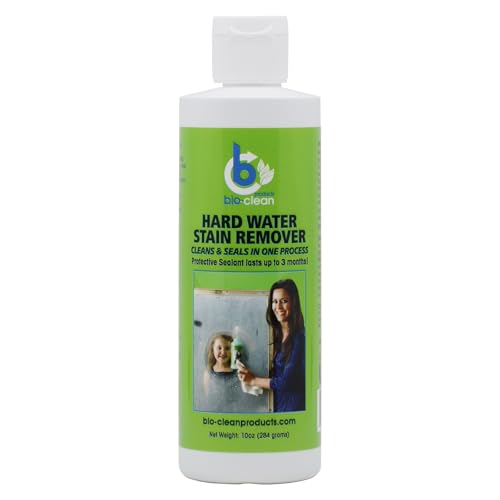
Bio Clean WSR10 Hard Water Stain Remover, 10 oz stands out for its range of application methods: the 10-ounce jar can be used with a dry cloth, sponge, soft-bristled brush or oscillating buffer. The maker says its non-toxic, biodegradable formula cleans and seals in one process, with the seal lasting as long as 3 months. The surface range also includes vinyl, stainless steel, Corian and boats. The jar is smaller than the 20.3-ounce aerosol, so it may be a less suitable choice when container size is the deciding factor.
Bottom line: Pick this when you want several ways to apply the cleaner and a broad named surface range.
Bio Clean Eco Friendly Hard Water Stain Remover, 40 oz
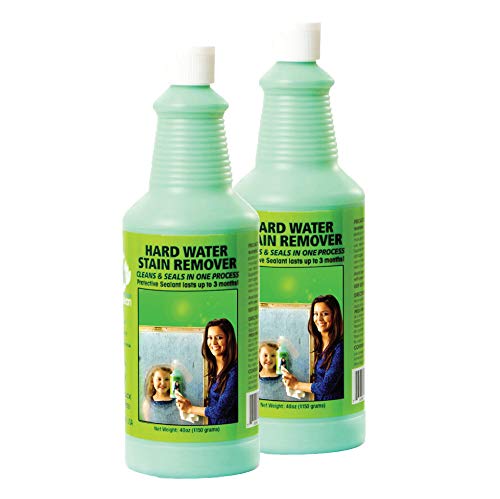
Bio Clean Eco Friendly Hard Water Stain Remover, 40 oz differs from the other options by coming in a pack of two 40-ounce units. Its surface recommendations include windows, tile, showers, stone and doors, and the specifications identify it as biodegradable and made in the USA. This package may suit buyers who specifically want two larger containers rather than a single aerosol or jar.
Bottom line: Choose this if two 40-ounce units and the named surface range match your needs.
CRL Bio-Clean Water Stain Remover, 16 oz

CRL Bio-Clean Water Stain Remover, 16 oz is the bottle option, with a 16-fluid-ounce size and a range that includes glass, tile, fiberglass, chrome, porcelain and stainless steel. The maker says it removes water and mineral stains, rust and soap scum, and describes its target as stage one corrosion. That corrosion qualification matters: buyers addressing more extensive damage should not assume this product is intended for it.
Bottom line: Pick this for a bottle-format cleaner with glass, chrome and porcelain among its named surfaces.
How to choose a hard water stain remover
Start with the surface and the deposit, then compare the application method. Hard water residue is primarily mineral scale from dissolved calcium and magnesium; soap scum and rust can occur alongside it but may need different cleaning chemistry. Among these Bio Clean options, the named surface ranges differ, and the container formats include an aerosol, jar and bottle. For a broad task, select a product whose surface list includes every material you plan to clean. If you cannot confirm that fit, test a small hidden spot and stop if the finish changes.
Stone needs special care: acids can etch marble, limestone and travertine, while the fields here do not establish whether any formula is safe for natural stone. Do not assume that a product recommended for tile is also safe for every stone type. Check the label for your precise surface before applying.
Match the cleaner to the surface
Use the product’s named surface range as a starting filter, not as permission to use it on every finish. Glass, chrome, porcelain, fiberglass and stainless steel are distinct materials; coatings, grout sealers and polished finishes can change how a cleaner affects them. Bio Clean Hard Water Stain Remover, 20.3 oz is listed for windows, tile, grout and glass, while Bio Clean WSR10 Hard Water Stain Remover, 10 oz names a wider group including shower doors, chrome, porcelain and Corian. Bio Clean Eco Friendly Hard Water Stain Remover, 40 oz includes stone in its recommendations, but that alone does not establish compatibility with each natural stone.
Before a full application, test a hidden area and let it dry so you can see any dulling or discoloration. Never mix cleaners: combining products can create hazardous fumes or reactions. In particular, keep bleach separate from acids and other cleaning products.
Choose a format and application method
Container type changes how a cleaner is applied and stored, but it does not by itself establish coverage or cleaning strength. Bio Clean Hard Water Stain Remover, 20.3 oz is an aerosol, Bio Clean WSR10 Hard Water Stain Remover, 10 oz is a jar, and CRL Bio-Clean Water Stain Remover, 16 oz is a bottle; the methods for Bio Clean WSR10 Hard Water Stain Remover, 10 oz include a dry cloth, sponge, soft-bristled brush or oscillating buffer. For manual work, a soft cloth or brush is generally easier to control around grout lines and edges than a powered buffer. Follow the container directions for application and removal, and avoid using an abrasive pad unless the surface maker allows it.
Work in a ventilated area and wear protective gloves when handling household cleaners. Keep containers away from children and pets, and avoid spraying near eyes or inhaling mist. Never transfer products into unmarked containers.
Frequently Asked Questions
What causes hard water stains on glass?
Hard water stains form when water evaporates and leaves dissolved minerals, especially calcium and magnesium, on the glass. Repeated drying can build a visible deposit, so wiping shower glass dry after use can reduce residue buildup.
Can hard water remover damage natural stone?
Yes, acidic cleaners can etch calcium-based stone such as marble, limestone and travertine. Confirm that a cleaner is approved for the exact stone and test a hidden spot before treating a visible area.
How should I test a cleaner on a surface?
Apply a small amount to an inconspicuous area and use the container directions, then rinse or remove it as directed and let the spot dry. Check for dulling, discoloration or other finish changes before treating a larger area.
Can I combine hard water remover with bleach?
No; never mix bleach with other cleaners. Bleach combined with acids can release chlorine gas, so use one product at a time and rinse the surface as directed before using another cleaner.
What is the difference between mineral scale and soap scum?
Mineral scale is residue left by dissolved water minerals, while soap scum forms when soap compounds react with minerals in hard water. A deposit can contain both, so match the cleaner to the surface and follow its directions for the specific residue.