
Bio Ionic 10X Flat Iron: Models Compared by Features

The Bio Ionic 10X Styling Iron with 1-inch sonic vibrating plates is the closest fit for shoppers seeking a Bio Ionic 10X flat iron, with its 60-second warm-up claim and straight-or-wave styling. Choose a different model if you want digital temperature controls or wider plates for longer hair.
A flat iron uses heated plates to smooth sections of hair; plate width and temperature control affect how easily it fits your hair length and texture.
We earn a commission if you buy through links on this page. As an Amazon Associate I earn from qualifying purchases. Products are compared on manufacturer specifications, not hands-on testing.
- Best overall: Bio Ionic 10X Styling Iron, Black – Its 1-inch sonic vibrating plates and 60-second warm-up claim match the requested Bio Ionic 10X styling iron.
- Best for alternate color: Bio Ionic 10X Styling Iron, Soft Amethyst – It has the same 1-inch sonic vibrating plate size in a Soft Amethyst finish.
- Best for temperature control: Bio Ionic OnePass Styling Flat Iron, 1-Inch – Its product name specifies digital temperature control up to 450°F.
- Best for wider sections: BaBylissPRO Ultra Sleek, 1.5-Inch – The 1.5-inch plates cover more hair per section than the 1-inch options.
| Product | Best for | Plate width | Heat control | Plate feature | Shop |
|---|---|---|---|---|---|
| Bio Ionic 10X Styling Iron, Black | Everyday 10X styling | 1 in | — | Sonic vibrating | Check Price on Amazon |
| Bio Ionic 10X Styling Iron, Soft Amethyst | Alternate finish | 1 in | — | Sonic vibrating | Check Price on Amazon |
| Bio Ionic OnePass Styling Flat Iron, 1-Inch | Digital heat control | 1 in | Digital to 450°F | Silicone speed strips | Check Price on Amazon |
| BaBylissPRO Ultra Sleek, 1.5-Inch | Wider hair sections | 1.5 in | 5 settings to 450°F | Nano titanium floating | Check Price on Amazon |
Bio Ionic 10X Flat Irons and Alternatives
Compare plate size and styling features to choose an iron that matches your routine.
Bio Ionic 10X Styling Iron, Black

This black 10X model pairs 1-inch sonic vibrating plates with a 60-second warm-up claim, distinguishing it from the OnePass and wider-plate alternatives. Bio Ionic says its Ion-Generating Mineral Complex helps safeguard moisture, and the product is presented for straight styles and soft waves. The 1-inch width suits detailed work and shorter sections, while its dimensions are 15.75 inches long and 1.9 pounds.
Bottom line: Choose this if you want the black 10X model and its sonic vibrating plates.
Bio Ionic 10X Styling Iron, Soft Amethyst

The Soft Amethyst 10X is the color alternative to the black 10X, with 1-inch sonic vibrating plates and a rounded barrel for straightening or creating waves. Bio Ionic says its Volcanic MX and Moisturizing Heat Technology lock in moisture and support a high-gloss finish; the feature description also claims styling in less than 10 minutes. Rounded plate tips are intended to smooth short hairs around the hairline.
Bottom line: Pick this for the 10X features in a Soft Amethyst color.
Bio Ionic OnePass Styling Flat Iron, 1-Inch
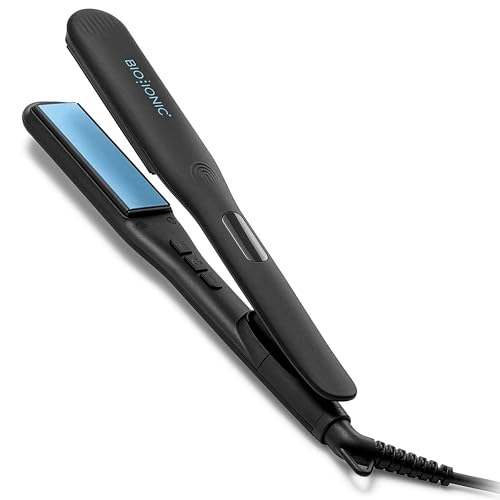
The OnePass is a related Bio Ionic iron, not a 10X model; its key distinction is digital temperature control up to 450°F. The product name also specifies 1-inch plates, silicone speed strips and auto shut-off, while Bio Ionic says its Moisturizing Heat Technology is designed to help retain moisture during styling. Those features may suit shoppers who want a selectable upper temperature and a narrow plate width. Its silicone strips are a different plate feature from the sonic vibration in the 10X models, and shoppers specifically seeking the 10X name should choose one of those instead.
Bottom line: Choose it if digital heat control matters more than the 10X model name.
BaBylissPRO Ultra Sleek, 1.5-Inch

The BaBylissPRO Ultra Sleek is the widest option here, with 1.5-inch nano-titanium floating plates rather than the 1-inch plates on the Bio Ionic models. The maker says the iron heats quickly and is suited to medium-to-long hair, including thicker or coarser textures; its ceramic heater and five digital settings reach 450°F. A 9-foot cord is also specified. The wider plates can cover more hair in a pass, but they offer less precision around short sections and the hairline than a 1-inch iron.
Bottom line: Pick this for wider plates and multiple digital heat settings.
How to choose a flat iron plate width
Choose plate width by hair length and the size of the sections you want to style: 1-inch plates offer more control around short layers, while 1.5-inch plates cover broader sections. Wider plates can reduce the number of sections on long hair, but they are less maneuverable near the hairline. Plate width does not set a safe temperature; heat control is a separate choice. For a mixed routine that includes straightening and shaping waves, a 1-inch rounded-barrel iron is a useful starting point.
Use this fit guide to match width to the job rather than assuming the widest iron is best.
| Need | Useful width | Trade-off |
|---|---|---|
| Short layers or hairline work | 1 inch | More maneuverable |
| Long hair, broad sections | 1.5 inches | Less precise near roots |
| Straight styles and waves | 1 inch, rounded barrel | Smaller sections take longer |
Flat iron temperature and heat exposure
Use the lowest temperature that straightens a dry section in one slow pass; many styling guides suggest starting around 300°F for fine hair and increasing cautiously for coarser textures. Fine, bleached, or chemically treated hair generally needs less heat than coarse, untreated hair, and repeated passes add exposure regardless of the setting. A maximum of 450°F is not a recommended everyday setting. Choose digital control when you want to select a specific temperature rather than rely on an iron with no stated adjustment range.
Let hair dry completely before using a flat iron. Trapped water can rapidly turn to steam under hot plates, increasing the risk of hair damage and burns.
How to section hair for even straightening
Work with dry hair in sections roughly 1 inch wide and no thicker than the plate depth, so the plates can contact the section evenly. Very thick hair often needs thinner sections; pulling a large bundle through at once can leave inner strands under-styled and encourage repeat passes. Comb each section smooth before clamping, then glide continuously from near the roots toward the ends instead of pausing on one spot. Smaller sections take more time, but they help avoid compensating with excessive heat.
Keep the hot plates away from the scalp, ears, and hands, and set the iron on a heat-resistant surface between passes. Unplug the tool after styling and let it cool fully before storage.
Using a flat iron to make waves
A rounded-barrel iron with 1-inch plates can straighten hair and shape waves because its curved outside lets the hair bend as the tool turns. Clamp a small, dry section, rotate the iron about a half turn, and glide steadily toward the ends; a slower glide makes a tighter bend than a quicker one. A broad 1.5-inch plate can make looser bends but is harder to maneuver on short layers.
Practice the rotation with the iron switched off before styling, and avoid holding hot plates in one place. Let each wave cool before brushing so the shape has time to set.
Frequently Asked Questions
What temperature should I use on a flat iron?
Start near 250°F to 300°F for fine or fragile hair, and use the lowest effective setting. Coarser hair may need a higher setting, but repeated passes and maximum heat increase exposure to damaging heat.
Can a 1-inch flat iron make waves?
Yes, a rounded-barrel 1-inch iron can create waves as well as straight styles. Work with smaller sections and rotate the iron as you glide; avoid holding it in one place.
How wide should flat iron sections be?
Sections about 1 inch wide are a useful starting point for even contact. Thick hair may need thinner sections, since oversized sections can leave inner strands unevenly styled.
Should I use a flat iron on wet hair?
No; dry hair fully before using a standard flat iron. Water trapped in hair can heat rapidly under the plates, increasing the risk of breakage or burns.