
Blackout Cloth Projector Screen: 5 Options Compared

For a DIY blackout cloth projector screen, choose Polyester DIY Screen Fabric, 69 × 123 in. for its black backing and fabric sized for a screen up to 150 inches. If you need a ready-to-hang, portable screen instead of material to stretch across a frame, compare the foldable options; for a DIY screen rated for ambient light, consider Gray Ambient-Light DIY Fabric, 69 × 118 in..
We earn a commission if you buy through links on this page. As an Amazon Associate I earn from qualifying purchases. Products are compared on manufacturer specifications, not hands-on testing.
- Best overall: Polyester DIY Screen Fabric, 69 × 123 in. – Black-backed polyester fabric supports a DIY fixed-frame screen up to 150 inches.
- Best for ambient light: Gray Ambient-Light DIY Fabric, 69 × 118 in. – Gray, black-backed polymer fabric is designed for front projection and ambient-light conditions.
- Best for portability: Mdbebbron 120-Inch Foldable Screen – The 120-inch polyester screen folds for storage and travel.
| Product | Best for | Screen size | Backing | Material | Shop |
|---|---|---|---|---|---|
| Polyester DIY Screen Fabric, 69 × 123 in. | DIY fixed frames | Up to 150 in. | Black | Polyester | Check Price on Amazon |
| Mdbebbron 120-Inch Foldable Screen | Portable setups | 120 in. | — | Polyester | Check Price on Amazon |
| 100-Inch Foldable Polyester Screen | Dark-room viewing | 100 in. | — | Polyester | Check Price on Amazon |
| IOLIEO 120-Inch Black-Backed Screen | Foldable black backing | 120 in. | Black | Polyester | Check Price on Amazon |
| Gray Ambient-Light DIY Fabric, 69 × 118 in. | Ambient-light DIY | Up to 130 in. | Black | EPPE polymer | Check Price on Amazon |
Blackout Cloth Projector Screen Options
Compare DIY fabric and foldable screens by backing, material and intended setup.
Polyester DIY Screen Fabric, 69 × 123 in.

For a large DIY fixed frame, Polyester DIY Screen Fabric, 69 × 123 in. is a silver-gray polyester fabric with a black backing and a maximum screen size of 150 inches. The maker says the backing blocks more than 90% of projected light from passing through, and that the material is sound-transparent with a viewing angle greater than 160 degrees. Stretch and secure the fabric on all four sides; folds from packaging are expected to fade as it is stretched. This is front-projection material, not a rear-projection screen, and it requires a frame and tensioning rather than offering a ready-to-hang portable format.
Bottom line: Choose it for a fixed-frame DIY build when black backing matters.
Mdbebbron 120-Inch Foldable Screen

For a portable setup rather than a DIY frame, Mdbebbron 120-Inch Foldable Screen is a white, foldable 120-inch screen made from natural polyester. The maker says it can be folded for storage and attached with hooks, ropes, a bracket, nails or double-sided tape, giving it more setup flexibility than the frame-only fabric options. It supports double-sided projection, a useful distinction if the screen may be viewed from either side. The main tradeoff is that this is a finished screen rather than a dedicated black-backed DIY material, so choose it for portability and mounting flexibility, not as a substitute for opaque backing.
Bottom line: Pick it for a foldable screen with multiple mounting options.
100-Inch Foldable Polyester Screen
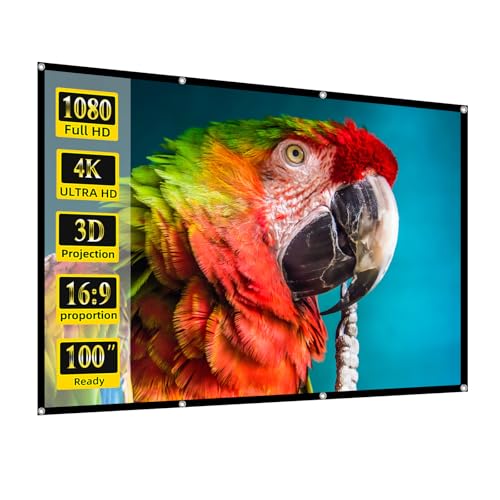
For a smaller portable setup, 100-Inch Foldable Polyester Screen is a foldable 100-inch screen made from high-density polyester. Its maker specifically recommends a completely dark environment or placement against a solid, opaque surface for the best image, making room lighting an important part of the decision. The lightweight format is intended for temporary indoor and outdoor use and can fold into a backpack. Unlike black-backed DIY fabric, it is not positioned as a thick, heavy-duty fixed-frame material; buyers seeking a permanent frame installation or a light-blocking backing should choose another type.
Bottom line: Choose it for casual portable viewing where you can control ambient light.
IOLIEO 120-Inch Black-Backed Screen

For a ready-made foldable screen with black backing, IOLIEO 120-Inch Black-Backed Screen combines a 120-inch diagonal format with a white polyester screen surface. The maker says the backing reduces light bleed, while the thicker material and tailored accessories are intended to keep the borders straighter. It can be machine washed and mounted on a wall or frame, or tied to trees or tents with accessories. This is a finished screen for flexible movie setups, not raw cloth for building a custom-sized fixed frame; its 120-inch format also limits sizing choices compared with larger DIY fabric.
Bottom line: Pick it for a foldable 120-inch screen with black backing.
Gray Ambient-Light DIY Fabric, 69 × 118 in.

For a gray DIY surface intended to retain contrast in some ambient light, Gray Ambient-Light DIY Fabric, 69 × 118 in. uses multilayer EPPE polymer fabric with a black backing and a maximum size of 130 inches. The maker gives it a gain of 0.85 and recommends against pairing the gray material with a projector under 2,000 ANSI lumens. Its matte surface is described as diffuse reflective, with a viewing angle above 160 degrees. This fabric offers a smaller maximum screen size than the 150-inch option and is a front-projection DIY material; verify projector brightness before choosing it.
Bottom line: Choose it for a gray DIY screen when ambient light is a concern.
How to Choose Blackout Cloth Projector Screen Material
Choose based on whether you need raw material for a fixed frame or a finished portable screen. DIY fabric must be stretched evenly on all four sides; slack or uneven tension can leave ripples, so plan a frame that fits the fabric dimensions rather than assuming a diagonal label is the cloth width. A black backing is useful when projected light passing through the screen could illuminate the wall behind it. Gray surfaces can affect perceived brightness, so match them to projector output: the gray DIY option here advises against projectors below 2,000 ANSI lumens. For a bright room, reduce incoming light with curtains or blinds as well; screen material alone cannot darken the room.
Screen Size and 16:9 Fit
A 16:9 screen’s width is about 0.872 times its diagonal, and its height is about 0.49 times its diagonal. For example, a 120-inch diagonal image is roughly 105 inches wide and 59 inches high, before allowing for borders or mounting space. Measure the usable wall or frame area before choosing fabric, and leave room around the image for tensioning and attachment. The 69 × 123-inch cloth and the 69 × 118-inch cloth are fabric dimensions, not the width and height of a 16:9 projected image. With less than about 105 inches of available width, choose a smaller diagonal than 120 inches or plan a narrower image.
Black Backing Compared With Foldable Screens
Black-backed DIY fabric and foldable screens solve different setup problems. DIY material is cut or stretched to a frame and lets the buyer choose the finished screen size within the fabric’s limits; a foldable screen arrives as a portable viewing surface and needs a suitable way to hang or support it. Black backing reduces light passing through, but it does not eliminate room light reflecting off the front surface. Use a darkened room when image contrast matters, especially with a thin portable screen.
| Setup need | Better match | Tradeoff |
|---|---|---|
| Custom fixed frame | Black-backed DIY cloth | Requires frame and even tension |
| Portable use | Foldable polyester screen | Needs secure hanging or support |
| Gray DIY image surface | Ambient-light fabric | Check projector brightness |
Installing and Caring for Projection Fabric
Stretch screen cloth evenly across all four sides and keep the fabric square before tightening it fully; uneven pulls can create diagonal wrinkles. Foldable screens need attachment points strong enough to support their full span, and outdoor setups should be taken down if wind makes the screen flap or pull loose. Some fabrics arrive folded, so allow time for creases to relax under tension rather than relying on a quick setup to produce a perfectly smooth surface. Follow the care method appropriate to the specific material: the IOLIEO screen is described as machine washable, but that claim does not apply to every fabric here. Do not assume DIY projection material can be washed or exposed to weather without checking its material guidance.
Frequently Asked Questions
How wide is a 120-inch 16:9 projector screen?
A 120-inch diagonal 16:9 image is about 105 inches wide and 59 inches high. Add frame borders and mounting clearance to those image dimensions when measuring a wall.
Does black backing make a projector screen blackout?
Black backing limits projected light passing through the screen, but it does not prevent room light from reflecting off the front. Darken the room with curtains or blinds when ambient light washes out the image.
How much projector brightness does gray screen fabric need?
The gray DIY fabric here is not recommended for projectors below 2,000 ANSI lumens. Ambient light, screen size and projector placement also affect perceived brightness, so reduce room light when possible.
How do you remove creases from folded screen fabric?
Stretch DIY fabric evenly across all four sides; the maker of the silver-gray cloth says folds gradually fade after stretching. For a foldable screen, avoid assuming the same approach applies unless its care guidance permits it.
Can a front-projection screen be used for rear projection?
Not every front-projection material works from behind: the silver-gray DIY fabric here is specifically unsuitable for rear projection. Confirm rear-projection compatibility before building a setup that places the projector behind the screen.