
Blue Light Filter for TV: 50- and 55-Inch Fits

For a 55-inch TV, VizoBlueX 55-Inch TV Filter is the direct match, with a filtering range of 380–495 nm and a UV-protection claim. Choose 50-Inch Anti-Blue Light TV Protector for a 50-inch screen; VizoBlueX 23–24-Inch Monitor Filter is a monitor filter rather than a TV-size shield, so it suits only a smaller display that matches its measurements.
A TV screen protector is a panel placed over the display, so measure the visible screen and compare its width and height with the protector before ordering.
We earn a commission if you buy through links on this page. As an Amazon Associate I earn from qualifying purchases. Products are compared on manufacturer specifications, not hands-on testing.
- Best overall: VizoBlueX 55-Inch TV Filter – The 55-inch size is the largest TV-specific option, and its blue light range is 380–495 nm.
- Best for 50-inch TVs: 50-Inch Anti-Blue Light TV Protector – Its protector dimensions are 43.11 by 24.25 inches.
- Best for 23–24-inch monitors: VizoBlueX 23–24-Inch Monitor Filter – The 21.5-by-13-inch panel is sized for smaller 16:9 displays rather than a full-size TV.
| Product | Best for | Screen size | Protector dimensions | Filter claim | Shop |
|---|---|---|---|---|---|
| VizoBlueX 55-Inch TV Filter | 55-inch TVs | 55 in | 48.4 × 28.9 in | 380–495 nm; 100% UV | Check Price on Amazon |
| 50-Inch Anti-Blue Light TV Protector | 50-inch TVs | 50 in | 43.11 × 24.25 in | Up to 80% blue light | Check Price on Amazon |
| VizoBlueX 23–24-Inch Monitor Filter | Small displays | 23–24 in | 21.5 × 13 in | UV and HEV blocking | Check Price on Amazon |
Blue Light Filters for TV
Compare the display size and panel measurements before choosing a screen protector.
VizoBlueX 55-Inch TV Filter

For a large TV, this 55-inch VizoBlueX shield combines a blue light filter with a physical screen-protection panel. The maker says it blocks blue light in the 380–495 nm range and provides 100% UV protection; its panel dimensions are 48.4 by 28.9 inches. The product is also described as heavy-duty protection against scratches and fingerprints, which may matter in a household where the screen could be touched. Its main limitation is size: those dimensions are specific to this model, so compare them with your visible panel rather than relying on the TV’s diagonal size alone.
Bottom line: Pick this if your 55-inch TV’s visible panel matches the shield’s dimensions.
50-Inch Anti-Blue Light TV Protector
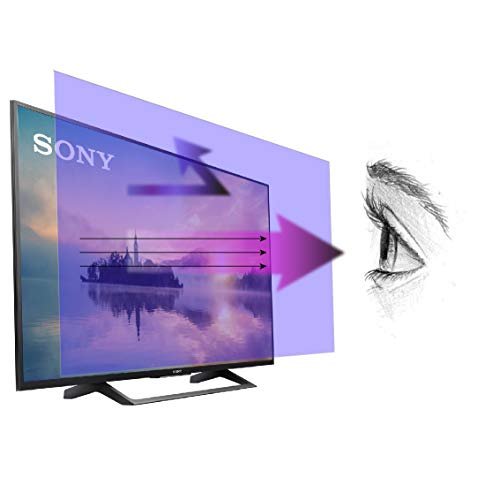
This 50-inch TV protector gives a clear size alternative to the 55-inch shield, with dimensions of 43.11 by 24.25 inches. The maker says its filter blocks up to 80% of blue light. That percentage is a maximum claim, not a description of the exact filtering at every wavelength, so it is not directly comparable to a wavelength range alone. This option suits buyers whose visible TV panel matches the width and height. The specifications do not give a separate UV-protection claim, so choose it for the blue light filtering and fit rather than assuming UV coverage.
Bottom line: Choose this for a 50-inch TV when the panel measurements align.
VizoBlueX 23–24-Inch Monitor Filter

Unlike the TV-sized panels, this VizoBlueX filter is made for 23- to 24-inch monitors, with a 21.5-by-13-inch panel. The maker says its multilayer filter eliminates the hazardous UV spectrum and blocks HEV light; the product is presented as a screen filter rather than an anti-glare or privacy panel. It may suit a small 16:9 display, including the monitor types named by the maker, when the visible screen size matches. Its limitation for TV shoppers is straightforward: a 23- to 24-inch panel cannot cover a 50- or 55-inch TV.
Bottom line: Pick this only for a smaller monitor-sized display that fits its panel.
How to choose a blue light filter for TV
Match the protector to the visible screen width and height, not just the TV’s diagonal label. TV size is conventionally measured diagonally across the viewable display, while bezels and chassis are excluded; a protector may have its own width and height that do not match the TV’s nominal size exactly. Measure the display area and compare both dimensions with the panel. Aspect ratio matters too: most modern TVs use 16:9, but a screen protector’s edges and mounting style can affect fit. For these products, pick the 50-inch or 55-inch TV model only after checking its panel dimensions against your measured display. If the width or height differs, do not assume the panel will fit because the diagonal number matches.
What blue light filter claims mean
Blue light specifications are meaningful only when you know what they measure. A wavelength range such as 380–495 nm identifies the part of the spectrum a maker says a filter addresses, while a percentage such as “up to 80%” is a maximum blocking claim that does not by itself show performance at each wavelength. UV protection is a separate claim from blue light filtering. Compare products only on the same kind of claim, and do not treat a UV statement as proof of a particular blue light reduction. A screen filter changes the light passing through the display; it is not a medical treatment and should not be selected on the promise of preventing or curing eye conditions.
TV protector sizes and monitor filters
A TV-sized screen panel and a monitor filter serve different display dimensions, even when both are marketed for blue light filtering. The 50- and 55-inch options here are described as TV shields, while the 23–24-inch VizoBlueX panel is explicitly sized for a monitor. The following comparison makes the physical-size distinction easier to apply; match the actual viewable screen before choosing.
| Display class | Diagonal size | Panel dimensions | Best fit check |
|---|---|---|---|
| TV protector | 50 in | 43.11 × 24.25 in | Visible panel width and height |
| TV shield | 55 in | 48.4 × 28.9 in | Visible panel width and height |
| Monitor filter | 23–24 in | 21.5 × 13 in | Monitor panel, not TV chassis |
How to measure your TV before ordering
Measure the visible screen from edge to edge in both directions, excluding the bezel, then compare those figures with the protector’s width and height. A diagonal measurement alone can hide a mismatch: two displays with similar diagonal sizes may differ in aspect ratio, and a cover with the right diagonal can still be too wide or too tall. For a 16:9 display, the diagonal follows from its width and height, but curved screens, frame designs, and mounting arrangements can change whether a flat panel sits correctly. Before ordering, confirm the TV’s panel dimensions against the protector dimensions; if either side is larger than the usable screen area, select a different size.
Frequently Asked Questions
How do I measure a TV screen for a filter?
Measure the visible display diagonally for its nominal size, then measure its width and height edge to edge without the bezel. Compare those width and height figures with the protector panel because diagonal size alone cannot confirm a fit.
Does a blue light filter also block UV light?
Not necessarily; blue light filtering and UV protection are separate specifications. Look for an explicit UV claim if UV coverage matters, and do not infer it from a blue light percentage.
Can I use a monitor filter on a television?
Only if the television’s visible screen matches the panel dimensions and size range. A 21.5-by-13-inch panel is monitor-sized and cannot cover a full-size 50- or 55-inch TV.
Will a TV screen protector fit a curved screen?
A flat panel may not sit flush on a curved display, even when the diagonal size matches. Check the screen shape and compare the protector’s full width and height with the usable display before choosing.