
Brace for Fractured Ribs: 3 Chest Wraps Compared

For a fractured rib, BraceAbility Rib Brace, Female offers the most fit options, with three styles intended for different body shapes. A chest wrap is a compression support, not a way to stabilize a fracture; ask a healthcare professional whether one is appropriate, and choose a different approach if wearing it makes breathing harder.
We earn a commission if you buy through links on this page. As an Amazon Associate I earn from qualifying purchases. Products are compared on manufacturer specifications, not hands-on testing.
- Best overall: BraceAbility Rib Brace, Female – Three styles include flat-front, contoured and plus-size options.
- Best for adjustable fit: Solmyr Rib and Chest Support, XL – The XL wrap uses an adjustable hook-and-loop strap and comes in five sizes.
- Best for a stated chest range: Pauline Rib Brace, Women’s M – The women’s wrap is described as fitting a 30–45-inch chest.
| Product | Best for | Fit options | Chest fit | Weight | Shop |
|---|---|---|---|---|---|
| BraceAbility Rib Brace, Female | Style options | 3 styles | — | 0.2 lb | Check Price on Amazon |
| Solmyr Rib and Chest Support, XL | Adjustable fit | 5 sizes | Measure widest area | 0.49 lb | Check Price on Amazon |
| Pauline Rib Brace, Women’s M | Defined chest range | M | 30–45 in | 0.15 lb | Check Price on Amazon |
Braces for fractured ribs
Compare the fit approach and construction of these chest wraps, and ask a clinician before using compression for a rib injury.
BraceAbility Rib Brace, Female

Three style options distinguish this wrap: a flat-front design for men, a contoured women’s design and a plus-size option. The white female version has a universal size label, and the product measures 12 inches long by 9 inches wide. The maker says the wrap is designed for several rib and chest-wall injuries, including fractures and bruising. This variety may help shoppers whose shape or fit needs differ from a single-cut belt. The limitation is that the universal label does not give a chest measurement here, so check the maker’s size chart before choosing a style.
Bottom line: Choose this if the three style options better match your body shape.
Solmyr Rib and Chest Support, XL

The Solmyr wrap focuses on adjustable closure: its elastic fabric uses a hook-and-loop strap intended to secure the brace. It comes in five sizes, and the maker advises measuring around the widest part where the belt will sit with a flexible tape. That measuring approach is useful when selecting the XL version, because size labels alone do not establish the fit. The product is black and weighs about 0.49 pound. Breathable fabric is a feature, but a snug wrap can still be unsuitable if it restricts breathing; consult a clinician before using compression on an injured rib.
Bottom line: Choose this if adjustable closure and five size choices are priorities.
Pauline Rib Brace, Women’s M
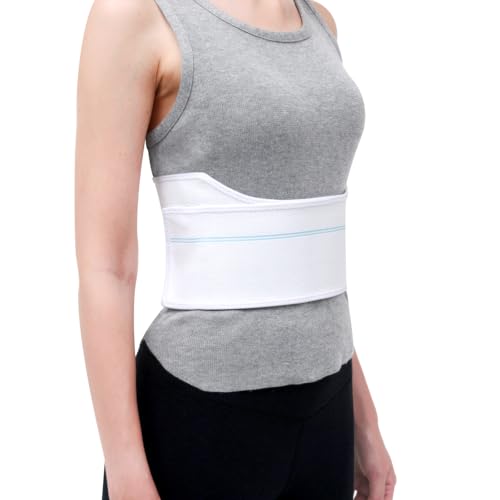
A 30–45-inch chest range is the clearest fit detail for this women’s medium wrap. The white binder uses soft elastic material with a hook-receptive surface, allowing the wearer to adjust compression. At about 0.15 pound, it is the lightest of these three by the weights. Its broad stated range may help someone whose measurement falls within it, but chest shape and placement can affect comfort. The maker describes gentle support for chest muscles and ribs; that should not be taken as a promise of faster healing or a substitute for medical advice about a fracture.
Bottom line: Choose this if your chest measurement falls within its range.
How to choose a rib brace
Choose by fit and breathing comfort, not by the number of injury types named for a wrap. Measure the chest at the intended wearing point with a flexible tape; for Solmyr Rib and Chest Support, XL, the maker specifically directs users to measure the widest area where the belt will sit. A wrap should not make a full breath difficult, and you should ask a clinician whether compression is appropriate for your injury. Rib fractures can make deep breathing painful, so restricting chest movement is a concern rather than a useful measure of support.
The practical decision rule is straightforward: if a wrap prevents a comfortable deep breath, do not tighten or continue wearing it without medical guidance. Check a size chart against your actual measurement rather than assuming that universal or XL sizing will fit. Select a style based on body shape and stated range, then reassess comfort while seated and standing.
Rib brace fit and compression
A rib wrap should sit securely without constricting the chest. Pauline Rib Brace, Women’s M gives a 30–45-inch chest range for its medium size, while Solmyr Rib and Chest Support, XL directs shoppers to measure the intended placement; BraceAbility Rib Brace, Female offers three styles but the female version is labeled universal. These approaches are not interchangeable, so use the relevant maker’s sizing guidance rather than comparing size names alone.
Place a flexible tape around the body where the wrap is intended to sit, keeping it level and snug without pulling it tight. A chest measurement can change with posture and placement, so repeat it if the first reading is uncertain. Stop and seek clinical guidance if wearing a wrap causes breathing difficulty, numbness, worsening pain or skin irritation. A brace cannot confirm that a rib is fractured or determine whether an injury needs urgent assessment.
Rib wraps compared by fit approach
The main difference among these wraps is how they communicate fit: style choices, a size-count and measurement instruction, or a specific chest range. Use the information that matches how you prefer to select clothing or support garments, but do not treat a fit range as a clinical recommendation to compress an injury.
The table summarizes the decision points supplied for these three wraps. If your measurement is outside a range, or a universal label does not make the fit clear, confirm sizing with the maker before using a wrap. Comfort during normal breathing is more important than a tight fit.
| Fit approach | Useful when |
|---|---|
| Multiple styles | Body shape determines the preferred cut |
| Measure at placement | You want to select among multiple sizes |
| Stated chest range | Your measurement can be checked against a range |
Breathing and rib injury safety
Rib injuries can make deep breathing and coughing painful, but limiting chest movement can interfere with those actions. Do not bind the chest tightly or use a brace to hold a fracture in place; seek advice from a healthcare professional about pain control and whether a support wrap is suitable. Trouble breathing, blue lips, faintness, or rapidly worsening chest pain calls for urgent medical care.
Keep any wrap loose enough for comfortable breathing, and remove it if symptoms worsen. A brace does not diagnose a fracture, rule out a lung injury, or replace a medical assessment after significant chest trauma. Ask a clinician for specific instructions if you have a lung condition, multiple injuries or concerns about coughing and breathing.
Frequently Asked Questions
Can a rib brace make breathing harder?
Yes, a wrap that is too tight can restrict chest expansion and make breathing less comfortable. Remove or loosen it and seek clinical advice if you cannot take a comfortable deep breath.
Should I wrap broken ribs tightly?
No; tight chest binding can limit the deep breathing needed after a rib injury. Ask a healthcare professional about appropriate support and pain management instead of using compression to immobilize the chest.
How should I measure for a rib belt?
Use a flexible tape around the intended wearing point, level with the floor and snug without pulling tight. For Solmyr Rib and Chest Support, XL, the maker specifies measuring around the widest area where the belt will sit; use each wrap’s own chart or stated range.
When does a rib injury need urgent care?
Breathing difficulty after a chest injury needs urgent medical evaluation. Seek urgent care as well for faintness, blue lips or rapidly worsening chest pain.
Can a chest wrap heal a fractured rib?
A chest wrap does not repair or stabilize a fracture. Rib injuries need clinical assessment, and the right support depends on the injury and whether compression allows comfortable breathing.