
Brass Brushes for Cleaning: 3 Styles Compared

ALLWAY BB2 Wide Brass Stripper Brush suits shoppers who want brass brushes for cleaning larger areas because its wide head covers more surface per pass. Choose a smaller brush instead for tight spots or repeated detail work; brass wire is less aggressive than steel, but can still mar soft finishes.
We earn a commission if you buy through links on this page. As an Amazon Associate I earn from qualifying purchases. Products are compared on manufacturer specifications, not hands-on testing.
- Best overall: ALLWAY BB2 Wide Brass Stripper Brush – Its wide brass bristles are suited to broader scrubbing, and the handle ends in a plastic scraper.
- Best for tight spaces: Amazon Basics Brass Mini Wire Brushes – The 1/2-inch brush head and offset soft-grip handle are made for access and control.
- Best for multipacks: SUJAYU 12-Piece Brass Wire Brush Set – The set includes 12 brass brushes, each about 6.7 inches long.
| Product | Best for | Pack count | Brush width | Handle feature | Shop |
|---|---|---|---|---|---|
| ALLWAY BB2 Wide Brass Stripper Brush | Broad scrubbing | 1 | — | Soft grip; scraper end | Check Price on Amazon |
| Amazon Basics Brass Mini Wire Brushes | Tight access | 3 | 1/2 in | Offset soft grip | Check Price on Amazon |
| SUJAYU 12-Piece Brass Wire Brush Set | Multiple small brushes | 12 | 0.5 in | Curved-grain grip | Check Price on Amazon |
Brass Brushes for Cleaning
Choose by how much surface you need to cover, how narrow the work area is, and whether a multipack is useful.
ALLWAY BB2 Wide Brass Stripper Brush

ALLWAY BB2 Wide Brass Stripper Brush stands apart with a wide brass-bristle head and a plastic scraper on the handle end. The maker says its crimped bristles help provide even coverage and are less aggressive than steel wire; it is intended for burnishing metal and removing paint, rust, and scale. The soft-grip handle is designed for scrubbing with less hand fatigue. This shape suits broader work more than narrow crevices, so choose a smaller brush when access is the main concern. Brass is softer than steel, but test an inconspicuous area before brushing a delicate finish.
Bottom line: Choose this for wider metal-cleaning passes and a built-in scraper.
Amazon Basics Brass Mini Wire Brushes
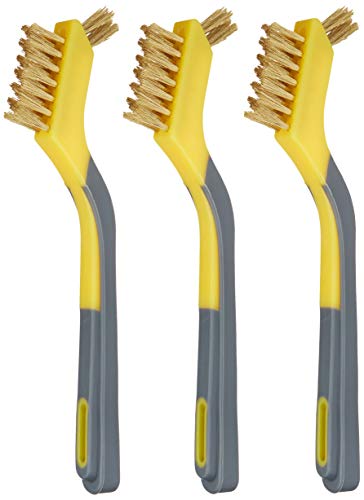
Amazon Basics Brass Mini Wire Brushes is the compact choice here, with a 1/2-inch brass brush head and an offset handle for control in tight spaces. The three-pack uses brass wire for stubborn residue, paint, and rust; its soft-grip handle is made from polypropylene and TPR, with solvent- and chemical-resistant construction. The offset shape also keeps knuckles farther from the work surface. A small head covers less area per pass than a wide brush, so it is better suited to localized cleanup than large surfaces. The maker backs the set with a one-year limited warranty.
Bottom line: Pick this for narrow work areas where a small head and offset grip help.
SUJAYU 12-Piece Brass Wire Brush Set
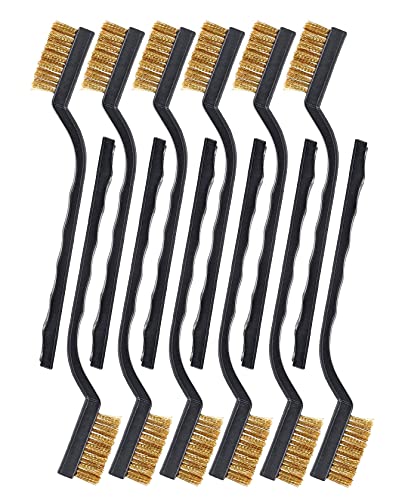
SUJAYU 12-Piece Brass Wire Brush Set provides 12 small brass brushes, rather than a single wide brush, and each is about 6.7 inches long with a 1.3-inch head. The brass wire and plastic handle are intended for cleaning and descaling metal parts, including steel and automotive parts. A curved-grain grip is designed to feel comfortable in hand. This pack suits jobs that benefit from having several small brushes available; it is not the fit for someone who wants a single brush with a broad head or an attached scraper. Use light pressure around soft or finished surfaces, since brass bristles can still leave marks.
Bottom line: Choose this when you want a larger quantity of small brass brushes.
How to choose a brass cleaning brush
Choose the bristle material and head size according to the surface and residue. Brass is softer than steel wire, making it a gentler option for many metal-cleaning tasks, but it is not scratch-proof on soft metals, coatings, or polished finishes. For a broad, open surface, a wider brush reduces the number of passes; for a narrow seam or small part, a head around 1/2 inch offers better access. Use light pressure and try the brush on a hidden spot first. Avoid using one brush across different materials without clearing trapped grit: hard particles caught between bristles can scratch a surface even when the wire itself is relatively soft.
Brass, steel, and nylon brush types
Brass, steel, and nylon brushes differ chiefly in stiffness and likely surface impact. Steel wire is generally the more aggressive choice for heavy rust or scale on robust metal; brass wire is a less aggressive metal option; nylon is for gentler cleaning where metal wire may be too harsh. That hierarchy is a starting point, not a guarantee: finish, pressure, and embedded debris also matter. Use this guide to match the brush to the job, then test an inconspicuous area before committing to a visible surface.
The material choice is a practical guide, not a promise that a finish cannot be damaged.
| Brush type | Good starting use | Key caution |
|---|---|---|
| Brass wire | Moderate cleaning on metal | Can still mark soft finishes |
| Steel wire | Heavier rust or scale on robust metal | More aggressive against surfaces |
| Nylon | Gentler cleaning tasks | Less suited to stubborn metal scale |
Brush size and access
Match brush width to the work area: a 1/2-inch head is suited to tight spots, while a wider head covers more area with each pass. A brush with a straight head can reach open surfaces; a curved or angled head can help approach corners and crevices. Handle shape matters too: offset grips can improve clearance for knuckles, while a scraper end can help lift residue after brushing. Measure the narrowest opening before choosing a brush, and allow space for the handle to move. If a brush cannot fit without forcing it, use a smaller head rather than bending the bristles into the surface.
Safe brushing and common mistakes
Start with light pressure and short strokes, then increase force only if the material tolerates it. Wire bristles can break or shed, so wear eye protection and keep the brush pointed away from people; do not use a damaged brush. A common mistake is treating “brass” as safe for every finish: brass is softer than steel, but still harder than many coatings and soft metals. Another is brushing across grit or metal chips, which can act like abrasives. Clear debris from the brush between passes and test a hidden area before cleaning a visible surface.
Frequently Asked Questions
Can a brass brush scratch aluminum or a finish?
Yes, brass wire can scratch soft aluminum, paint, plating, and polished finishes, especially with heavy pressure or trapped grit. Test a hidden spot first and use nylon if the finish cannot tolerate a mark.
Is brass wire gentler than a steel brush?
Brass wire is generally less aggressive than steel wire, but the surface and applied pressure still determine damage risk. For delicate finishes, choose nylon and test first.
What brush width works for narrow crevices?
A 1/2-inch head is a useful starting point for tight spaces, but check the opening and handle clearance before brushing. A wider head is faster on open areas but may not fit narrow gaps.
How do I remove rust without damaging metal?
Use light strokes with a brass brush on a test area before cleaning the full surface. For thick scale on robust metal a steel brush may work faster, but it is more aggressive and unsuitable for many delicate finishes.
Should I clean a brass brush between uses?
Yes, clear loose debris and trapped grit from the bristles between uses so particles do not abrade the next surface. Keep brushes used on heavily rusted or contaminated parts separate from brushes used on finished surfaces.