
BRIS Inflatable Boats: 3 Sizes Compared by Fit

BRIS 15.4 ft Inflatable Boat is the strongest fit for buyers prioritizing reinforced fabric: its 15.4-foot hull uses 2,000 Dtex, 1.2 mm PVC and a marine plywood transom. Choose BRIS 12.5 ft Inflatable Boat or BRIS 10.8 ft Inflatable Boat instead for a shorter aluminum-floor boat, with BRIS 10.8 ft Inflatable Boat the lightest of the three.
An inflatable boat uses air-filled tubes for flotation, so buyers should match the hull to intended load and motor; confirm rated capacity and engine limits before ordering.
We earn a commission if you buy through links on this page. As an Amazon Associate I earn from qualifying purchases. Products are compared on manufacturer specifications, not hands-on testing.
- Best overall: BRIS 15.4 ft Inflatable Boat – The 15.4-foot hull has 2,000 Dtex, 1.2 mm PVC fabric and a marine plywood transom.
- Best for fishing: BRIS 12.5 ft Inflatable Boat – The 12.5-foot model has a sectional aluminum floor and separate internal air chambers.
- Best for lighter transport: BRIS 10.8 ft Inflatable Boat – At 121.3 pounds, it is the lightest option and has a sectional aluminum floor.
| Product | Best for | Length | Width | Weight | Shop |
|---|---|---|---|---|---|
| BRIS 15.4 ft Inflatable Boat | Reinforced construction | 182.4 in | 78.7 in | 246 lb | Check Price on Amazon |
| BRIS 12.5 ft Inflatable Boat | Fishing and diving | 149.6 in | 66.9 in | 180.8 lb | Check Price on Amazon |
| BRIS 10.8 ft Inflatable Boat | Compact transport | 129.9 in | 60.2 in | 121.3 lb | Check Price on Amazon |
BRIS Inflatable Boats Compared
Compare hull size, weight and construction to match an inflatable boat to your intended use and transport setup.
BRIS 15.4 ft Inflatable Boat

BRIS 15.4 ft Inflatable Boat stands apart with 2,000 Dtex, 1.2 mm PVC fabric, a marine plywood transom and double fabric layers at the tube bottoms. BRIS says its seams are heat-welded, with most using a quadruple overlap, and the boat has a 3-year manufacturer warranty beginning at delivery. The 15.4-foot hull suits buyers who want this heavier-duty material and transom combination for rescue or dive use. At 246 pounds, it is substantially heavier than the two shorter boats, which matters for carrying and storage.
Bottom line: Choose this if reinforced fabric and a marine plywood transom matter more than lower carry weight.
BRIS 12.5 ft Inflatable Boat

BRIS 12.5 ft Inflatable Boat pairs a sectional aluminum floor with separate internal air chambers, giving it a different setup from the larger plywood-transom model. Its 1,100 Denier, 0.9 mm PVC fabric has polyester support; BRIS says the seams are heat-welded and most have a quadruple overlap. This 12.5-foot boat suits fishing, diving or snorkeling when buyers want a rigid floor platform and chamber separation. At 180.8 pounds, it is lighter than BRIS 15.4 ft Inflatable Boat but heavier than BRIS 10.8 ft Inflatable Boat, so the middle size does not mean the easiest solo carry.
Bottom line: Pick this for a mid-size aluminum-floor boat with separate internal air chambers.
BRIS 10.8 ft Inflatable Boat
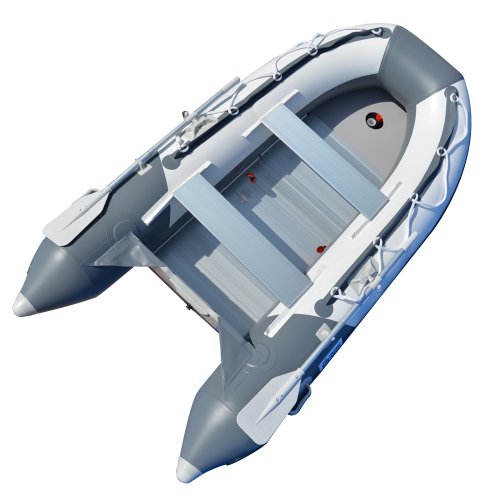
BRIS 10.8 ft Inflatable Boat is the shortest and lightest option, at 10.8 feet and 121.3 pounds, and it uses a sectional aluminum floor. Its 1,100 Denier, 0.9 mm PVC fabric has polyester support. BRIS says the seams are heat-welded, with most using a quadruple overlap, and provides a 3-year manufacturer warranty beginning at delivery. This size suits buyers who value easier handling and a shorter hull for tender or fishing use. Its smaller footprint may be limiting when a longer waterline or more room aboard is the priority.
Bottom line: Choose this for the lightest, shortest BRIS option when compact handling comes first.
How to choose a BRIS inflatable boat
Choose by the space and load you need, then check motor and capacity limits before deciding. These three hulls span 10.8 to 15.4 feet, with weights from 121.3 to 246 pounds; length and weight affect storage, launching and carrying. Floor construction also changes the setup: BRIS 12.5 ft Inflatable Boat and BRIS 10.8 ft Inflatable Boat have sectional aluminum floors, while BRIS 15.4 ft Inflatable Boat has a marine plywood transom and double fabric layers at the tube bottoms. The shorter aluminum-floor boats suit buyers seeking a compact platform, while the larger model emphasizes thicker PVC fabric. Before purchase, verify the rated passenger/load capacity and permitted outboard size for the exact configuration; those limits determine whether a boat is suitable for its planned crew and motor.
Inflatable boat size and transport fit
Measure the storage space and transport route, not just the watercraft footprint. Hull lengths here range from 129.9 to 182.4 inches, and widths range from 60.2 to 78.7 inches; allow additional room for packed components and handling. Weight is another practical divider: BRIS 10.8 ft Inflatable Boat weighs 121.3 pounds, compared with 180.8 pounds for BRIS 12.5 ft Inflatable Boat and 246 pounds for BRIS 15.4 ft Inflatable Boat. If one person must move the boat, favor the lightest feasible model and plan how it will be carried from vehicle to launch point; inflatable does not mean featherweight. Check the manufacturer’s packed dimensions and lifting guidance for your storage and transport arrangement, then confirm local launch and access rules for the waterway.
PVC fabric and floor types compared
Fabric denier and thickness describe construction, while floor type affects the boat’s platform. BRIS 15.4 ft Inflatable Boat uses 2,000 Dtex, 1.2 mm PVC; BRIS 12.5 ft Inflatable Boat and BRIS 10.8 ft Inflatable Boat use 1,100 Denier, 0.9 mm PVC with polyester support. Denier and Dtex are different measurement systems, so compare the material and thickness rather than treating their numbers as directly interchangeable. For a simple choice, use this table to identify the construction that matches your priorities.
| Priority | Model construction | Tradeoff |
|---|---|---|
| Thicker, higher-Dtex fabric | BRIS 15.4 ft Inflatable Boat: 2,000 Dtex, 1.2 mm PVC | Heaviest at 246 lb |
| Sectional aluminum floor | BRIS 12.5 ft Inflatable Boat and BRIS 10.8 ft Inflatable Boat | Two different hull sizes and weights |
| Lower carry weight | BRIS 10.8 ft Inflatable Boat: 121.3 lb | Shortest hull at 10.8 ft |
Safe setup and care for an inflatable boat
Use the boat within its rated load, motor and pressure limits; an inflatable hull still has firm operating limits. Federal boating rules require a properly fitting, U.S. Coast Guard-approved wearable life jacket for each person aboard, and children must wear one on many recreational boats; state rules can add requirements. Keep drain plugs, valves and transom fittings in sound condition, and inspect seams and fabric for abrasion or cuts before each outing. Salt and UV exposure can shorten the life of PVC, so rinse off salt, let the boat dry fully before storage and keep it out of prolonged direct sun. Follow the maker’s inflation pressure and repair guidance rather than guessing pressure by feel.
Frequently Asked Questions
How much weight can a BRIS inflatable boat carry?
The safe load depends on the capacity rating for the exact boat configuration, so confirm that plate or manual before loading passengers, gear or fuel. Do not infer capacity from hull length or fabric thickness.
What outboard size fits a BRIS inflatable boat?
Use only an outboard within the boat’s rated maximum horsepower and transom limits. Confirm the rating for the exact model before buying a motor, since hull size alone does not establish a safe engine limit.
How should I store a PVC inflatable boat?
Rinse away salt and let the boat dry completely before storage to reduce moisture exposure. PVC can degrade with prolonged UV exposure, so store it shaded and away from sharp edges or solvents.
Do aluminum floors make inflatable boats rigid?
Sectional aluminum floors provide a firmer platform than an unsupported inflatable floor, but they do not turn an inflatable hull into a rigid boat. Assemble each panel securely and inspect the floor and transom before launch.
What should I check before inflating an inflatable boat?
Inspect valves, seams, fabric, floor sections and transom fittings for damage before inflation. Use the pressure specified by the manufacturer; overinflation can strain seams and underinflation can impair handling.