
Broyhill 10 x 12 Yorktown Hardtop Wood Gazebo Compared

The Broyhill 10 x 12 Yorktown hardtop wood gazebo is not among these options; the closest matches are other 10 x 12 cedar gazebos with hard roofs. Choose based on roof material and exact footprint, since the alternatives differ in dimensions and structure.
A permanent wood gazebo is an outdoor pavilion with a fixed roof, so measure the patio and confirm the anchoring surface before choosing.
We earn a commission if you buy through links on this page. As an Amazon Associate I earn from qualifying purchases. Products are compared on manufacturer specifications, not hands-on testing.
- Best overall: Aoxun Cedar Double-Roof Gazebo – A 10 x 12 cedar frame paired with a galvanized-steel double-roof.
- Best for wider layout: Jocisland Cedar Sloped-Roof Gazebo – Its width is 144 inches, compared with 120 inches for several alternatives.
- Best for polycarbonate roof: Oasisphere Cedar Double-Roof Gazebo – Uses a double polycarbonate roof rather than galvanized steel.
| Product | Best for | Roof | Frame | Dimensions | Shop |
|---|---|---|---|---|---|
| Aoxun Cedar Double-Roof Gazebo | Steel double-roof | Galvanized steel | 4 x 4 in cedar | 141 x 120 x 114 in | Check Price on Amazon |
| Jocisland Cedar Sloped-Roof Gazebo | Drainage-focused roof | Galvanized steel | Cedar wood | 120 x 144 x 96 in | Check Price on Amazon |
| Oasisphere Cedar Double-Roof Gazebo | Thick cedar posts | Galvanized steel double roof | 4.72 in cedar posts | 144 x 120 x 108 in | Check Price on Amazon |
| HOWSVN Cedar Gable-Roof Gazebo | Gable-roof design | Galvanized steel gable roof | Cedar wood | 138.96 x 116.16 x 105.48 in | Check Price on Amazon |
10 x 12 Hardtop Wood Gazebos
These cedar gazebos differ most in roof material, post dimensions and their overall measurements.
Aoxun Cedar Double-Roof Gazebo

Among these alternatives, this model combines a 10 x 12 footprint with a galvanized-steel double-roof and 4 x 4-inch cedar posts. Its overall dimensions are 141 inches long, 120 inches wide and 114 inches high, so allow room beyond the nominal footprint for the frame. A double-roof can encourage airflow while a sloped-roof sheds precipitation. The maker reports laboratory testing for wind resistance up to 83 mph and wet snow capacity up to 12 inches; those results are test-condition claims, not a substitute for site-specific anchoring. Buyers wanting a confirmed local wind or snow rating should verify it before purchase.
Bottom line: Choose this if a steel double-roof and 4 x 4-inch cedar posts are your priorities.
Jocisland Cedar Sloped-Roof Gazebo
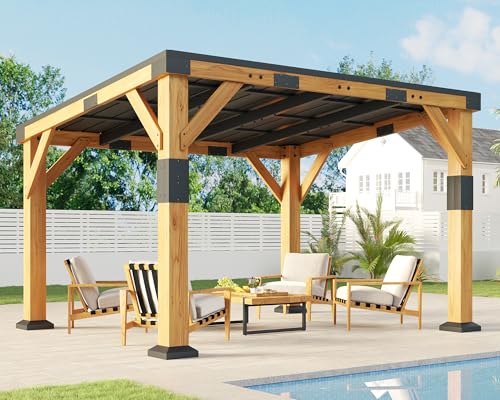
This gazebo has a single sloped galvanized-steel roof rather than a double-roof, and its 144-inch width is the largest here. The cedar frame uses four wooden posts, with expansion bolts for anchoring; powder-coated steel hardware is also part of its construction. Overall dimensions are 120 inches long, 144 inches wide and 96 inches high, so check orientation carefully before planning a rectangular patio layout. The maker says the roof and frame are intended for strong winds and heavy loads, but gives no numerical capacity in the specifications. This option suits buyers prioritizing a wider covered area over a specified load rating.
Bottom line: Choose this when the 144-inch-wide layout best matches your space.
Oasisphere Cedar Double-Roof Gazebo

Its 4.72-inch cedar posts are thicker than the 4-inch posts on the Aoxun steel-roof option, making post size its clearest distinction. The 10 x 12 structure has a galvanized-steel double-roof with a 15-degree slope; the maker says the layered design vents heat and moisture and the roof blocks 99% of harmful rays. Dimensions are 144 inches long, 120 inches wide and 108 inches high. Those proportions mean the length is longer than a 120-inch nominal side, so measure the intended area rather than relying only on the size label. It suits buyers seeking thicker posts and a ventilated double-roof.
Bottom line: Choose this for the thickest specified cedar posts among the options.
HOWSVN Cedar Gable-Roof Gazebo

Unlike the sloped and double-roof alternatives, this model uses a galvanized-steel gable-roof and has the smallest footprint dimensions. The overall measurements are 138.96 inches long, 116.16 inches wide and 105.48 inches high. Its cedar pillars attach to a cement floor with expansion screws, so the installation surface matters. The maker claims a 1,600-pound load capacity, up to 20 inches of snow and winds up to 50 mph, and says its wood has FSC certification. The maker also advises clearing snow in time. Choose this configuration only if a gable-roof suits the site and its anchoring requirements can be met.
Bottom line: Choose this if a gable-roof and cement-floor anchoring fit your installation.
How to choose a 10 x 12 wood gazebo
Start with roof type and the space available, not the nominal 10 x 12 label. The dimensions here range from 116.16 to 144 inches wide and 138.96 to 144 inches long, which can affect clearances beside fences, doors and walkways. Steel hardtops and polycarbonate panels differ in material and construction; double roofs add an air gap intended to ventilate heat. Compare post dimensions when frame bulk matters, but do not treat a thicker post by itself as proof of a higher wind or snow capacity. If the gazebo will sit on a slab, confirm the anchors can attach to that surface. Keep at least a few inches of working clearance around the structure for installation and upkeep.
The table separates the options by roof format and the standout fit consideration.
| Roof format | What to compare | Decision cue |
|---|---|---|
| Steel double-roof | Air gap and post thickness | Prefer a layered roof and cedar frame |
| Sloped steel roof | Drainage and layout | Fit the width to the site |
| Gable steel roof | Roof profile and anchors | Confirm slab attachment |
| Double polycarbonate | Panel material and snow claim | Check local snow exposure |
Measure the gazebo footprint and clearance
Measure the full outside length and width before ordering, because the nominal 10 x 12 size does not match every overall measurement exactly. These product dimensions run from about 116 to 144 inches wide and about 139 to 144 inches long; leave additional room for assembly and access. Check overhead clearance as well: listed heights range from 96 to 114 inches. Sloped roofs direct water toward their lower edges, so avoid placing a roof edge where runoff can hit a doorway or a neighboring structure. On a patio, map post locations with tape and make sure each anchor point lands on suitable material. A concrete slab may accept expansion anchors, while soil or a deck requires a different installation plan.
Compare roof materials and drainage
Galvanized steel and polycarbonate are different roof materials, while double-layer construction is a separate design choice. A sloped-roof helps water and snow move toward its edges; clear gutters and avoid directing runoff onto paths where it can freeze. Double roofs are designed to allow airflow between layers, but they do not eliminate heat buildup under a roof in direct sun. Polycarbonate can transmit more daylight than opaque metal, though the specifications do not give a light-transmission figure for this model. For snow climates, use a specific load capacity rather than assuming a roof material or slope establishes one. The maker claims in these choices range from 4 to 20 inches of snow, so verify the applicable figure and clear snow as needed.
Anchor a permanent gazebo safely
A permanent gazebo needs a secure connection to a suitable base; expansion anchors are intended for solid masonry or concrete, not loose soil. Check that the slab is sound and thick enough for the selected anchors, and keep anchors aligned with the post plates. Wind resistance claims depend on the structure and anchoring conditions, so a rated frame can still shift if the base connection fails. Do not install where roof runoff can undermine a footing or where overhead branches can fall onto the structure. In snow country, remove accumulation before it exceeds the maker’s limit; heavy wet snow can overload a roof sooner than fluffy snow at the same depth. Confirm the required foundation and local permits before assembly.
Frequently Asked Questions
How much space does a 10 x 12 gazebo need?
Allow more than 10 by 12 feet because overall dimensions in this group reach 144 inches on a side. Add working clearance around the posts for assembly, access and roof runoff.
Can a wooden gazebo stay up in winter?
A hardtop gazebo can remain outdoors, but snow capacity depends on its specific structure and anchoring. These makers claim capacities from 4 to 20 inches, and accumulated snow should be cleared before reaching the applicable limit.
Is a steel roof better than polycarbonate?
Steel is the choice when a metal hardtop is the priority, while polycarbonate is a different panel material that may admit more daylight. The polycarbonate model has a 4-inch snow claim, so snow exposure should factor into that choice.
Does a gazebo need to be anchored to concrete?
A permanent gazebo needs anchoring to a stable base, but concrete is not the only possible foundation. Expansion anchors suit solid concrete or masonry; soil and decks need anchoring methods designed for those surfaces.
How do I keep rain from pooling around a gazebo?
Place the roof edges so runoff drains away from doors, paths and foundations. Sloped roofs shed water toward the lower edges, so grade or drainage paths should carry water away rather than leave it against posts.