
Brushes for French Tips: 5 Styles Compared by Use

For a French tip, Vanfa F16 French Cleanup Brush is the most direct match because its flat, tongue-shaped head is designed to clean polish around nails and refine smile lines. Choose a liner set instead if you want to draw the tip freehand; the other options combine line work with dotting or broader nail-art tasks.
We earn a commission if you buy through links on this page. As an Amazon Associate I earn from qualifying purchases. Products are compared on manufacturer specifications, not hands-on testing.
- Best overall: Vanfa F16 French Cleanup Brush – Its flat head is specifically intended for French manicure cleanup and crisp smile lines.
- Best for long lines: Artdone Metallic Liner Brushes – Five liner lengths, from 5 to 25 mm, give options for different line strokes.
- Best for mixed brush work: 8-Piece Liner and Gel Brush Set – The eight-piece set combines five liners with three multi-shape brushes.
| Product | Best for | Brush design | Set count | Shop |
|---|---|---|---|---|
| Vanfa F16 French Cleanup Brush | French edge cleanup | Flat, tongue-shaped | 1 brush | Check Price on Amazon |
| Artdone Metallic Liner Brushes | Long freehand lines | Liner brushes, 5–25 mm | 5 brushes | Check Price on Amazon |
| 8-Piece Liner and Gel Brush Set | Mixed brush techniques | 5 liners, 3 multi-shape | 8 brushes | Check Price on Amazon |
| 4-Piece Double-Ended Nail Art Brushes | Two-ended tools | Double-ended brushes | 4 brushes | Check Price on Amazon |
| Artdone Double-Ended Dotting and Brush Kit | Lines and dotting | 4 bristled, 2 dotting | 6 tools | Check Price on Amazon |
Brushes for French Tips
Match the brush head to whether you are painting the tip, refining its edge, or adding other nail-art details.
Vanfa F16 French Cleanup Brush

The flat, tongue-shaped head makes this brush the most French-specific choice here: it is intended to clean around nails and sharpen smile lines. Its soft brush hair is also described for spreading gel evenly, and the brush can be used for larger nail-art shapes such as leaves and petals. Choose it when your main task is refining an edge rather than painting several kinds of fine lines. The limitation is its single specialized head; a buyer who wants multiple liner lengths or dotting tips will need a more varied set.
Bottom line: Pick this when French-tip cleanup is the main job.
Artdone Metallic Liner Brushes

Five liner lengths distinguish this set from the cleanup-focused brush: the heads measure 5, 8, 12, 20, and 25 mm. The manufacturer describes the easy-grip handles and copper ferrules as suited to fine lines and short strokes, and says the brushes work with regular nail polish and acrylic paint. This set suits someone painting a French tip freehand or adding thin accents, rather than someone who mainly needs to remove polish at the cuticle edge. Its limitation is that every brush is a liner, so it does not provide a dedicated flat cleanup head.
Bottom line: Choose it for freehand tip lines in several brush lengths.
8-Piece Liner and Gel Brush Set
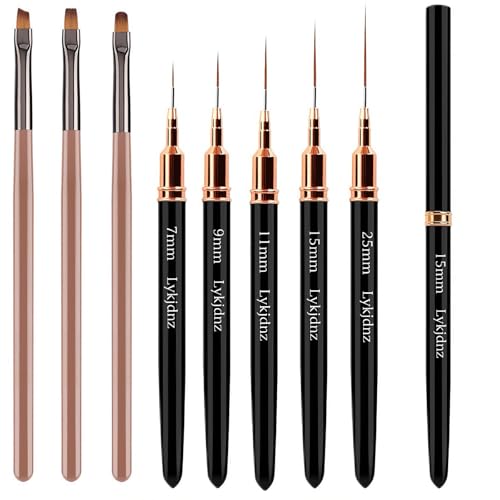
This set pairs five liner brushes with three multi-shape gel brushes, giving it a broader mix than a liner-only kit. The liner lengths are 7, 9, 11, 15, and 25 mm; the nylon bristles are described as soft and pliable. It may suit a nail artist who wants to draw French edges and also handle gel coating or shaping with other brush heads. The product name also mentions cleanup brushes, but the features do not distinguish their head shapes, so buyers seeking a specific angled or flat profile should confirm the brush layout before ordering.
Bottom line: Pick it for a mixed liner-and-gel brush selection.
4-Piece Double-Ended Nail Art Brushes

Four double-headed brushes set this kit apart: each has two ends, with sizes 10#, 12#, 14#, and 16#. The metal handles are described as aluminum alloy, while the bristles are soft and elastic. This is a broader manicure tool set for someone who wants several brush sizes alongside dotting functions, and can also suit French-tip detailing. Choose it when the two-ended format matters more than having a clearly dedicated French cleanup profile.
Bottom line: Choose it for a double-ended, multi-size manicure tool.
Artdone Double-Ended Dotting and Brush Kit

The distinctive feature here is the combination of brush ends and dotting ends across six double-ended tools. Four tools have bristled brushes, while two can draw lines; the opposite ends carry dotting tools with ball diameters from 1.0 to 3.0 mm. That makes this a more varied nail-art kit than a single-purpose French brush and could help with dots or accent designs beside a tip.
Bottom line: Pick it when dotting tools matter as much as brush work.
How to choose a brush for French tips
Choose a flat cleanup head to refine a painted edge, or a liner brush to draw the smile line directly. French tips can be painted with a detail brush or made by laying polish across the nail edge and cleaning the curve afterward; the right choice depends on whether you prefer to paint the line or correct it. For a freehand line, match the brush length to the stroke: shorter heads are easier to steer around a curve, while longer heads can carry a longer stroke before reloading. A single cleanup brush is more focused; mixed sets add other brush or dotting functions but may not include the exact head profile you want.
| Need | Brush type | Useful distinction |
|---|---|---|
| Refine the smile line | Flat cleanup brush | Broad, flat edge for controlled cleanup |
| Paint a curved tip line | Liner brush | Choose a shorter head for tighter steering |
| Add dots or accents | Mixed nail-art set | Includes functions beyond French edging |
How to make a clean French smile line
A clean French smile line follows the natural curve of the nail’s free edge, with the deepest point centered and both sides rising evenly. Start with a thin guide curve rather than applying a thick band at once; build the tip in small strokes and compare the two sides before curing gel. A liner works well for drawing the curve, while a flat cleanup brush can smooth its boundary after application. Keep uncured gel off skin: gel products can cause sensitization, and any product on the skin should be removed before curing. Cure gel only with the lamp and timing specified for that gel system.
How to clean and store nail art brushes
Clean a nail brush promptly after use, because cured gel hardens in the bristles and can make the head unusable. For uncured gel, use the cleaning method recommended for that product; keep the brush away from direct sunlight and curing lamps while working. Regular polish and acrylic paint may require different solvents, so avoid assuming one cleaner suits every medium. Wipe gently rather than crushing the bristles against a surface, reshape the head, and store it covered once dry. Never leave a brush soaking in solvent for long periods: prolonged exposure can loosen the ferrule or damage the bristle shape.
Frequently Asked Questions
What brush is easiest for cleaning a French tip edge?
A flat, small cleanup brush is useful for refining the painted boundary because its edge can follow the curve in short strokes. Use a cleaner compatible with the polish or gel, and remove any gel from skin before curing.
What liner brush length works for a French tip?
A shorter liner, around 5 to 12 mm, is easier to steer around a tight smile line, while a longer head can make a continuous stroke with fewer reloads. Brush length is not the same as the width of the line it paints; pressure and polish loading also affect line thickness.
Can I use a nail art brush with regular polish?
Yes, provided the brush material is compatible with the polish and its cleaner. Regular polish dries in air, so work in small sections and clean the brush before residue hardens.
Should gel polish touch the skin before curing?
No, keep uncured gel off the skin because repeated contact can trigger an allergy. Remove any accidental contact before curing and use the cure time and lamp specified for that gel product.
How do I keep a nail brush from losing its shape?
Clean it promptly with a solvent suited to the product, gently reshape the bristles, and store it covered after drying. Avoid leaving brushes soaking in solvent or exposing uncured gel on the bristles to a lamp or sunlight.