
Canine Carry Outs Good or Bad for Dogs

Canine Carry Outs can work as occasional treats, but the best choice depends on how much you want on hand: the 47-ounce bags are bulk formats, while the sausage links come in a 5-ounce bag.
For everyday feeding, keep treats to no more than 10% of a dog’s daily calories and use a complete, balanced dog food for the rest; the specifications do not provide calorie counts, so check the package before portioning.
We earn a commission if you buy through links on this page. As an Amazon Associate I earn from qualifying purchases. Products are compared on manufacturer specifications, not hands-on testing.
- Best overall: Canine Carry Outs Beef Flavor, 47 oz – The 47-ounce bag offers the largest beef-flavor format in this group.
- Best for chicken flavor: Canine Carry Outs Chicken Flavor, 47 oz – The resealable 47-ounce bag pairs chicken flavor with a soft, chewy texture.
- Best for outings: Canine Carry Outs Beef Sausage Links, 5 oz – The 5-ounce sausage-link bag is the smallest package here.
| Product | Best for | Flavor | Package size | Treat form | Shop |
|---|---|---|---|---|---|
| Canine Carry Outs Beef Flavor, 47 oz | Bulk beef treats | Beef | 47 oz | Soft, chewy treats | Check Price on Amazon |
| Canine Carry Outs Chicken Flavor, 47 oz | Bulk chicken treats | Chicken | 47 oz | Soft, chewy treats | Check Price on Amazon |
| Canine Carry Outs Beef Sausage Links, 5 oz | Small outings | Beef | 5 oz | Sausage links | Check Price on Amazon |
Canine Carry Outs dog treats
Compare these soft, chewy treats by flavor, package size, and shape to find a format that fits your routine.
Canine Carry Outs Beef Flavor, 47 oz
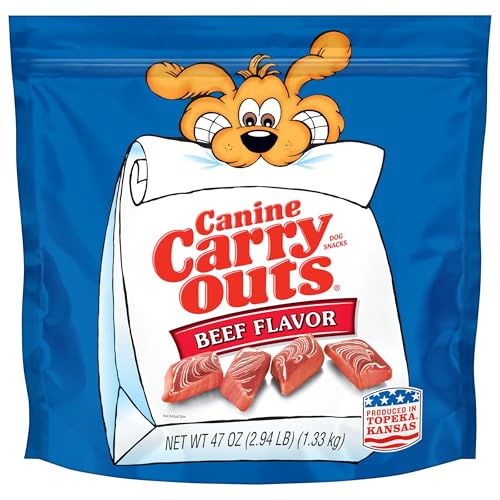
The 47-ounce beef-flavor bag is the largest package in this group, making it the clearest fit if you want to keep one flavor on hand. These treats are soft and chewy, with fun shapes and the look and taste of real beef. The maker says they are produced in Topeka, Kansas. A large bag can be inconvenient if your dog gets treats only occasionally, and the calorie count is not included in the specifications; check the package so treats stay within your dog’s daily calorie allowance.
Bottom line: Choose this if you want the largest beef-flavor bag in this group.
Canine Carry Outs Chicken Flavor, 47 oz

Unlike the beef option, this 47-ounce bag gives you chicken flavor in a bulk-size, resealable package. The treats are soft and chewy, and the maker says they are made with real chicken and produced in Topeka, Kansas. Choose it when chicken flavor is the deciding factor and you can use a large bag over time. Its package size may be more than you need for occasional rewards, so portion treats deliberately and account for them in your dog’s daily calories.
Bottom line: Pick this for a large resealable bag when chicken flavor is your preference.
Canine Carry Outs Beef Sausage Links, 5 oz

The 5-ounce sausage-link bag is the compact choice here, unlike the two 47-ounce bags. The beef-flavor snacks have a chewy texture and are sized for taking on the go; the maker says they have the look and taste of real beef sausage links and are made in the USA. This smaller package suits occasional outings or buyers who do not want a bulk bag. The sausage-link form may be less convenient when you want a soft treat in another shape, and calorie content should guide how many you give.
Bottom line: Choose these when you want a smaller bag of beef-flavor links for outings.
How to decide whether dog treats are good or bad
Canine Carry Outs fit as treats, not as a meal replacement: veterinary nutrition guidance commonly limits treats and other extras to 10% or less of daily calories. The remaining 90% or more should come from a complete and balanced diet appropriate for the dog’s life stage. For example, a dog eating 500 calories per day should get no more than 50 calories from treats and extras combined. Dogs with food sensitivities, a prescribed diet, or weight-management needs may need a different treat plan from their veterinarian.
How to portion soft dog treats
Start by counting treats within the daily calorie budget rather than adding them on top of meals. If one treat contains more calories than the remaining treat allowance, break it into smaller rewards when its texture allows, or choose a lower-calorie option. A 47-ounce bag holds much more product than a 5-ounce bag, but package weight alone does not tell you how many treats or calories are in a serving. For training, reserve part of the day’s treat allowance before a session and use small pieces; frequent rewards can add up quickly. Keep fresh water available, and supervise dogs while they chew, especially if they tend to gulp treats.
Choosing between the flavors and shapes
Flavor and format are the meaningful differences among these options: two are 47-ounce soft treats in beef or chicken flavor, while the 5-ounce option is beef-flavor sausage links. Use this guide to match the package to your routine.
| Need | Format to consider | What distinguishes it |
|---|---|---|
| Largest beef package | 47-ounce beef bag | Soft treats in fun shapes |
| Chicken flavor in a large bag | 47-ounce chicken bag | Resealable package |
| Smaller amount for outings | 5-ounce sausage links | Compact bag, link shape |
Pick by the flavor your dog can eat and the amount you expect to use before opening another bag. Avoid assuming the larger package is a better fit if treats are occasional or your dog needs strict calorie control.
Storage and safe treat habits
Store dog treats in their original packaging and follow the package directions for sealing and storage; the chicken bag is identified as resealable. Keep treats out of reach so a dog cannot eat a large quantity at once, and supervise chewing rather than leaving treats unattended. Introduce a new treat in a small amount, particularly when changing flavors or treat types, and stop offering it if your dog shows an adverse reaction. Treats should not replace balanced food, and a sudden increase in extras can disrupt the daily calorie balance. For a dog on a veterinary diet or with known sensitivities, ask the veterinarian before adding a new treat.
Frequently Asked Questions
How many treats can a dog have each day?
Treats and other extras should generally stay at or below 10% of a dog’s daily calories. The package calorie count and the dog’s normal daily intake determine the actual number.
Can dog treats replace a meal?
No, treats should not replace a complete and balanced dog food. Keep them to about 10% or less of daily calories so the main diet supplies most nutrition.
Are soft treats suitable for training rewards?
Soft treats can be broken into smaller pieces when their texture allows, which can help keep frequent rewards within the daily calorie budget. Count each piece toward the dog’s treat allowance.
Should I switch flavors gradually?
Introduce a new flavor in a small amount, particularly for a dog with a sensitive stomach or food sensitivities. Stop giving the treat if an adverse reaction appears.
How should I store an opened dog treat bag?
Seal an opened bag as directed on its packaging and keep it where a dog cannot reach it. The chicken-flavor bag is identified as resealable, while package-specific storage directions should guide the other bags.