
Canopy Attached to House: 4 Options Compared by Fit

For a canopy attached to a house, 10×12 Lean-to Gazebo Pergola is the closest match if you want a wall-mounted, sloped-roof shade structure; choose by roof material and the area you need to cover. 10×20 Wall-Mounted Hardtop Gazebo is another attached option with a hardtop, while the pop-up canopies suit temporary shade rather than permanent wall mounting.
Before choosing a wall-mounted model, confirm that the wall can support its attachment and that the roof can drain clear of the house.
We earn a commission if you buy through links on this page. As an Amazon Associate I earn from qualifying purchases. Products are compared on manufacturer specifications, not hands-on testing.
- Best overall: 10×12 Lean-to Gazebo Pergola – It is a wall-mounted lean-to with a sloped roof and galvanized steel frame.
- Best for hardtop coverage: 10×20 Wall-Mounted Hardtop Gazebo – Its hardtop roof and 10×20-foot size suit buyers seeking a larger attached shade area.
- Best for portable shade: JEAREY 10×10 Pop-Up Canopy – The center-lock frame is designed for quick setup and includes stakes and sandbags.
| Product | Best for | Mounting style | Roof type | Footprint | Shop |
|---|---|---|---|---|---|
| 10×12 Lean-to Gazebo Pergola | Sloped-roof shade | Wall-mounted | Waterproof canopy | 10×12 ft | Check Price on Amazon |
| 10×20 Wall-Mounted Hardtop Gazebo | Hardtop patio cover | Wall-mounted | Hardtop panels | 10×20 ft | Check Price on Amazon |
| JEAREY 10×10 Pop-Up Canopy | Quick portable shade | Freestanding pop-up | Silver-coated fabric | 10×10 ft | Check Price on Amazon |
| 10×10 Pop-Up Canopy with Sidewalls | Enclosed event shade | Freestanding pop-up | Fabric with sidewalls | 10×10 ft | Check Price on Amazon |
Canopies Attached to a House and Related Shade Options
Compare wall-mounted lean-to structures with portable canopies by how they attach, what covers the roof and where you plan to use them.
10×12 Lean-to Gazebo Pergola

For a wall-mounted fabric-style canopy, 10×12 Lean-to Gazebo Pergola pairs a sloped roof with a powder-coated steel frame and dual top tubes. The 10×12-foot model is intended for patio, yard or poolside shade, and its roof directs water away to reduce pooling. The included anchor kit has spiral stakes with ropes, ground stakes and expansion screws for different ground surfaces. This option suits buyers who want a lean-to form rather than a freestanding pop-up. Its canopy is not a hardtop, so shoppers seeking solid roof panels should compare a hardtop model instead.
Bottom line: Choose this if you want a wall-mounted sloped canopy rather than a solid hardtop.
10×20 Wall-Mounted Hardtop Gazebo

The hardtop roof distinguishes 10×20 Wall-Mounted Hardtop Gazebo from the fabric-canopy lean-to: it uses solid roof panels and a reinforced frame in a 10×20-foot format. Its wall-mounted layout is intended to save ground space over a porch, deck or backyard, while the sloped roof channels rain away. This is the larger stated footprint among the attached choices, making it a fit for buyers planning coverage over dining or lounge furniture. The solid roof makes it less suited to anyone who specifically wants a fabric canopy or a portable shelter.
Bottom line: Pick this for a larger wall-mounted cover with a solid-panel roof.
JEAREY 10×10 Pop-Up Canopy

Unlike the house-mounted structures, JEAREY 10×10 Pop-Up Canopy is a portable pop-up canopy with a one-button center lock and a wheeled carry bag. Its 10×10-foot top is made from 150D Oxford fabric with a silver coating; the maker says the fabric is water-resistant, UV-protective and flame-resistant to CPAI-84. Eight stakes and four fillable sandbags are included to help stabilize it outdoors. Choose this model for events or temporary shade that can be packed away, not as a permanent attachment to a house. A pop-up frame does not replace a fixed wall connection.
Bottom line: Choose this for portable event shade, not a house-mounted installation.
10×10 Pop-Up Canopy with Sidewalls
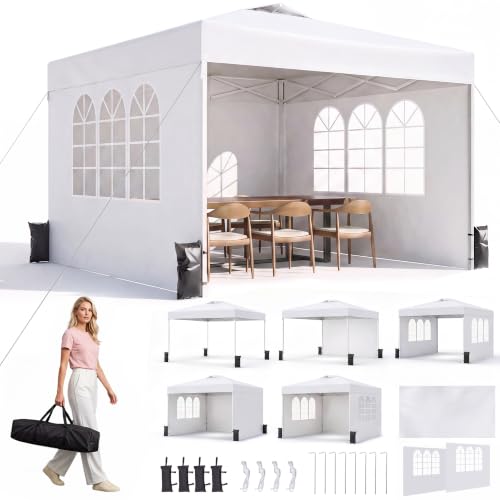
For temporary shade with more enclosure, 10×10 Pop-Up Canopy with Sidewalls has three removable sidewalls, including two panels with PVC windows, plus a double-vented roof. The 10×10-foot pop-up frame is designed to open without complicated tools, making it suited to events, markets or camping rather than a fixed house connection. The sidewalls offer adjustable coverage and privacy, but they also make this a different choice from a wall-mounted lean-to. Buyers seeking a permanent patio canopy should focus on a product designed to fasten to the home instead.
Bottom line: Pick this for flexible event coverage with removable sidewalls.
How to Choose a Canopy Attached to a House
Start with the wall connection and roof type, then size the covered area to the furniture or walkway below. A fixed lean-to needs attachment into structural framing or masonry; siding alone is not a reliable structural anchor. Check whether the roof overhang and slope direct water away from doors, windows and the foundation. Fabric roofs are lighter and can be easier to remove, while hardtop panels form a more solid cover but still need a suitable supporting frame. For any model, confirm its wind and snow limits before installation, and do not assume an anchor kit establishes a safe load rating. If you cannot locate framing or determine the wall construction, get installation guidance before drilling.
Wall Mounting, Drainage and Clearance
Keep the canopy’s roof edge clear of the wall and route runoff away from the foundation; water that drains against siding can enter seams and cause damage. A wall-mounted structure commonly uses a ledger or mounting rail, but its fasteners must reach framing or masonry rather than just finish materials. Flashing at the wall-to-roof junction helps keep rain from getting behind the connection. Measure the door swing, windows, vents and eaves before setting the height, and check that the roof does not obstruct required exits. Follow the model’s specified slope and attachment pattern, since changing either can affect drainage and structural loads. Verify local permit requirements for a permanent patio structure before installation.
Attached Canopies Compared with Pop-Up Shelters
A wall-mounted lean-to is intended to remain connected to the house; a pop-up canopy stands on its own frame and is suited to temporary use. The table separates the choices by installation style and roof construction. It is a useful first filter, but site measurements and allowable loads still determine whether a fixed structure is suitable.
| Need | Structure type | Key distinction |
|---|---|---|
| Fixed patio shade | Wall-mounted lean-to | Connects to house framing or masonry |
| Solid roof cover | Hardtop lean-to | Uses solid roof panels |
| Temporary event shade | Pop-up canopy | Freestanding folding frame |
A portable model can be a practical alternative when drilling into the house is not appropriate, but it needs its own stable footing. Do not treat a pop-up canopy as a substitute for a permanently anchored structure.
Common Installation Mistakes to Avoid
The most consequential mistake is fastening a canopy only to siding, trim or an unsupported exterior layer. Locate structural framing or suitable masonry before drilling, and use the fasteners and spacing specified for the structure. A second common mistake is allowing runoff to collect at the wall: slope the roof away from the house and use suitable flashing at the connection. Measure the full roof projection, not only the advertised footprint, so doors and walkways remain usable. Finally, do not leave a temporary canopy exposed to conditions beyond its specified limits. Wind can lift a broad roof, and added weights do not make an unrated shelter safe in severe weather.
Frequently Asked Questions
Can a canopy attach directly to house siding?
No; the attachment needs to reach structural framing or suitable masonry, not siding alone. Confirm the wall construction and fastener requirements before drilling.
How should a wall-mounted canopy drain rainwater?
The roof should slope away from the house so runoff does not collect at the wall. Flashing at the roof-to-wall junction helps keep water from entering behind the connection.
How much clearance should a patio canopy have?
Measure the entire roof projection and leave room for doors, windows, vents and the walking route beneath it. The needed height and setback depend on those obstacles and the canopy’s mounting instructions.
Can a pop-up canopy stay attached to a house?
A pop-up canopy is a freestanding portable shelter, not a wall-mounted structure. Use it as temporary shade and stabilize it according to its intended setup rather than modifying it into a fixed attachment.