
Car Seat Fabric Repair Tape: 4 Options Compared

For fabric seat repairs, Xroam Linen Fabric Repair Tape is the closest match if you want a 4-inch-wide roll that can cover a long area; ZESION Linen Fabric Patches, 2-Pack offers two 8-by-11-inch cut-to-fit patches. Choose a different material if your seat is leather or vinyl, since those surfaces call for the leather repair tapes here.
Fabric repair tape is a backing patch with adhesive that bonds to a clean surface without sewing. Keep any patch away from seat-belt anchorages, belts, and airbag seams.
We earn a commission if you buy through links on this page. As an Amazon Associate I earn from qualifying purchases. Products are compared on manufacturer specifications, not hands-on testing.
- Best overall: Xroam Linen Fabric Repair Tape – Its 4-inch-wide, 79-inch-long linen tape can cover a continuous repair area.
- Best for cut-to-fit patches: ZESION Linen Fabric Patches, 2-Pack – Two 8-by-11-inch polyester patches can be trimmed to fit smaller damaged areas.
- Best for leather or vinyl: Besezx Leather Repair Patch Tape – The 3.1-inch-wide patch is intended for synthetic leather and vinyl surfaces.
| Product | Best for | Material | Patch size | Color | Shop |
|---|---|---|---|---|---|
| Xroam Linen Fabric Repair Tape | Long fabric tears | Linen | 4 × 79 in | Dark grey | Check Price on Amazon |
| ZESION Linen Fabric Patches, 2-Pack | Trimmed fabric patches | Polyester | 2 × 8 × 11 in | Dark grey | Check Price on Amazon |
| Besezx Leather Repair Patch Tape | Leather and vinyl | Leather patch | 3.1 × 60 in | Black | Check Price on Amazon |
| ONine Leather Repair Tape | Black leather repairs | Leather patch | 3 × 60 in | Black | Check Price on Amazon |
Car Seat Fabric Repair Tape
Compare these options by surface material and patch dimensions before choosing a repair.
Xroam Linen Fabric Repair Tape
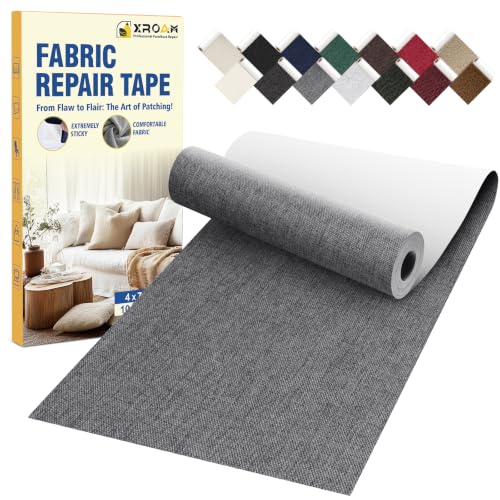
Xroam Linen Fabric Repair Tape is the long-roll option among these fabric repairs: the 4-inch-wide linen tape measures 79 inches long. The maker says its fabric-specific adhesive needs no sewing or ironing and that bound edges help resist fraying. Its length suits a long tear or several smaller patches cut from one roll, while dark grey may stand out on seats in other colors. This is a fabric patch, not a leather or vinyl repair tape; use it only where the seat surface is fabric.
Bottom line: Choose it for long fabric repairs where dark grey works with the seat.
ZESION Linen Fabric Patches, 2-Pack

ZESION Linen Fabric Patches, 2-Pack comes as two separate 8-by-11-inch patches, rather than one long roll, making its format useful for covering distinct spots. The maker identifies the material as polyester and says the backing is self-adhesive; each patch can be cut to size. That format gives you more flexibility for patch shape, but the pieces are smaller in total length than a 79-inch roll. The dark-grey color is another consideration if the seat fabric is a different shade.
Bottom line: Pick it for separate, shaped fabric patches rather than a continuous strip.
Besezx Leather Repair Patch Tape
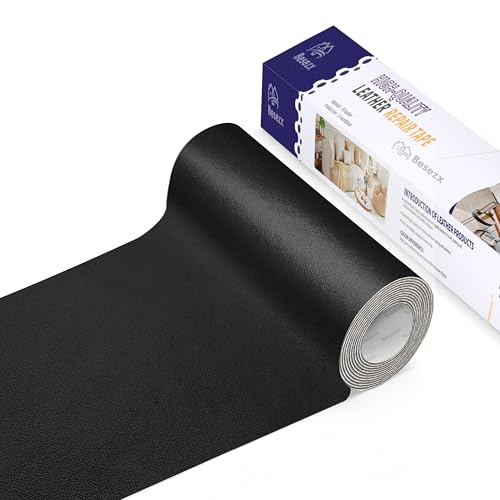
Besezx Leather Repair Patch Tape differs from the fabric tapes because it is a leather-style repair patch intended for synthetic leather and vinyl, not woven seat fabric. The black strip is 3.1 inches wide and 60 inches long, and the maker says it applies without heat, tools, or sewing. That width may suit a narrow scuff or tear on a compatible smooth surface. It is a poor match for cloth upholstery: adhesive patches made for smooth leather or vinyl may not bond correctly to woven fibers.
Bottom line: Choose it only for compatible synthetic leather or vinyl seat surfaces.
ONine Leather Repair Tape
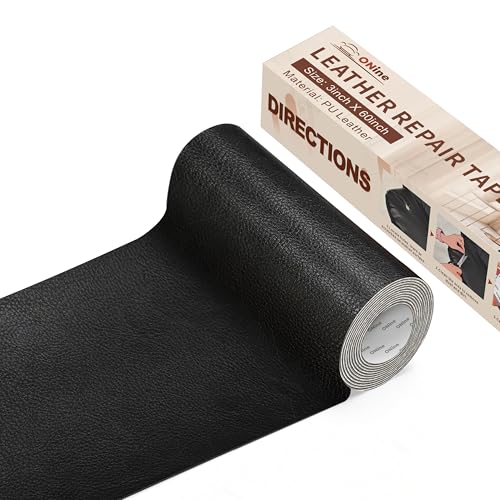
ONine Leather Repair Tape is the narrower leather-repair option here, measuring 3 inches wide by 60 inches long. The maker says the self-adhesive patch requires no heat, tools, or stitching and recommends a clean, dry surface for adhesion. Its use is leather repair, including car seats, so it is intended for smooth leather-like surfaces rather than cloth. Compared with the 3.1-inch-wide alternative, the strip is slightly narrower; neither should be treated as fabric tape.
Bottom line: Use it for compatible black leather-like surfaces, not fabric upholstery.
How to choose car seat fabric repair tape
Choose by upholstery material first, then by the area you need to cover. Fabric-backed tape is intended for cloth, while leather and vinyl patches are made for smoother surfaces; using the wrong adhesive type can leave a patch that lifts or looks conspicuous. For a long, narrow tear, a roll can be cut into sections; separate patches can be easier to shape around isolated damage. Trim a patch with rounded corners, which are less likely than sharp corners to catch and peel. Clean and fully dry the repair area before application, and test a small hidden spot first if the seat’s color or finish could be affected. Do not cover airbag seams, seat-belt webbing, or anchor points.
Where a seat repair patch can go
Place an adhesive patch only on a flat, stable upholstery area that does not move or fold heavily during normal seat adjustment. A patch must not bridge an airbag deployment seam: many vehicles use seat-mounted side airbags, and covering the seam can interfere with deployment. Keep seat belts, buckles, and their anchorages unobstructed; never stick repair material to belt webbing. If a tear reaches a seam or a safety restraint, stop and ask an automotive upholstery or restraint professional rather than covering it. For a small tear away from these areas, measure the damaged region and allow the patch to extend beyond its edges, while avoiding unnecessary overlap onto bolsters that flex repeatedly.
Fabric tape versus leather repair tape
Match the patch type to the seat surface instead of choosing by color alone. Cloth upholstery has visible fibers and texture; leather and vinyl repair patches are designed for smoother surfaces and can look or adhere differently on woven fabric. The options here divide into two fabric patches and two leather-style tapes, so the material label is the key filter. Check that the patch fully covers the damaged portion and that its color is acceptable against the seat. This quick guide helps narrow the choice by surface and format.
| Seat surface or repair | Patch type to consider | Format fit |
|---|---|---|
| Cloth, long narrow area | Fabric tape | Long roll |
| Cloth, separate small areas | Fabric patch | Cut-to-fit pieces |
| Smooth leather-like surface | Leather or vinyl patch | Strip or patch |
| Airbag seam or restraint | No adhesive patch | Professional assessment |
Applying and maintaining an adhesive seat patch
Prepare the surface before peeling the backing: remove loose debris and let the upholstery dry completely. Cut the patch to extend beyond the tear, then press it onto a flat area without wrinkles; rounded corners help reduce edge catching. Do not stretch the patch across a crease, bolster, or section that flexes constantly, because repeated movement can loosen an edge. Avoid aggressive cleaners on the adhesive edge, and check periodically for lifting or exposed damage. An adhesive cover is a cosmetic repair, not a replacement for upholstery stitching or a repair to a seat structure, belt, or airbag system.
Frequently Asked Questions
Can fabric repair tape fix a tear in a car seat?
Fabric tape can cover a small tear on stable cloth upholstery when the patch material matches the seat. Keep it away from seat-belt parts and airbag seams, and use a professional for damage that reaches either.
How much larger should a seat patch be than the tear?
The patch should extend beyond the tear on every side so its adhesive contacts intact upholstery. Avoid making it so large that its edges land on a bolster or crease that flexes repeatedly.
Can leather repair tape go on cloth car seats?
Leather repair tape is intended for smooth leather-like or vinyl surfaces, not woven cloth. Use a fabric patch for cloth upholstery because a smooth-surface adhesive may not bond reliably to fabric fibers.
How should I prepare car seat fabric before patching?
Remove loose dirt and let the fabric dry fully before applying an adhesive patch. A clean, dry surface supports adhesion, while trapped moisture or debris can keep the backing from sitting flat.
Is it safe to patch a seat airbag seam?
No; do not cover an airbag seam with repair tape. Seat-mounted airbags may deploy through a seam, so have seam damage assessed by an automotive upholstery or restraint professional.