
Carter Fuel Pump: 3 Models Compared by Fit

For most carbureted applications, P4594 12V Rotary Vane Pump is the clearest match because its 12V rotary vane design is specified for 4–7 psi and names Carter P4594 as a replacement reference.
We earn a commission if you buy through links on this page. As an Amazon Associate I earn from qualifying purchases. Products are compared on manufacturer specifications, not hands-on testing.
- Best overall: P4594 12V Rotary Vane Pump – Its 4–7 psi rating and Carter P4594 replacement reference suit low-pressure carbureted systems.
- Best for preassembled mounting: P4594 12V Bracket-Mounted Pump – It comes preassembled on a metal bracket and is rated at 6–8 psi.
- Best for module replacement: Carter P75026M Pump Module – It is a 12V fuel-pump module assembly rather than a standalone low-pressure pump.
| Product | Best for | Pressure | Design or format | Shop |
|---|---|---|---|---|
| P4594 12V Rotary Vane Pump | Carbureted systems | 4–7 psi | Rotary vane | Check Price on Amazon |
| P4594 12V Bracket-Mounted Pump | Bracket-ready install | 6–8 psi | Rotary vane, bracket-mounted | Check Price on Amazon |
| Carter P75026M Pump Module | Module replacement | — | Fuel-pump module assembly | Check Price on Amazon |
Carter Fuel Pumps Compared
Match the replacement part to the engine’s fuel-system type and required pressure before choosing a pump.
P4594 12V Rotary Vane Pump

P4594 12V Rotary Vane Pump is the closest fit for a low-pressure carbureted system, with a 4–7 psi output and replacement references that include Carter P4594. The pump uses a rotary vane mechanism and 1/4-18 NPSF inlet and outlet threads. It is aimed at carbureted automotive and marine applications, so it may not suit an engine that calls for a different pump style or pressure range. Confirm that the engine’s required pressure and thread type match before installation.
Bottom line: Choose it when your carbureted system calls for a 4–7 psi pump and compatible threads.
P4594 12V Bracket-Mounted Pump
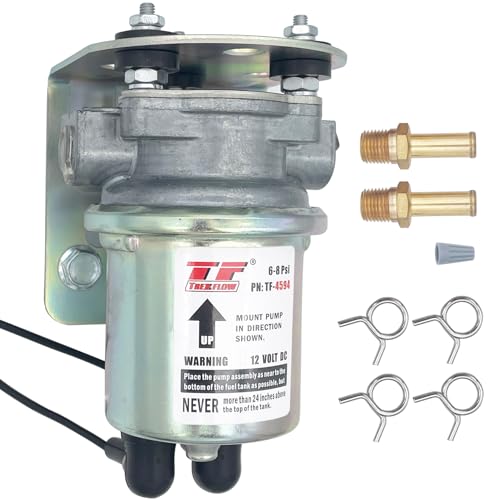
P4594 12V Bracket-Mounted Pump differs from the other standalone pumps by arriving preassembled on a metal bracket, with threaded electrical posts for wiring attachment. The maker specifies 12 VDC, 6–8 psi, a free flow of 72 GPH, and 1/4-inch NPS inlet and outlet fittings. Its pressure range is higher than P4594 12V Rotary Vane Pump, so choose it only when the engine can use that range. The maker advises mounting it low near the tank and using a pre-filter rated at 100 microns or coarser.
Bottom line: Pick it when the specified 6–8 psi range and bracket-mounted format suit your setup.
Carter P75026M Pump Module

Carter P75026M Pump Module is the option here built as an automotive fuel-pump module assembly, not a standalone carburetor pump. Its features include a Clean Screen strainer and silver fuel-sender contacts; the maker says the strainer provides up to 40% greater dirt-holding capacity than the next-best competing strainer. Most applications include accessories such as tank seals, strainers, and wiring harnesses. The module format makes it a different kind of replacement, so confirm the vehicle’s required module part number and included components.
Bottom line: Choose it for a vehicle that calls for the P75026M module assembly.
How to Choose a Carter Fuel Pump
Choose by matching the engine’s fuel-system type, required pressure, and replacement part number; a pump that fits physically can still deliver the wrong pressure. Carbureted systems commonly use low-pressure pumps around 4–7 psi, while many electronic fuel-injection systems require substantially higher pressure, often in the tens of psi. A standalone pump and an in-tank module assembly are also different replacement formats. Check the engine or vehicle’s specified part number and pressure range before buying, then compare inlet and outlet fittings and electrical connections. If pressure requirements are unknown, confirm them before ordering rather than treating a similar-looking pump as interchangeable.
Carbureted and Fuel-Injection Pump Differences
Carbureted engines generally need lower fuel pressure than fuel-injected engines, so pump type and pressure must match the fuel-delivery system. A carburetor’s float and needle valve regulate fuel entering the bowl; excess pump pressure can overwhelm that regulation and contribute to flooding. Fuel-injection systems use pressurized delivery to feed injectors, with required pressure varying by design. The 4–8 psi range on the standalone options here is a low-pressure range, not a universal fit for every engine. Use the engine’s specified pressure as the decision rule: if it calls for more than 8 psi, do not choose a pump based only on a Carter name or similar fittings.
Pump Fit, Threads, and Mounting
Thread size and mounting position can determine whether a replacement installs correctly. The standalone pump options use 1/4-inch NPS-family connections, but a 1/4-inch fitting alone does not prove that thread form or seal type matches; compare the exact connection specification. For a gravity-fed layout, a pump mounted low and near the fuel tank can help supply fuel to the inlet, and the maker of P4594 12V Bracket-Mounted Pump specifically recommends that placement. Keep fuel lines away from exhaust heat and moving parts, and support them so vibration does not strain connections. A module assembly is fitted differently from an external pump, so verify the vehicle’s module application before selecting that format.
Fuel Pump Installation Safety
Fuel-pump work involves flammable liquid and vapor, so eliminate ignition sources before opening a fuel line. Work outdoors or in a well-ventilated area, keep cigarettes and open flames away, and disconnect the battery before handling electrical connections. Relieve fuel-system pressure using the vehicle’s service procedure; trapped fuel can spray when a line is loosened. Use fuel-rated hose and fittings, and inspect connections for leaks after installation without starting the engine. A fuse-protected electrical circuit and secure ground are important for a 12V pump. If a line is damaged, a connection will not seal, or fuel odor persists, stop and have the system checked before driving.
Frequently Asked Questions
What pressure should a carburetor fuel pump deliver?
Many carbureted engines use roughly 4–7 psi, but the correct pressure depends on the carburetor and engine setup. Match the engine’s specified range rather than assuming all low-pressure pumps are interchangeable.
Can a 6–8 psi pump work with every carburetor?
No; carburetors have different pressure requirements, and too much pressure can overwhelm the float and needle valve. Use a pump only if its range matches the engine’s specified range.
Where should an external electric fuel pump be mounted?
A gravity-fed external pump is commonly mounted low and near the fuel tank so fuel can reach its inlet. Keep the pump and fuel lines away from exhaust heat, moving parts, and likely impact areas.
What does a fuel-pump module assembly include?
A module assembly combines a pump with components that fit into the vehicle’s tank, and the included parts vary by application. Confirm the required module part number and check whether seals, strainers, and wiring components are included.
How do I check whether a replacement pump fits?
Compare the exact OEM or replacement part number, required pressure, electrical connection, and inlet and outlet fittings. Thread size alone is not enough to confirm a match, because thread form and sealing method matter too.