
Chewing Sticks for Humans: 5 Types Compared

For a traditional tooth-cleaning twig, choose KUZANOX Miswak Sticks: it is made from Salvadora persica wood and comes in a 12-stick pack. Choose a different type if you want a flavored stick for biting and chewing rather than a toothbrush alternative, or prefer licorice root.
Chewing sticks are twigs or root pieces used for oral care or oral sensory chewing; they are not all meant to be used the same way.
We earn a commission if you buy through links on this page. As an Amazon Associate I earn from qualifying purchases. Products are compared on manufacturer specifications, not hands-on testing.
- Best overall: KUZANOX Miswak Sticks – Salvadora persica wood and a 12-stick pack suit a traditional tooth-cleaning routine.
- Best for mint flavor: CHEWZ STIX Fresh Mint Birchwood – Fresh mint-flavored birchwood sticks are made for biting, holding and chewing.
- Best for licorice root: HalalEveryDay African Licorice Sticks – These thin licorice-root sticks come in an assorted-length 1-pound pack.
| Product | Best for | Material | Shop |
|---|---|---|---|
| KUZANOX Miswak Sticks | Traditional tooth cleaning | Salvadora persica wood | Check Price on Amazon |
| CHEWZ STIX Fresh Mint Birchwood | Mint sensory chewing | Birchwood | Check Price on Amazon |
| SEWAK AL-FALAH Miswak | Individually sealed miswak | Miswak tree material | Check Price on Amazon |
| HalalEveryDay African Licorice Sticks | Licorice-root chewing | Licorice root | Check Price on Amazon |
| FREEGRIN Miswak Sticks | Small miswak pack | Salvadora persica | Check Price on Amazon |
Chewing sticks for humans
Compare the stick material and intended use before choosing a chewing stick for oral care or sensory chewing.
KUZANOX Miswak Sticks

For a traditional miswak routine, this pack contains 12 sticks made from Salvadora persica, also called Peelu wood. The maker says plant fibers help gently clean teeth and support daily oral hygiene; the sticks have a naturally earthy taste and aroma. The format suits someone seeking a twig toothbrush rather than a flavored stick mainly for chewing.
Bottom line: Choose it for a traditional Salvadora persica tooth-cleaning stick in a 12-count pack.
CHEWZ STIX Fresh Mint Birchwood

Unlike the miswak and licorice-root options, these are flavored birchwood sticks intended for biting, holding and chewing, not for brushing teeth. The Fresh Mint pouch contains 10 sticks, and the maker describes them as sugar-free and zero-calorie for adults. That makes this format a fit for someone who wants a portable oral sensory routine with mint flavor. The tradeoff is that it does not serve as a toothbrush twig; anyone choosing it for oral care rather than chewing would be selecting the wrong type.
Bottom line: Pick it for adult sensory chewing with a fresh mint flavor.
SEWAK AL-FALAH Miswak
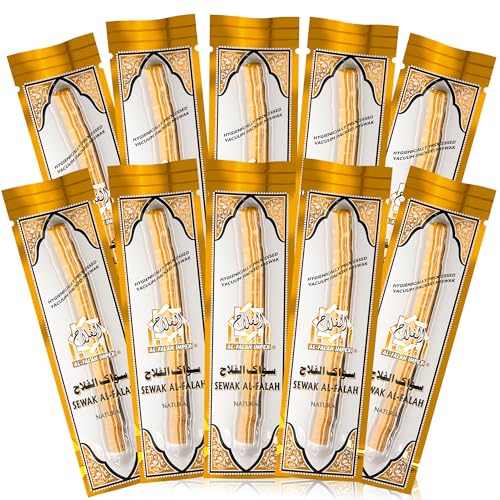
This 10-pack of individually vacuum-sealed miswak is the option here that emphasizes separate sealed sticks. The maker describes it as a natural manual toothbrush with soft bristles and says a stick can last months with proper care and brushing habits. It suits someone looking for a ready-to-use traditional tooth-cleaning twig in a multi-stick pack. The specifications give no plant species, so buyers who specifically want Salvadora persica should confirm the material before choosing it.
Bottom line: Choose it if individually sealed miswak sticks are the priority.
HalalEveryDay African Licorice Sticks

These sticks are made from licorice root, not neem, and differ from the miswak products by offering root pieces in a 1-pound pack with assorted lengths and a thin width. The maker says they can serve as a natural toothbrush alternative or as something to chew when curbing smoking or snacking cravings; the product is not described as tasting like licorice candy. This suits someone who specifically wants licorice root in a larger bulk format. The varied lengths mean individual stick dimensions are not uniform.
Bottom line: Pick it for licorice-root sticks in a bulk pack rather than a defined stick count.
FREEGRIN Miswak Sticks

This is the smallest miswak pack here, with two vacuum-sealed sticks made from Salvadora persica, also called Sewak or Peelu. The maker presents it as a traditional natural toothbrush alternative and emphasizes preserving the material’s natural properties. The compact count suits someone who wants only a couple of sticks rather than a 10- or 12-count pack.
Bottom line: Choose it when you want a two-stick Salvadora persica pack.
How to choose chewing sticks for humans
Start with whether the stick is for tooth cleaning or sensory chewing: miswak is used as a twig toothbrush, while flavored birchwood is described for biting, holding and chewing. Miswak sticks are typically prepared by chewing or peeling back the end until fibers form a brush-like tip; use that end with gentle strokes rather than biting down on it. Choose a material and purpose that match your routine, not just the word “chewing” on a package. For a tooth-cleaning twig, favor a clearly identified plant material and learn the preparation method; for oral sensory chewing, select a product specifically intended for chewing and follow its age and use guidance.
A simple decision rule is to choose miswak when tooth cleaning is the goal and a designated chew stick when biting or holding is the goal. Do not assume that every stick is interchangeable.
Miswak and chewing-stick types compared
Miswak and flavored chew sticks differ mainly in their intended job: a prepared miswak tip acts as a small brush, while birchwood chew sticks provide a stick to bite or hold. Licorice-root sticks are another material and should not be treated as the same plant as miswak. The table maps the materials to their described purposes.
| Type | Material | Typical use |
|---|---|---|
| Miswak | Salvadora persica twig | Prepare a fibrous tip for tooth cleaning |
| Flavored chew stick | Birchwood | Biting, holding and chewing |
| Root stick | Licorice root | Chewing or a toothbrush alternative |
Choose according to the use stated for the product, since a chew stick is not automatically a toothbrush.
Preparing and caring for a miswak stick
A miswak twig works as a brush after its end is opened into fibers; trim or peel away the used, splayed portion when it becomes worn, then make a fresh tip. Keep the stick clean and allow it to dry between uses rather than leaving it wet in a closed container, which can encourage microbial growth. Use light pressure along the teeth and gumline; forceful scrubbing can irritate gums whether the tool is a twig or a conventional brush. Replace a stick that becomes dirty, damaged, or develops an unusual odor. For routine dental care, a twig should not displace regular dental visits or fluoride toothpaste where recommended.
Chewing-stick safety and common mistakes
Chewing sticks are solid pieces of wood or root, so avoid swallowing fragments and stop using a stick that splinters. A sharp or rigid piece can injure the mouth, especially if chewed aggressively; supervise children and do not give them an adult chew stick without age guidance. Do not share a tooth-cleaning twig, since sharing oral-care tools can transfer saliva and germs. Another common mistake is treating a flavored chew stick as a brush: a product designed for biting does not clean teeth in the same way as a prepared miswak tip. Use each type only for its purpose and discard any piece that becomes damaged.
Frequently Asked Questions
How do you prepare a miswak stick for brushing?
Peel or chew the end until it separates into soft fibers that form a small brush. Trim back the worn fibers and prepare a fresh end when the tip becomes splayed or dirty.
How often should a miswak stick be replaced?
Replace or trim the used end when the fibers become worn, dirty, or damaged; the interval depends on how often and how firmly the stick is used. Keep the stick clean and dry between uses.
Can a chewing stick replace a toothbrush?
A prepared miswak can be used as a tooth-cleaning twig, but a flavored stick intended for biting and holding is not a toothbrush. For comprehensive oral care, do not assume any chewing stick replaces dental advice or routine care.
Are miswak and licorice sticks the same plant?
No. Miswak is commonly made from Salvadora persica, while licorice sticks are made from licorice root. Check the named material when the plant source matters to your choice.
Is it safe to share a chewing stick?
Do not share a tooth-cleaning stick because it contacts saliva and oral tissues. Keep an individual stick clean, and discard it if it splinters or becomes damaged.