
Cleveland Iron Works Pellet Stove Models Compared

For most buyers, Cleveland Iron Works Large, 130 lb Hopper is the Cleveland Iron Works pellet stove to consider first because its 130-pound hopper is the largest of these models. Choose Cleveland Iron Works Bay Front, 66 lb Hopper for a smaller rated heating area and a digital control panel with remote, or Cleveland Iron Works Cast Iron, 90 lb Hopper for cast-iron construction and a 90-pound hopper.
A pellet stove burns compressed wood pellets and uses a powered system to feed fuel and move heat. Match the stove to your room and installation requirements, not just the largest advertised coverage area.
We earn a commission if you buy through links on this page. As an Amazon Associate I earn from qualifying purchases. Products are compared on manufacturer specifications, not hands-on testing.
- Best overall: Cleveland Iron Works Large, 130 lb Hopper – Its 130-pound hopper is larger than the other models’ 66- and 90-pound capacities.
- Best for digital controls: Cleveland Iron Works Bay Front, 66 lb Hopper – It includes a digital control panel and remote.
- Best for cast iron: Cleveland Iron Works Cast Iron, 90 lb Hopper – Its cast-iron build distinguishes it from the other two models.
| Product | Best for | Heating area | Hopper capacity | Weight | Shop |
|---|---|---|---|---|---|
| Cleveland Iron Works Large, 130 lb Hopper | Fewer refills | 2,000–3,000 sq ft | 130 lb | 209.44 lb | Check Price on Amazon |
| Cleveland Iron Works Bay Front, 66 lb Hopper | Remote controls | 1,800–2,500 sq ft | 66 lb | 242.51 lb | Check Price on Amazon |
| Cleveland Iron Works Cast Iron, 90 lb Hopper | Cast-iron build | 2,000–3,000 sq ft | 90 lb | 304.24 lb | Check Price on Amazon |
Cleveland Iron Works Pellet Stove Comparison
Compare the three Cleveland Iron Works models by rated coverage, hopper size and weight before choosing a stove.
Cleveland Iron Works Large, 130 lb Hopper

Cleveland Iron Works Large, 130 lb Hopper has the largest hopper among these Cleveland Iron Works models, with a 130-pound capacity. The maker rates it for 2,000 to 3,000 square feet and says it has built-in Wi-Fi for smart-home use. Its dimensions are 42.13 inches high, 28.35 inches long and 24.49 inches wide.
Choose this model if you want a large pellet reserve and your space is within its rated heating range. Its coverage is not a guarantee for every layout: insulation, ceiling height and climate affect how much heat a room needs. The 209.44-pound weight also makes placement and installation planning important.
Bottom line: Pick this model if its rated coverage fits your space and the 130-pound hopper is your priority.
Cleveland Iron Works Bay Front, 66 lb Hopper
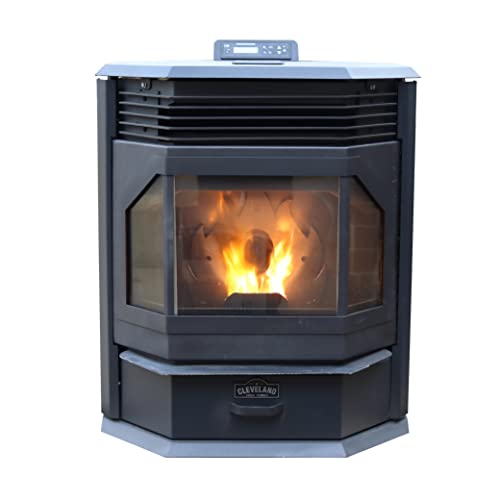
Cleveland Iron Works Bay Front, 66 lb Hopper is the control-focused option, with a digital control panel and remote included. The maker rates it for 1,800 to 2,500 square feet and specifies built-in Wi-Fi; its 66-pound hopper is smaller than the other two models’ hoppers. Stated dimensions are 36.6 inches high, 26.8 inches long and 28.3 inches wide.
Consider this stove if the included remote and control panel matter more to you than maximizing pellet capacity. Its rated coverage overlaps the other models, so room size alone will not settle the choice. At 242.51 pounds, it is heavier than Cleveland Iron Works Large, 130 lb Hopper, a factor to plan for when arranging delivery and installation.
Bottom line: Choose this option if you value the included remote and control panel over a larger hopper.
Cleveland Iron Works Cast Iron, 90 lb Hopper

Cleveland Iron Works Cast Iron, 90 lb Hopper stands apart with a cast-iron build and a 90-pound pellet hopper. The maker describes it as controllable through an iOS or Android app, with a programmable digital thermostat, and rates it for 2,000 to 3,000 square feet. Its dimensions are 33.42 inches high, 31.1 inches long and 27.84 inches wide.
This model suits buyers who want cast iron and app control without choosing the largest hopper. Its 304.24-pound weight is the highest of these three, so confirm the floor and installation plan can accommodate the stove. App functions and heating performance are maker claims; the room’s layout and insulation still affect real-world heating needs.
Bottom line: Pick this model if cast iron and app-based control matter more than minimizing stove weight.
How to choose a Cleveland Iron Works pellet stove
Start with the space you need to heat, then compare hopper capacity and controls. These models are rated for 1,800 to 3,000 square feet, but the printed range is not a substitute for matching heat output to insulation, ceiling height, climate and room layout. Open-plan areas can distribute heat differently from rooms divided by closed doors.
Hopper capacity affects how often you need to replenish fuel, but runtime also changes with heat setting and pellet feed rate. For a simple decision rule, if you want the largest capacity among these three, choose the 130-pound hopper; if you need the included remote and digital panel, compare the 66-pound model. Confirm the stove’s installation and venting requirements before selecting a location.
Pellet stove sizing and room coverage
Use the manufacturer’s square-foot rating as a starting point, not a promise that one stove will heat every home equally. Drafts, insulation quality, ceiling height, floor plan and outdoor temperatures all change the heat a space needs. A high-ceiling room or a home with several separated rooms may not behave like a compact, well-insulated open area of the same floor size.
These models’ rated ranges overlap, so a room near the edge of a range deserves extra care. Measure the area you intend to heat and consider whether doors or stairways restrict circulation. Do not size solely by the biggest number: an oversized stove may be run at low output more often, while an undersized stove may struggle during colder conditions. Have the installation plan checked against the manual and local requirements.
Pellet stove venting and installation
Pellet stoves need an exhaust vent to carry combustion gases outdoors, and the vent route and termination must follow the stove manual and local building and fire rules. Pellet-stove vent systems commonly use 3- or 4-inch pipe, but the required diameter and allowable layout depend on the appliance and vent configuration. Do not select pipe size from a general rule alone.
Clearances from walls and other combustibles are model-specific; the manual’s clearance diagram determines safe placement. A noncombustible hearth or floor protection may also be required for the particular installation. Before buying, map the vent path and verify clearances, floor protection, electrical access and any mobile-home requirements that apply. A certified installer can help resolve code and venting questions before the stove is in place.
Pellet fuel and routine stove care
Wood pellets are commonly about 1/4 inch in diameter, but length, dust and moisture vary by batch and can affect feeding and combustion. Use fuel approved for the specific stove, keep pellets dry, and avoid letting debris accumulate in the hopper. Damp or crumbling pellets can interfere with consistent feeding.
Pellet stoves also need regular ash removal and cleaning of the burn pot and heat-exchange areas; use the manual’s schedule because the interval depends on burn rate and fuel quality. Always let the stove cool fully before cleaning, and never dispose of warm ash in a combustible container. Keep exhaust passages clear and arrange qualified inspection or service when the manual calls for it or the stove shows a fault.
Frequently Asked Questions
How large a room can these pellet stoves heat?
The three Cleveland Iron Works models here are maker-rated for areas from 1,800 to 3,000 square feet. Insulation, ceiling height, climate and room layout can change the coverage a home actually needs.
How often does a pellet stove hopper need refilling?
Refill frequency depends on hopper size, heat setting and feed rate, so capacity alone cannot establish a fixed interval. These three hoppers hold 66, 90 or 130 pounds; higher heat demand generally uses pellets faster.
What size vent pipe does a pellet stove need?
Pellet-stove vent systems commonly use 3- or 4-inch pipe, but the required diameter and permitted vent layout depend on the stove and installation. Check the appliance manual and local code before selecting vent components.
Can a pellet stove vent through a wall?
Some pellet-stove installations use a side-wall vent, but the allowable route and termination clearances depend on the model manual and local code. Verify the vent plan before choosing a location, especially near windows, doors or combustible materials.
How often should a pellet stove be cleaned?
Ash and combustion areas need regular cleaning, with frequency driven by operating time and pellet quality. Follow the model’s maintenance schedule and allow the stove to cool completely before removing ash.