
Compression Socks With Zipper: 5 Options Compared

For compression socks with zipper, TheraMagic Zipper Compression Socks, 20–30 mmHg is the named product and offers 20–30 mmHg graduated support in a closed-toe design; choose a different option if you need 15–20 mmHg or open toes.
Zippered compression socks are knee-high stockings with a closure intended to make them easier to put on. Compare compression level, toe coverage, and sizing before choosing.
We earn a commission if you buy through links on this page. As an Amazon Associate I earn from qualifying purchases. Products are compared on manufacturer specifications, not hands-on testing.
- Best overall: TheraMagic Zipper Compression Socks, 20–30 mmHg – The 20–30 mmHg closed-toe design distinguishes it from the available 15–20 mmHg options.
- Best for multipacks: Tarpop Zipper Compression Socks, 4 Pairs – This option comes with four pairs and provides 20–30 mmHg compression.
- Best for open toes: bropite Zipper Compression Socks, Open Toe – The open toe construction differs from the closed-toe designs in the group.
| Product | Best for | Compression | Toe style | Pair count | Shop |
|---|---|---|---|---|---|
| TheraMagic Zipper Compression Socks, 20–30 mmHg | Higher compression | 20–30 mmHg | Closed toe | — | Check Price on Amazon |
| cerpite Zipper Compression Socks, 15–20 mmHg | Two-pair set | 15–20 mmHg | Closed toe | 2 pairs | Check Price on Amazon |
| Ailaka Medical Zipper Compression Socks, 15–20 mmHg | Sheer appearance | 15–20 mmHg | Closed toe | 1 pair | Check Price on Amazon |
| Tarpop Zipper Compression Socks, 4 Pairs | Four-pair pack | 20–30 mmHg | Closed toe | 4 pairs | Check Price on Amazon |
| bropite Zipper Compression Socks, Open Toe | Open toe coverage | 15–20 mmHg | Open toe | 2 pairs | Check Price on Amazon |
Compression Socks With Zipper Compared
Compare each pair’s compression level, toe coverage, and pack size before selecting a fit.
TheraMagic Zipper Compression Socks, 20–30 mmHg

TheraMagic Zipper Compression Socks, 20–30 mmHg is the only named option here with 20–30 mmHg support and a YKK zipper. It is intended for shoppers seeking a higher compression range who want a zip closure. The manufacturer advises measuring first thing in the morning and consulting its size chart, which is especially relevant because the size is Large-X-Large. Its 20–30 mmHg range may not suit someone directed to use lighter compression; confirm the appropriate level with a clinician if you have a medical concern.
Bottom line: Choose this if you need the higher 20–30 mmHg range and closed toes.
cerpite Zipper Compression Socks, 15–20 mmHg
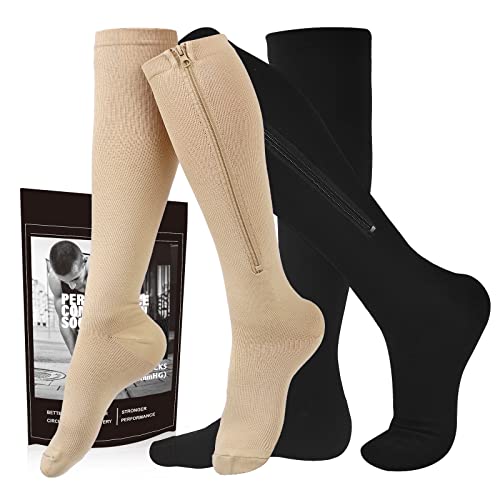
cerpite Zipper Compression Socks, 15–20 mmHg offers a 15–20 mmHg option in a two-pair pack, making pack quantity its clear distinction from the single-pair option and four-pair set. These are closed-toe socks in Black/Beige, size Large-X-Large, for men and women. This option may suit someone who wants two pairs in a lighter range than 20–30 mmHg. Color choices and sizing are limited in the configuration, so compare your leg measurements with the maker’s sizing guidance before selecting; compression garments should not be chosen solely by shoe size.
Bottom line: Pick this for a two-pair closed-toe set in 15–20 mmHg.
Ailaka Medical Zipper Compression Socks, 15–20 mmHg

It also describes an inner fabric layer intended to keep the zipper from rubbing against skin and a zipper designed to stay closed during movement. Black is the color, with a Large/X-Large size. This may fit shoppers who prefer one pair and want a sheer style rather than a multipack.
Bottom line: Choose this for a single pair with a sheer look.
Tarpop Zipper Compression Socks, 4 Pairs

Tarpop Zipper Compression Socks, 4 Pairs stands apart with four pairs in one set, all in black and size L/XL. The socks use 20–30 mmHg compression and a side zipper with interior fabric intended to reduce rubbing. The closed-toe design may suit someone who wants multiple pairs at the same compression level for rotation. The package’s larger count is less useful if you need a different size or want open toe coverage; this product is available in only the size and color configuration. Match ankle and calf measurements to the maker’s sizing chart, since a zipper does not compensate for a poor leg fit.
Bottom line: Pick this if you want four closed-toe pairs in 20–30 mmHg.
bropite Zipper Compression Socks, Open Toe
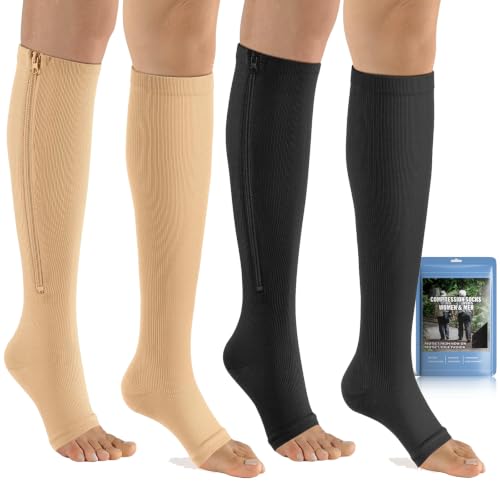
bropite Zipper Compression Socks, Open Toe is the open toe choice, unlike the closed-toe socks elsewhere in this group. It comes as two pairs in a 15–20 mmHg range, with calf-length, knee-high coverage described in the product name. The manufacturer recommends choosing the larger size when measurements fall between two sizes. Open toes leave the forefoot uncovered, which can be useful when closed-toe coverage is unwanted, but it is not the right pick if you need compression over the toes. The configuration is Large-X-Large; check leg measurements and the maker’s size chart before deciding.
Bottom line: Choose this if you want open toes with 15–20 mmHg compression.
How to choose compression socks with zipper
Choose compression level first, then verify fit and toe coverage. The products here span 15–20 and 20–30 mmHg; the higher range is not automatically a better choice for every wearer. Compression hosiery is commonly labeled by pressure at the ankle, with graduated designs applying more pressure at the ankle than higher on the leg. Ask a clinician which range is appropriate if you are using compression for a diagnosed condition or have circulation concerns. Measure ankle circumference at its narrowest point and calf circumference at its widest point, then use the brand’s size chart. If either measurement falls outside the chart, do not assume the zipper can make an undersized or oversized sock fit safely.
Closed-toe versus open toe zipper socks
Toe coverage is the simplest functional difference: closed-toe socks cover the toes, while open toe socks leave the forefoot exposed. Open toes can be preferable with sandals or when you want more toe room, but they do not provide fabric coverage over the toes. Closed toes offer continuous coverage through the front of the foot. Zipper placement also matters: a side or inner-leg zipper may reduce the need to stretch a tight stocking over the foot, but the closure should lie flat and not pinch skin. This table maps the main needs to the relevant type.
| Need | Type to consider | Tradeoff |
|---|---|---|
| Covered toes | Closed toe | More fabric over the forefoot |
| Forefoot exposed | Open toe | Toes are uncovered |
| Higher compression range | 20–30 mmHg | Use only the range appropriate to you |
How to measure for knee-high compression socks
Measure the ankle and calf rather than relying on shoe size. The ankle is usually measured at its narrowest circumference, and the calf at its widest; measure both legs if they differ and use the larger measurement when the maker’s chart directs you to a single size. Morning measurement can help when legs tend to swell later in the day; the TheraMagic maker specifically recommends measuring then. A sock that bunches, slides, or creates a tight band may be the wrong size or incorrectly positioned. Smooth out wrinkles and keep the zipper track straight when putting it on. For a between-sizes result, follow the maker’s size guidance rather than guessing.
When to use compression socks safely
Compression levels should match the wearer, not just the activity. A clinician can help determine whether 15–20 or 20–30 mmHg is suitable, especially when compression is being considered for a medical issue. Do not treat a product’s marketing claims as a substitute for medical guidance. Remove the sock and seek advice if it causes numbness, tingling, pain, or skin color changes; these can signal pressure or circulation problems. Zippers should close without pulling skin into the teeth, and any protective fabric flap should stay between the zipper and skin. Keep the garment smooth, since folds can create concentrated pressure rather than even support.
Frequently Asked Questions
What does 15–20 mmHg mean in compression socks?
The number describes the compression pressure range, measured in millimeters of mercury. In graduated stockings, pressure is strongest at the ankle and decreases up the leg; ask a clinician which range fits your needs.
Should I measure compression socks in the morning?
Morning measurements can be useful if your legs swell during the day. Measure ankle and calf circumference and compare both with the maker’s sizing chart before choosing a size.
Can zipper compression socks be too tight?
Yes; pain, numbness, tingling, or color changes are reasons to remove them and seek medical advice. A zipper does not make an incorrect size safe, so confirm ankle and calf measurements first.
Are open toe compression socks better for sandals?
Open toe socks leave the forefoot uncovered, which can work with sandals, while closed-toe socks cover the toes. Choose based on whether you need compression fabric over the toes.
How should I put on zippered compression socks?
Keep the sock smooth and the zipper track straight as you position it, with any inner protective flap between zipper and skin. Avoid wrinkles or pinched skin, since folds can create concentrated pressure.