
Cooling Socks for Hot Feet: 4 Options Compared

For cooling socks for hot feet, Hilph Foot Ice Pack Slippers is the clearest all-around fit because its slip-on design covers the toes, arch and heel and its large size fits US sizes 5–11.
Choose Chilmax Gel Ice Pack Socks, 2-Pack instead if you want an adjustable one-size wrap, or Zomaple Cold Therapy Socks, Medium if medium sizing and compression straps suit you better; these are reusable cold therapy products, not lightweight everyday socks.
We earn a commission if you buy through links on this page. As an Amazon Associate I earn from qualifying purchases. Products are compared on manufacturer specifications, not hands-on testing.
- Best overall: Hilph Foot Ice Pack Slippers – Slip-on coverage extends from toes to arch and heel, with a US size range of 5–11.
- Best for adjustable fit: Chilmax Gel Ice Pack Socks, 2-Pack – A one-size elastic wrap uses an ankle Velcro closure to adjust its fit.
- Best for strap adjustment: Zomaple Cold Therapy Socks, Medium – Its medium fit uses two compression straps and surrounds the ankle and heel.
| Product | Best for | Cooling format | Fit | Coverage | Shop |
|---|---|---|---|---|---|
| Hilph Foot Ice Pack Slippers | Slip-on coverage | Gel ice slippers | Large, US 5–11 | Toes, arch, heel | Check Price on Amazon |
| Chilmax Gel Ice Pack Socks, 2-Pack | Adjustable fit | Hot/cold gel socks | One size | Foot and ankle | Check Price on Amazon |
| Zomaple Cold Therapy Socks, Medium | Strap adjustment | Gel packs and sock | Medium | Full foot, ankle, heel | Check Price on Amazon |
| Cold Therapy Frozen Stockings, Large | Frozen slipper style | Reusable frozen gel stockings | Large | Foot and heel | Check Price on Amazon |
Cooling Socks for Hot Feet Compared
Compare the cooling format, fit and coverage before choosing a reusable cold therapy style.
Hilph Foot Ice Pack Slippers
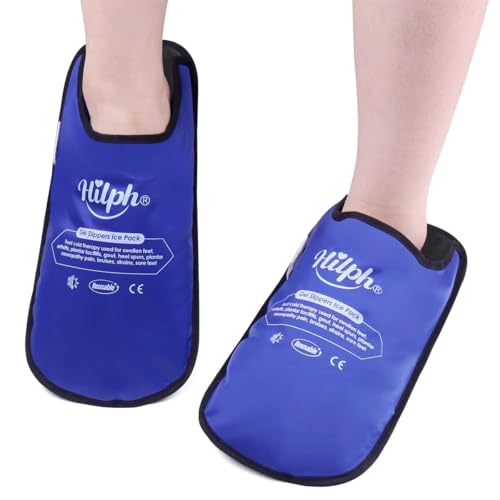
For a slip-on design with a defined shoe-size range, this pair fits large sizes 5–11 US and covers the toes, arch and heel. The maker describes the slippers as hands-free and says the wraparound shape targets the ball, arch and heel. The no-buckle style may suit someone who prefers not to fasten straps, while the size range gives a more specific fit reference than one-size styles.
Bottom line: Choose this pair if your US shoe size is 5–11 and you want a slip-on style.
Chilmax Gel Ice Pack Socks, 2-Pack

For a one-size adjustable wrap, this two-piece set uses an ankle Velcro closure and elastic fabric rather than a fixed shoe-size range. The maker says the gel socks support both hot and cold therapy, can be worn on either foot and provide 360-degree coverage. That combination may appeal when a wrap needs to be secured around the ankle or moved between feet. The product is 3.15 inches high, 4.5 inches long and 6.8 inches wide; because those measurements do not establish a shoe-size range, buyers who need a precise fit should prioritize a product with a size range.
Bottom line: Pick this option if adjustable closure and one-size design matter most.
Zomaple Cold Therapy Socks, Medium

For strap-based adjustment, this medium-size option has two compression straps and a built-in gel bootie around the ankle and heel. The maker says its gel stays soft when frozen and the design delivers full-foot cooling; the dimensions are 10.23 inches long, 7.87 inches wide and 0.79 inches high. The straps let the wearer adjust snugness, which distinguishes it from the slip-on pair. The maker advises removing it before walking or standing, so it is better suited to seated or resting use than to moving around while wearing it.
Bottom line: Choose it if you want a medium sock with adjustable straps for resting use.
Cold Therapy Frozen Stockings, Large

For a frozen stocking or slipper shape in a large size, this blue option is described as reusable and intended for the feet and heels. The maker says the cooling lasts at least 15–20 minutes and recommends freezing the packs separately rather than stacking them. That timing gives buyers a session length to compare with other styles. The fit is large, but no shoe-size range accompanies it, so people who need a precise fit may prefer the pair with a numeric range. Treat the cooling duration as the maker’s claim, not a guaranteed result for every user.
Bottom line: Pick this style if you want a large frozen stocking and a 15–20-minute cooling period.
How to Choose Cooling Socks for Hot Feet
Choose first between a gel slipper that slips on, a wrap that fastens, and a sock built for ordinary daily wear. Cold therapy gel products are designed to hold a chilled pack against the foot; moisture-wicking fabric instead moves sweat away from skin and does not provide a frozen-pack cooling session. For a defined size range, favor a model that names shoe sizes; one-size and medium labels alone do not tell you how they fit your foot. If you want to walk around, do not assume a cold gel sock is designed for mobility: some styles are meant for resting, and a frozen pack can affect balance and sensation.
Match the closure to how much adjustment you want: slip-on needs less fastening, while straps can be tightened or loosened.
| Need | Style to consider |
|---|---|
| Defined shoe-size range | Slip-on gel slipper |
| Adjustable ankle closure | Velcro wrap |
| Strap-adjusted fit | Gel sock with straps |
| Everyday sweat management | Breathable moisture-wicking sock |
Fit and Coverage for Gel Cooling Socks
Foot coverage differs by design: some products cover toes through heel, while ankle wraps may concentrate material around the foot and ankle. A shoe-size range is more useful than a generic label such as large or one size; compare the range with the wearer’s usual US shoe size before choosing. For a strap model, check that the closure can sit comfortably without cutting into the ankle. Cold packs should fit smoothly rather than bunch into a hard lump, since concentrated pressure can irritate skin. When a product gives only a general fit label, confirm the fit before ordering if exact sizing is important.
Do not wear a cold therapy sock inside a tight shoe or use it while walking unless its design explicitly supports that activity; bulk and reduced foot sensation can make footing less secure.
Using Cold Therapy Socks Safely
Keep each cold application to about 15–20 minutes, then let the skin return to normal temperature before another session. A thin cloth barrier between a very cold pack and skin can reduce the chance of cold injury; inspect the skin during use and stop if it becomes unusually pale, numb, painful or blotchy. People with neuropathy, reduced circulation or reduced ability to feel temperature should ask a clinician before applying cold, because they may not notice excessive cooling promptly. Do not sleep while wearing frozen gel packs, since prolonged exposure can continue without the wearer noticing discomfort.
Cold therapy socks are not a substitute for medical assessment when foot pain is sudden, severe, worsening, or accompanied by marked swelling or skin color change.
Gel Cooling Socks Versus Everyday Cooling Socks
Gel cold therapy socks and breathable everyday socks solve different comfort problems. A gel product uses a chilled pack for a short, localized cooling session; a bamboo-viscose or mesh athletic sock relies on moisture management and airflow while being worn as regular footwear. The latter does not freeze and cannot provide the same cold-pack contact. For sweaty feet in shoes, choose a breathable moisture-wicking fabric and change damp socks; for a short cold session while resting, consider a gel format and follow safe application timing. Avoid using fabric claims such as odor resistance as a promise of a medical or temperature-control effect.
Wash and dry ordinary fabric socks according to their care label; keep reusable gel packs clean and check seams for leakage before each use.
Frequently Asked Questions
How long should I wear cooling socks at a time?
Keep a cold-pack session to about 15–20 minutes, then allow the skin to warm before repeating. Check the skin during use and remove the pack if numbness, unusual color or pain develops.
Can I sleep in frozen gel socks overnight?
No, avoid sleeping in frozen gel socks because prolonged cold exposure can continue without your noticing discomfort. Use a short session while awake and inspect the skin periodically.
Are gel cooling socks safe for neuropathy?
Reduced sensation can make it harder to detect cold injury, so ask a clinician before using frozen gel socks if you have neuropathy. If approved, keep sessions short and inspect the skin rather than relying on discomfort alone.
Can I walk while wearing cold therapy socks?
Treat gel socks as resting-use products unless their design clearly supports walking. A bulky pack or reduced sensation can affect footing, and one maker specifically advises removing its sock before walking or standing.
What is the difference between cooling socks and gel ice socks?
Everyday cooling socks use breathable or moisture-wicking fabric to manage sweat, while gel ice socks hold a chilled pack against the foot for a limited session. Choose fabric for regular shoe wear and a gel style for brief cooling while resting.