
Copper Fit Compression Socks: 3 Models Compared

Copper Fit Energy Compression Socks is the most versatile Copper Fit compression sock here because it combines 10–20 mmHg graduated compression with an easy-on design and three pairs. Choose Copper Fit Mobilizer Compression Socks if you want a cushioned footbed and LumaCore fabric, or Copper Fit 2.0 Easy-Off Knee High Socks if you prefer a single pair of knee high socks.
Compression socks apply pressure to the lower leg; graduated styles are tighter at the ankle and ease pressure higher up the calf. Fit matters as much as the model, so measure your ankle and calf before choosing a size.
We earn a commission if you buy through links on this page. As an Amazon Associate I earn from qualifying purchases. Products are compared on manufacturer specifications, not hands-on testing.
- Best overall: Copper Fit Energy Compression Socks – Three pairs combine easy-on wear with specified graduated 10–20 mmHg compression.
- Best for cushioned wear: Copper Fit Mobilizer Compression Socks – Three pairs have a cushioned footbed, moisture-wicking fabric, and L/XL sizing.
- Best for knee-high coverage: Copper Fit 2.0 Easy-Off Knee High Socks – This single-pair option is identified as knee high and has a cushioned footbed.
| Product | Best for | Compression | Pack count | Size | Shop |
|---|---|---|---|---|---|
| Copper Fit Energy Compression Socks | Everyday rotation | 10–20 mmHg graduated | 3 pairs | S/M | Check Price on Amazon |
| Copper Fit Mobilizer Compression Socks | Cushioned daily wear | 10–20 mmHg graduated | 3 pairs | L/XL | Check Price on Amazon |
| Copper Fit 2.0 Easy-Off Knee High Socks | Knee high coverage | — | 1 pair | L/XL | Check Price on Amazon |
Copper Fit Compression Socks Compared
Compare each pair’s compression rating, quantity, and fit before choosing for regular wear.
Copper Fit Energy Compression Socks

Copper Fit Energy Compression Socks stands apart with a 10–20 mmHg graduated compression rating and three pairs in the pack. Copper Fit says the easy-on/easy-off design supports circulation and helps reduce swelling and fatigue; the socks also have an arch-and-Achilles support band and breathable, moisture-wicking fabric. The S/M size makes this a fit-specific option rather than a universal choice, so compare your measurements with the size guidance before buying. This is the clearest pick for someone who wants a pressure range and multiple pairs, but it may not suit someone needing a larger size.
Bottom line: Choose this if S/M fits and you want a specified compression range with multiple pairs.
Copper Fit Mobilizer Compression Socks

Copper Fit Mobilizer Compression Socks pairs LumaCore Blu Infrared fibers with a cushioned footbed, making its fabric and step cushioning the distinguishing features. Copper Fit says the socks provide graduated 10–20 mmHg compression, arch support, and moisture-wicking comfort for work, travel, and everyday wear. The L/XL sizing is useful for shoppers whose measurements fall in that range, but the specialized fabric and cushioning may matter less to someone who mainly wants easy dressing. Match ankle and calf measurements to the maker’s sizing guide; a compression sock that is too tight can be uncomfortable and difficult to put on.
Bottom line: Pick this if cushioned comfort and L/XL sizing are your priorities.
Copper Fit 2.0 Easy-Off Knee High Socks
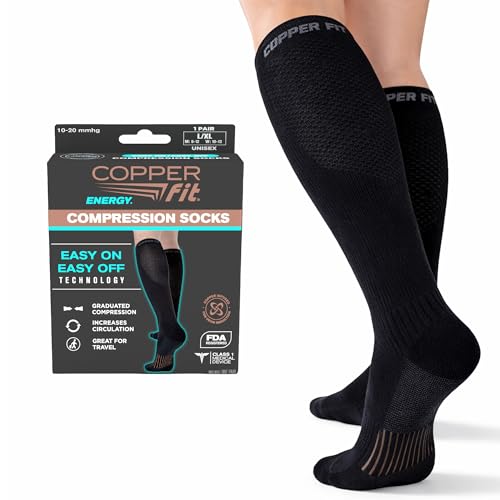
Copper Fit 2.0 Easy-Off Knee High Socks is the only single-pair option and is explicitly knee high, while the other Copper Fit choices come in three-pair packs. The sock has a fully cushioned footbed and is described as easy-on and easy-off; Copper Fit says its copper-infused fabric helps prevent odor during longer wear and travel. Its Large/X-Large size limits it to shoppers who fit that range.
Bottom line: Choose this for knee high coverage and a single pair when a pressure rating is not your deciding factor.
How to Choose Copper Fit Compression Socks
Choose a compression sock by pressure, fit, and how often you plan to wear it. Graduated compression applies the most pressure at the ankle, easing upward; the mmHg number describes pressure, not sock thickness. Of these options, two specify 10–20 mmHg, while the knee high model does not provide a pressure figure. A three-pair pack can make rotation easier, but it does not change the pressure or fit of an individual sock.
Measure the ankle at its narrowest point and the calf at its widest point, ideally in the morning before swelling increases. Use both measurements with the maker’s size chart. If your measurements fall across size categories, or you have a medical reason for compression, ask a clinician which size and pressure range are appropriate instead of sizing down for a tighter feel.
Getting the Right Compression Sock Fit
A properly fitted compression sock should feel snug and even, without rolling, pinching, or creating a painful band at the top. Measure the ankle and calf rather than choosing by shoe size alone; calf circumference often determines whether a knee high sock will stay comfortable. Put socks on when legs are least swollen, commonly in the morning, and smooth out folds rather than bunching fabric.
Remove a sock that causes numbness, tingling, unusual pain, or a color change, and seek medical advice before using compression if you have circulation or sensation concerns. A sock that is difficult to put on may be too small or may require an aid; extra force can damage knit fibers. Knee high length can also vary by leg, so confirm that the top sits below the knee crease rather than directly across it.
Understanding Compression Ratings and Sock Types
Compression socks are commonly grouped by pressure in mmHg, with graduated styles tighter at the ankle and less compressive toward the calf. A 10–20 mmHg range is a light-to-moderate level commonly selected for everyday wear, while medical needs may call for a different pressure and professional guidance. Do not assume that copper-infused fibers or cushioning change the sock’s compression level.
The feature comparison is practical: pressure rating helps narrow use, pack count affects rotation, and size determines fit. Some products specify a mmHg value; when a pressure number matters, favor a model that provides one rather than estimating from a product name or fabric feel. Socks are not a substitute for medical assessment of persistent leg swelling or pain.
| Need | Compare first |
|---|---|
| Known compression level | Choose a model with a mmHg range |
| Frequent rotation | Compare pack count |
| Knee high coverage | Confirm the sock height and leg measurements |
Wearing and Caring for Compression Socks
Put compression socks on over dry skin and smooth the fabric evenly from ankle to calf; folds can create uncomfortable pressure points. Avoid pulling hard on the top band, which can stretch or damage the knit. The easiest time to put them on is generally before prolonged standing or sitting, while legs are less swollen.
Wash according to the garment’s care label, since heat and harsh handling can weaken elastic fibers. Air-drying helps avoid unnecessary heat exposure when the label permits it. Replace a pair when the fabric loses its snug, even fit, develops holes, or no longer stays in place. For long periods of sitting, move your ankles and stand or walk periodically when safe; socks do not replace movement breaks.
Frequently Asked Questions
How do I measure for compression socks?
Measure the narrowest part of your ankle and the widest part of your calf, then compare both numbers with the maker’s size chart. Take measurements in the morning when swelling is usually lower.
What does 10–20 mmHg mean in compression socks?
The mmHg range indicates the pressure the sock is designed to apply, with graduated socks tighter at the ankle than higher on the leg. If you need compression for a medical condition, ask a clinician which pressure is suitable.
Can I wear compression socks all day?
Many people wear everyday compression socks during waking hours, but medical needs and personal tolerance differ. Remove them if you notice pain, numbness, tingling, or skin color changes, and seek medical guidance.
Should compression socks feel painfully tight?
No; they should feel snug and evenly supportive, not painful or constricting. Remove them if they cause numbness, tingling, unusual pain, or a color change.
When should I replace compression socks?
Replace them when elasticity is visibly reduced, the fabric is damaged, or they no longer fit snugly and stay in place. Washing and drying heat can wear elastic fibers, so follow the garment’s care label.