
Copper Moon Coffee: 4 Blends Compared by Roast

For most Copper Moon coffee drinkers, Copper Moon Stargazer Medium Roast is the flexible pick: a medium roast whole bean blend with toasted almond, caramel and chocolate notes in a 2-pound bag. Choose Copper Moon Blast Off Ground Coffee instead if you want ground coffee marketed for high caffeine, or select a light roast or organic blend for those priorities.
We earn a commission if you buy through links on this page. As an Amazon Associate I earn from qualifying purchases. Products are compared on manufacturer specifications, not hands-on testing.
- Best overall: Copper Moon Stargazer Medium Roast – Medium roast whole beans offer a balanced profile with almond, caramel and chocolate notes.
- Best for high caffeine: Copper Moon Blast Off Ground Coffee – Ground Blast Off Blend is marketed as a high-caffeine roast.
- Best for organic coffee: Copper Moon Organic Eco Harvest – This medium roast is USDA Certified Organic.
- Best for light roast: Copper Moon Guatemalan Antigua Light Roast – Guatemalan Antigua is a light roast with citrus, cocoa and berry notes.
| Product | Best for | Roast | Form | Bag size | Shop |
|---|---|---|---|---|---|
| Copper Moon Stargazer Medium Roast | Balanced medium roast | Medium | Whole bean | 32 oz | Check Price on Amazon |
| Copper Moon Blast Off Ground Coffee | Ground high caffeine | Strong roast | Ground | 12 oz | Check Price on Amazon |
| Copper Moon Organic Eco Harvest | Organic medium roast | Medium | Whole bean | 32 oz | Check Price on Amazon |
| Copper Moon Guatemalan Antigua Light Roast | Light roast beans | Light | Whole bean | 32 oz | Check Price on Amazon |
Copper Moon coffee blends
Compare roast level, format and flavor profile to choose the blend that suits your brewing routine.
Copper Moon Stargazer Medium Roast

Copper Moon Stargazer Medium Roast stands out for its balanced medium roast and layered toasted almond, caramel and chocolate notes. The 2-pound whole-bean bag suits people who grind coffee shortly before brewing and want a versatile roast for everyday cups. Copper Moon says the blend is sourced from beans grown in volcanic soil, and identifies it as vegan, allergen-free, non-GMO, kosher and vegetarian. The main tradeoff is the whole-bean format: buyers who need ready-to-brew coffee should choose a ground option instead.
Bottom line: Choose this for a medium roast whole bean with a balanced, nutty-sweet flavor profile.
Copper Moon Blast Off Ground Coffee
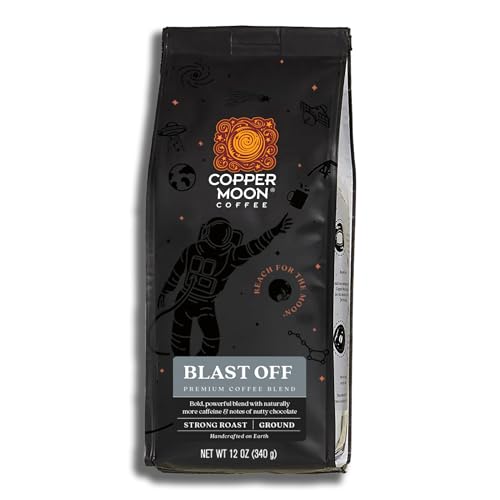
Copper Moon Blast Off Ground Coffee is the only ground coffee in this group and is marketed as a high-caffeine strong roast, making it a fit for buyers who prioritize convenience and an energizing cup. Its flavor profile includes earthy undertones and nutty chocolate notes, while the 12-ounce bag is smaller than the whole-bean options. Copper Moon says it selects beans for high caffeine content; the product facts give no caffeine amount, so this is not a way to compare milligrams per serving.
Bottom line: Pick this if you want ground coffee and prioritize the maker’s high-caffeine positioning.
Copper Moon Organic Eco Harvest

Copper Moon Organic Eco Harvest distinguishes itself with USDA Certified Organic status and a medium roast profile with chocolate, toasted nut, floral and raspberry notes. It is a whole-bean 2-pound bag, suited to buyers who want organic coffee and grind their beans at home. Copper Moon says the beans come from organic farms in Central and South America, and describes the blend as medium-bodied with medium acidity. Its limitation is that it is not a ground option, so it requires a grinder or a shop that can grind beans.
Bottom line: Choose this for certified organic whole beans with a medium roast and fruit-floral notes.
Copper Moon Guatemalan Antigua Light Roast

Copper Moon Guatemalan Antigua Light Roast is the light roast choice, with a Guatemalan Antigua blend described by Copper Moon as full-bodied with crisp, balanced acidity. The 2-pound whole-bean bag suits buyers who prefer lighter roasting while still wanting cocoa, berry and citrus character. The maker’s flavor notes include lemon, orange, cherry, chocolate and spice. This is a different fit from the medium-roast beans and ground strong roast; buyers who specifically want medium roast or ready-ground coffee should choose another option.
Bottom line: Pick this if a light roast and Guatemalan citrus-and-cocoa profile are priorities.
How to choose a Copper Moon roast
Roast level changes flavor more reliably than caffeine content: light roasts tend to keep brighter, more origin-forward notes, while medium roasts balance acidity and roasted flavors. These choices include a light Guatemalan blend and two medium roasts, plus a strong roast marketed for high caffeine. Roast level alone does not establish the caffeine in a brewed cup; serving size, coffee-to-water ratio and brewing method matter. If you want exact caffeine amounts, compare verified milligrams per serving rather than relying on roast names or flavor language. For a practical rule, choose medium roast for a balanced everyday profile, light roast for brighter citrus and fruit notes, and the strong roast when the maker’s high-caffeine positioning is your priority.
Whole bean or ground coffee
Whole beans preserve more aroma until grinding, while ground coffee is ready to brew and removes the grinder step. The 2-pound whole-bean choices suit households that brew regularly and can grind to match their equipment; the 12-ounce ground choice suits convenience or a smaller bag. A burr grinder gives more even particles than a blade grinder, especially for espresso and pour-over, where uneven grounds can produce uneven extraction. Match grind size to the brewer: coarse for French press, medium for drip, and fine for espresso. Avoid grinding a large supply far ahead; ground coffee loses aroma faster because more surface area is exposed to air.
Flavor notes and brewing choices
Flavor notes are sensory expectations, not ingredients: almond, caramel, chocolate, citrus and berry notes describe aromas and impressions in the cup. Water and brew ratio can shift how clearly those flavors appear. A common starting point is about 1 to 2 tablespoons of ground coffee per 6 ounces of water; weigh coffee for better repeatability, with roughly 1 gram of coffee for 16 to 18 grams of water as a typical starting range. Use fresh, cool water and adjust one variable at a time—grind, dose or brew time. If a cup tastes thin or sour, use a finer grind or slightly more coffee; if bitter or harsh, try a coarser grind or shorter brew.
Storing coffee after opening
Keep coffee in an airtight container in a cool, dark cupboard, away from heat, moisture and strong odors. Oxygen, light and humidity speed staling, so seal the bag promptly after each use and avoid leaving beans in a warm spot beside the stove. Whole beans generally hold their aroma longer than ground coffee because less surface is exposed to air. Buy a quantity you can use while it still smells fresh, and grind only what you need for each brew. Refrigeration can introduce moisture and odors when a container is repeatedly opened; freezing can work for longer storage only when coffee is sealed tightly in a portion you will not repeatedly thaw.
Frequently Asked Questions
Does roast level determine how much caffeine coffee has?
No; roast level is not a dependable measure of caffeine in a cup. Serving size, coffee-to-water ratio, bean type and brew method all affect the amount, so use verified milligrams per serving when a precise comparison matters.
How much coffee should I use for one cup?
A common starting point is 1 to 2 tablespoons of ground coffee per 6 ounces of water. For a repeatable brew, weigh coffee and start around 1 gram of coffee per 16 to 18 grams of water, then adjust to taste.
Should I grind whole beans before storing them?
No; whole beans generally retain aroma longer because less surface area is exposed to air. Grind just before brewing and store opened beans airtight in a cool, dark, dry cupboard.
What grind size works for a drip coffee maker?
A medium grind is a typical starting point for automatic drip coffee makers. If the brew tastes weak or sour, try a finer grind; if it tastes harsh or bitter, try a coarser grind.
How can I make coffee taste less bitter?
Use a coarser grind, a shorter brew time or slightly less coffee, changing one variable at a time. Water that is just off the boil—about 195 to 205°F—is a common brewing range; hotter water can pull harsher flavors.