
Covering for Strawberry Plants: 5 Options by Need

For strawberries that need support and a close-fitting mesh cover, choose XONYOOM Strawberry Support and Mesh Cover Set; its four raised supports are sized for individual plants. For a larger patch or cold-weather protection, choose a frost cloth such as 6.5-by-16-Foot Frost Cloth or MAQIHAN 6.5-by-13-Foot Frost Cloth, while LCHUANG Drawstring Garden Netting and Sukh 3-Piece Bird Netting are netting barriers for pests.
Choose a different style if you need to cover a broad bed, protect against frost, or keep birds away from ripening fruit: these covers work in different ways and are not interchangeable.
We earn a commission if you buy through links on this page. As an Amazon Associate I earn from qualifying purchases. Products are compared on manufacturer specifications, not hands-on testing.
- Best overall: XONYOOM Strawberry Support and Mesh Cover Set – Strawberry-specific support frames pair with mesh covers and lift berries about 4 inches above the soil.
- Best for broad frost coverage: 6.5-by-16-Foot Frost Cloth – The 6.5-by-16-foot frost cloth covers up to 104 square feet and can be trimmed.
- Best for small fruit plants: Sukh 3-Piece Bird Netting – Three 2.3-by-3.3-foot nylon netting covers are sized for strawberries, shrubs, and young fruit trees.
| Product | Best for | Cover size | Material | Setup | Shop |
|---|---|---|---|---|---|
| XONYOOM Strawberry Support and Mesh Cover Set | Raised berry support | 9.8 × 7.8 × 3.9 in. | Plastic supports; mesh covers | Four supports and covers | Check Price on Amazon |
| Sukh 3-Piece Bird Netting | Small fruit plants | 2.3 × 3.3 ft each | Nylon mesh | Drawstring | Check Price on Amazon |
| LCHUANG Drawstring Garden Netting | Individual pest barriers | 3.3 × 2.7 ft each; 4 pack | PE | Drawstring | Check Price on Amazon |
| 6.5-by-16-Foot Frost Cloth | Large cold-weather cover | 6.5 × 16 ft; up to 104 sq ft | 0.9 oz/sq yd polypropylene | Trim to size | Check Price on Amazon |
| MAQIHAN 6.5-by-13-Foot Frost Cloth | Trimmed row cover | 6.56 × 13 ft | 1 oz/sq yd non-woven fabric | Cut to size | Check Price on Amazon |
Covering for Strawberry Plants
Match the cover to the main problem—cold, pests, or berries resting on soil—before choosing a size.
XONYOOM Strawberry Support and Mesh Cover Set

Unlike the larger fabric sheets, this set is made specifically for strawberries and combines a raised support with a mesh cover for each plant. The set includes four plastic supports, four white mesh covers, 16 iron nails, and a storage bag. The maker says the raised trays improve airflow and reduce soil exposure around fruit; each support is about 4 inches high. This format suits a few individual plants rather than a continuous row. Its compact supports do not provide broad frost coverage, so choose a frost cloth for a bed-wide cold-weather barrier.
Bottom line: Choose this set to lift and cover a few strawberry plants individually.
Sukh 3-Piece Bird Netting
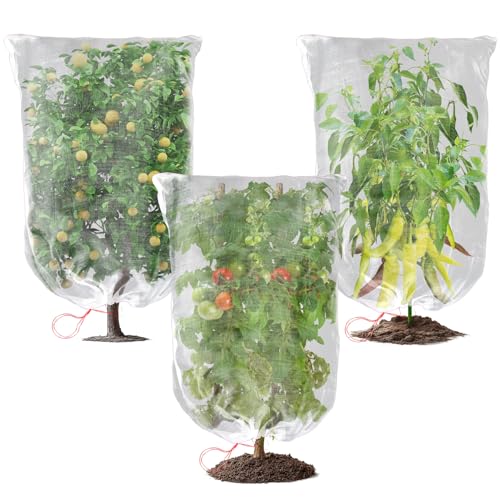
Three separate drawstring covers make this option easier to fit around individual plants than a long row-cover sheet. Each nylon mesh cover measures 2.3 by 3.3 feet, and the maker identifies strawberries among its intended uses. The breathable mesh is designed as a barrier against birds and other pests while allowing air and sunlight through. It suits small plants or shrubs that fit within each cover; it is not a substitute for an insulating frost blanket. Check that each plant fits inside the cover without pulling the mesh tight against fruit or foliage.
Bottom line: Pick these covers for small strawberry plants facing bird or insect pressure.
LCHUANG Drawstring Garden Netting

These four compact PE netting covers are intended for individual plants, rather than for insulating a strawberry bed in cold weather. Each measures 3.3 by 2.7 feet and has a drawstring for tightening around a plant. The maker says the mesh is intended to protect fruits, vegetables, flowers, and shrubs from insects and birds. This can suit a strawberry plant that fits within the cover, but the product is not strawberry-specific and its uses are broad. Choose a frost cloth instead when the main concern is cold, since a pest net is not an insulating cover.
Bottom line: Choose these for individual plants that need a drawstring pest barrier.
6.5-by-16-Foot Frost Cloth

This large frost cloth covers more area than the fitted mesh options, making it the practical choice for a strawberry row or bed facing cold weather. The white, UV-stabilized polypropylene fabric measures 6.5 by 16 feet and covers up to 104 square feet; it can be cut to size. The maker says the lightweight fabric allows light and air through and is intended for winter protection. It is not a fitted pest net or raised berry support, so secure it over the bed and use another style if berries need lifting off soil or a small plant needs a close mesh barrier.
Bottom line: Choose this sheet for a broad strawberry bed that needs cold-weather coverage.
MAQIHAN 6.5-by-13-Foot Frost Cloth
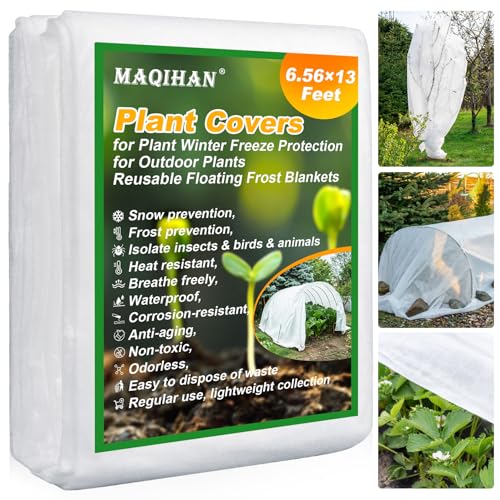
This frost cloth is shorter than 6.5-by-16-Foot Frost Cloth, while offering the same general sheet-style approach to covering a strawberry row. It measures 6.56 by 13 feet and uses 1-ounce-per-square-yard non-woven fabric. The maker says the cover is breathable, allows sunlight through, and can be cut to fit; it is also intended as a barrier against animals and insects. That makes it a flexible bed cover, not a shaped cover for a single plant. Pick it when a 13-foot sheet is a better fit than a longer one, and choose dedicated netting if pest exclusion is the only goal.
Bottom line: Choose this cloth when a cut-to-fit row cover suits your bed better than netting.
Choose strawberry covers by the problem
Start with the threat: frost cloth, pest netting, and berry supports solve different problems. Row covers are fabric sheets laid over plants or hoops; mesh covers make a physical barrier against birds and insects, while raised supports keep fruit from resting directly on soil. A cover that excludes pollinators can interfere with fruit set if left over plants during bloom, so remove or open it when flowers need pollination. For a small number of plants whose berries touch the ground, use a support; for a cold snap, cover the bed; for birds near ripening fruit, use netting. Do not assume that a mesh pest barrier provides meaningful frost insulation, or that a frost cloth will keep birds off berries.
Size a cover to the strawberry bed
Measure the bed length and width, then allow extra material for draping and securing the edges. A fabric sheet listed by its flat dimensions will cover less ground once it is laid over hoops or foliage, so do not use its full area as the bed footprint. For individual covers, compare the plant’s width and height with the cover’s dimensions and leave room for growth and airflow. Strawberries spread through runners, so a small cover that fits one plant today may not fit a matted patch later. Choose a sheet when the bed is wider or longer than individual mesh covers can accommodate; trim only after checking the usable area and how the edges will be anchored.
Use frost cloth without trapping pollinators
Strawberry blossoms are vulnerable to freezing, and full-bloom flowers can be damaged around 28°F. A row cover can hold some warmth, but the protection depends on fabric weight, wind, how well its edges are secured, and the temperature reached; do not treat lightweight cloth as a guarantee against a hard freeze. Drape fabric loosely over the bed or support it on hoops, and secure its edges so wind cannot lift it. Remove or open the cover during flowering when pollinators need access, then cover again when cold threatens. A breathable sheet still changes light and airflow, so avoid leaving it bunched tightly against wet foliage.
Keep netting from harming wildlife
Use netting with openings and tension appropriate to the pest, and keep loose mesh away from birds and other wildlife. Small openings can reduce entanglement risk compared with large, slack mesh; inspect covers regularly for snags, holes, and trapped animals. Drawstrings help close a cover around a plant, but they do not replace checking the bottom edge for gaps that pests can use. Keep netting from pressing on berries, and remove it when the fruit is no longer at risk. Never assume a cover blocks every pest: insects small enough to pass through the mesh can still reach plants, so match the barrier to the pest you are trying to exclude.
Frequently Asked Questions
When should strawberry plants be covered for frost?
Cover strawberry plants when freezing temperatures threaten, especially when flowers are open. Full-bloom blossoms can be injured around 28°F; remove or open covers during the day when pollinators need access.
Can row covers stay on strawberries during flowering?
Row covers can block pollinators if they remain closed over flowering plants. Open or remove them while flowers need pollination, then cover again when cold threatens.
How much extra fabric should a strawberry bed cover need?
Allow extra fabric beyond the bed’s measured length and width for draping and anchoring. Hoops and foliage use up sheet area, so a cover’s full flat dimensions do not equal its usable bed footprint.
How do I keep bird netting off strawberry fruit?
Use a support or frame that holds netting above leaves and berries, and secure the edges without leaving loose mesh. Inspect it regularly for snags or trapped wildlife.
Will mesh netting protect strawberries from frost?
Ordinary pest netting is not a substitute for an insulating frost cloth. Use a row cover for cold protection, and account for its limited protection in wind and severe freezes.