
Cracked Engine Block Sealant: 5 Options Compared

K&W FiberLock Block Repair, 32 oz is a pour-in cracked engine block sealant option for buyers who want a 32-fluid-ounce formula that does not require draining the cooling system. Choose a different product if its coolant compatibility or specific use directions better match your vehicle.
Engine block sealant is a cooling-system additive intended to seal some leaks; it is not a substitute for assessing structural engine damage.
We earn a commission if you buy through links on this page. As an Amazon Associate I earn from qualifying purchases. Products are compared on manufacturer specifications, not hands-on testing.
- Best overall: K&W FiberLock Block Repair, 32 oz – Its 32-fluid-ounce pour-in formula is marketed for block repair without draining the cooling system.
- Best for antifreeze compatibility: Bar’s Leaks HG-1 Head Seal – The maker says it works with all types of coolant and requires no flushing.
- Best for a measured leak limit: K-Seal ST3501 Pour & Go, 16 oz – The maker claims it can seal leaks up to 0.64 mm in size.
| Product | Best for | Volume | Coolant compatibility | Repair focus | Shop |
|---|---|---|---|---|---|
| K&W FiberLock Block Repair, 32 oz | Pour-in application | 32 fl oz | — | Head gasket and block leaks | Check Price on Amazon |
| Bar’s Leaks HG-1 Head Seal | Antifreeze compatibility | — | All coolant types | Heads, blocks, and gaskets | Check Price on Amazon |
| K-Seal ST3501 Pour & Go, 16 oz | Measured leak limit | 16 fl oz | All coolant types | Gaskets, heads, and blocks | Check Price on Amazon |
| Bar’s Leaks 1100 Head Gasket Repair | Two-part formula | 20 oz | Not compatible with antifreeze | Block and gasket leaks | Check Price on Amazon |
| Bar’s Leaks Block Seal | Antifreeze-compatible formula | — | Antifreeze-compatible | Gaskets and severe leaks | Check Price on Amazon |
Cracked Engine Block Sealant Options
Compare each formula’s compatibility and repair claims before choosing one for a coolant leak.
K&W FiberLock Block Repair, 32 oz
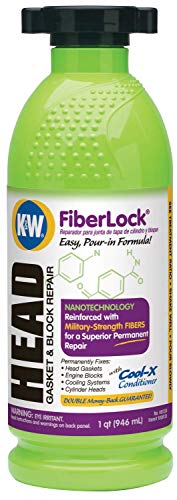
K&W FiberLock Block Repair, 32 oz stands out for its 32-fluid-ounce bottle and pour-in use without draining the cooling system. The maker says its fiber-and-nanotechnology formula can permanently repair leaks in 30 minutes or less, and describes the fibers as creating a web-like layer over cracks. This may suit buyers seeking an additive for a cooling-system leak who want a larger stated bottle volume. The claims do not identify compatible coolant types, so verify compatibility before use if your coolant type is a deciding factor.
Bottom line: Choose this if a pour-in formula and 32-fluid-ounce bottle fit your repair plan.
Bar’s Leaks HG-1 Head Seal

Bar’s Leaks HG-1 Head Seal is the option whose maker specifically says it works with all types of 50/50-mix coolant, including silicate and non-silicate antifreeze, without flushing. The use spans head and intake gasket leaks as well as warped or cracked heads and blocks. The maker calls a vehicle a candidate if it can idle for 15 minutes without overheating or needing more coolant, a useful screening condition for buyers. That condition is not a diagnosis: a vehicle that overheats sooner falls outside the maker’s candidate guidance.
Bottom line: Choose this when antifreeze compatibility without a flush is central to your choice.
K-Seal ST3501 Pour & Go, 16 oz

K-Seal ST3501 Pour & Go, 16 oz gives a specific leak-size claim: the maker says its ceramic micro-fibers seal holes and cracks up to 0.64 mm, or about 0.025 inch. The 16-fluid-ounce formula is described as a one-step, pour-and-go treatment for blown head gaskets, cracked heads, and porous blocks, and the maker says it works with all coolant types. This is a useful comparison point when the leak size is known. The claim does not establish that a larger or structural crack can be repaired, so do not treat it as a substitute for assessing severe damage.
Bottom line: Choose this if the 0.64 mm limit matches the leak you are evaluating.
Bar’s Leaks 1100 Head Gasket Repair
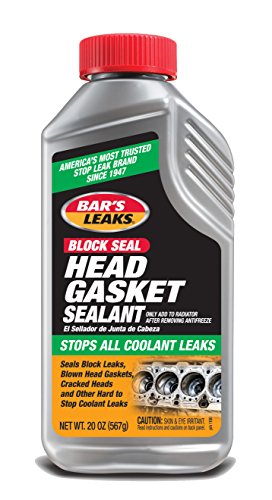
Bar’s Leaks 1100 Head Gasket Repair differs by using a two-part liquid-ceramic and reinforced-fiber formula. The maker says it stops block leaks, seals cracked cylinder heads and blocks, and repairs blown head gaskets. Its key constraint is coolant preparation: the formula is not compatible with antifreeze, and all antifreeze must be flushed and removed before adding it. That extra preparation makes this a poor match for anyone seeking a no-flush treatment. Check the cooling system’s current contents and allow for the required flush before deciding whether this formula fits.
Bottom line: Choose this only if you can fully remove antifreeze before adding the sealant.
Bar’s Leaks Block Seal
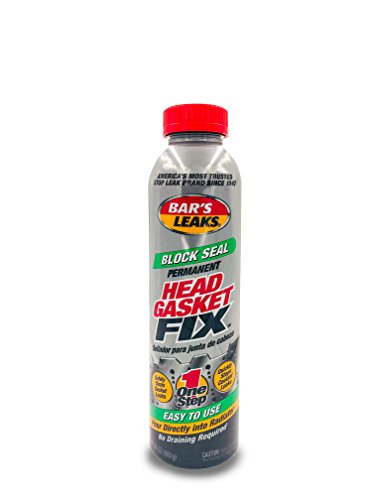
Bar’s Leaks Block Seal is described as a one-step formula combining sodium silicate sealing liquid with gasket-sealing particles. The maker says it is antifreeze-compatible and intended for aluminum and cast-iron heads and blocks, with uses including cracked blocks, freeze plugs, and other cooling-system leaks. That material range is a distinction for buyers comparing engine construction.
Bottom line: Choose this if antifreeze compatibility and use on aluminum or cast-iron parts matter most.
How to Choose Cracked Engine Block Sealant
Start with coolant compatibility, then compare the leak condition and application requirements. A sealant that must be added only after antifreeze is removed is a different job from one whose maker says it works with antifreeze and needs no flush. A measurable decision rule is to use K-Seal ST3501 Pour & Go, 16 oz only when the leak is within its maker’s 0.64 mm limit; that claim does not cover larger cracks. Also compare whether the maker gives an operating condition for candidate vehicles: Bar’s Leaks HG-1 Head Seal says the vehicle should idle for 15 minutes without overheating or requiring added coolant. Sealant is for some coolant leaks, not a way to judge whether a cracked engine part is structurally sound.
Coolant Compatibility and Preparation
Check the coolant currently in the system before selecting a formula, because the products differ in preparation requirements. Bar’s Leaks 1100 Head Gasket Repair requires all antifreeze to be flushed and removed, while makers of Bar’s Leaks HG-1 Head Seal and K-Seal ST3501 Pour & Go, 16 oz say their formulas work with all coolant types; Bar’s Leaks Block Seal is described as antifreeze-compatible. The term “all coolant types” does not make the products interchangeable in every other respect, so follow the chosen product’s specific directions. Never remove a radiator or reservoir cap while the engine is hot: pressurized coolant can spray and cause serious burns. Let the engine cool completely before working on the cooling system, and stop if it continues to overheat.
Sealant Claims Compared by Need
Use the comparison below to match a feature to your situation rather than assuming all sealants make the same repair claim. A numerical leak limit is more specific than a general claim to seal cracks, but neither guarantees a successful repair on a damaged engine. A product’s coolant compatibility also does not prove its suitability for every vehicle or leak. Before adding anything, identify the type of coolant and the leak symptom, then compare those facts with the maker’s directions.
| Need | Option | Decision point |
|---|---|---|
| Known small leak | K-Seal ST3501 Pour & Go, 16 oz | Maker claims up to 0.64 mm |
| No coolant flush | Bar’s Leaks HG-1 Head Seal | Maker says all coolant types; no flushing |
| Can fully remove antifreeze | Bar’s Leaks 1100 Head Gasket Repair | Flush and remove antifreeze first |
| Pour-in with larger bottle volume | K&W FiberLock Block Repair, 32 oz | 32 fluid ounces; no draining claimed |
When an Engine Block Leak Needs More Than Sealant
Sealant cannot establish whether a crack is limited to a small coolant leak or reflects broader engine damage. Persistent overheating, repeated coolant loss, or a system that cannot meet a product’s candidate condition are reasons to stop treating the problem as a simple additive choice. For example, the maker’s 15-minute idle condition for Bar’s Leaks HG-1 Head Seal is a screening rule, not a guarantee that the block is repairable. Do not keep driving an engine that overheats; temperature can rise quickly and cause additional damage. A mechanic can assess the source and extent of a suspected block crack and advise whether a mechanical repair is needed.
Frequently Asked Questions
Can engine block sealant repair a large crack?
A sealant’s ability to handle a large crack is not guaranteed by a general block-repair claim. K-Seal ST3501 Pour & Go, 16 oz has a maker-stated limit of 0.64 mm, so a larger crack is outside that specific claim and warrants mechanical assessment.
Can I add block sealant to antifreeze?
Compatibility depends on the formula: Bar’s Leaks 1100 Head Gasket Repair must be used only after all antifreeze is flushed and removed. Other options have distinct compatibility claims, so match the chosen product to the coolant in the system.
How long should the engine idle before using sealant?
The maker of Bar’s Leaks HG-1 Head Seal says a candidate vehicle should idle for 15 minutes without overheating or requiring added coolant. Stop if the engine overheats sooner rather than continuing to run it.
Should I open the radiator cap before adding sealant?
Never open a radiator or pressurized coolant reservoir while the engine is hot. Let the engine cool completely first, because hot pressurized coolant can spray and cause serious burns.
Will sealant permanently fix a cracked engine block?
No sealant claim can establish that every block crack is permanently repairable. The products have different claimed limits and conditions, and a structural or recurring leak needs an assessment of the engine damage.