
Daisy Chain Lock System: Shared Access Compared

For shared access without interlocking padlocks, Gate Keeper GM Solar Shared Access Hasp is the match: its hasp accepts up to two padlocks. Choose a conventional chain instead if you need to secure a bike, motorcycle, or other movable item rather than give multiple keyholders access to one gate.
A shared-access hasp creates a common locking point; a daisy chain links padlocks together, which can leave users dependent on one another’s locks.
We earn a commission if you buy through links on this page. As an Amazon Associate I earn from qualifying purchases. Products are compared on manufacturer specifications, not hands-on testing.
- Best overall: Gate Keeper GM Solar Shared Access Hasp – Its low-profile hasp provides one gate access point for up to two padlocks.
- Best for general security: Case-Hardened Security Chain with Padlock – The case-hardened chain and padlock are intended for securing items and outdoor fixtures.
- Best for portability: RYANGO 3-Foot Chain Lock – This 3-foot chain weighs 0.7 pound and is designed to be carried.
| Product | Best for | Use | Padlock capacity | Length | Shop |
|---|---|---|---|---|---|
| Gate Keeper GM Solar Shared Access Hasp | Shared gate access | Gate or panel access | 2 padlocks | 4 in | Check Price on Amazon |
| Case-Hardened Security Chain with Padlock | General outdoor security | Securing items | Included padlock | — | Check Price on Amazon |
| RYANGO 3-Foot Chain Lock | Portable short reach | Bikes, gates, doors | Keyed lock | 36 in | Check Price on Amazon |
| GRIFEMA 4-Foot Keyed Chain Lock | Longer chain reach | Bikes, gates, outdoor use | 2 keys | 47.2 in | Check Price on Amazon |
Daisy chain lock systems and chain locks
Choose shared-access gate hardware for multiple keyholders, or a conventional security chain for securing an item.
Gate Keeper GM Solar Shared Access Hasp

Unlike a conventional security chain, this low-profile steel hasp gives multiple keyholders one access point without interlocking their padlocks. It measures 4 inches long, 3 inches wide, and 0.38 inch high, and accepts up to two padlocks. The maker says it is compatible with Knox series emergency padlocks and standard padlocks, making it a fit for gates or panels shared by owners, utilities, and responders. Its limit is capacity: sites needing more than two separate padlocks need another arrangement.
Bottom line: Choose this for a gate or panel used by up to two padlock holders.
Case-Hardened Security Chain with Padlock
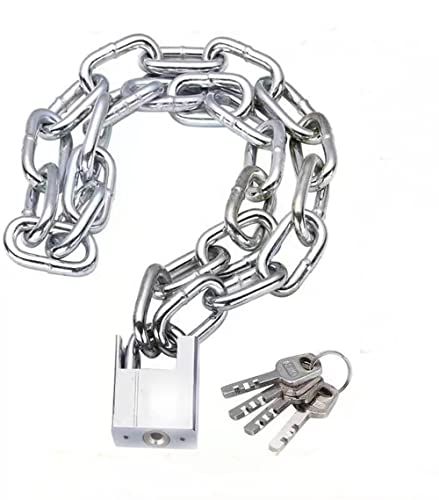
This is a conventional security chain with an included laminated steel padlock, not a shared-access hasp. Its case-hardened steel links are welded, and the maker presents it for securing bicycles, motorcycles, outdoor furniture, ladders, and tools. That makes it relevant when the goal is fastening an item to an anchor, rather than letting separate keyholders add their own locks to one gate.
Bottom line: Choose this when you need a chain and included padlock to secure property.
RYANGO 3-Foot Chain Lock

At 3 feet and 0.7 pound, this chain is the portable, short-reach option among the conventional chain locks. It uses 4 mm galvanized alloy steel chain, a keyed lock core, and a fabric covering; the maker names bicycles, e-bikes, scooters, gates, doors, and fences as uses. Unlike a shared-access system, it is a single chain lock rather than a hasp for multiple padlocks. Its 3-foot length can limit reach around wide posts or through several objects.
Bottom line: Choose this for a lightweight chain when a 3-foot reach is enough.
GRIFEMA 4-Foot Keyed Chain Lock

This 4-foot chain offers about 11 inches more reach than the 3-foot chain option, while remaining a conventional keyed lock rather than a shared-access hasp. Its hardened steel chain has a nylon protective sleeve, and it comes with two dedicated keys. The maker says the sleeve helps protect bike frames and shields the chain from rain and dust. Buyers seeking multiple independent padlocks at a gate should choose a hasp instead; this lock’s keys operate its included locking mechanism.
Bottom line: Choose this when you need more reach for a bike or outdoor item.
How to choose a shared-access lock system
A shared-access hasp is the right type when each authorized person needs to use a separate padlock at one gate or panel. A conventional security chain instead secures an item to an anchor with its own lock. Decide first whether you need several independent locks or a tether; that distinction matters more than the word “chain” in a product name.
Count the people or organizations that need their own padlocks, then compare that number with the hardware’s capacity. With two padlock holders, Gate Keeper GM Solar Shared Access Hasp meets the capacity; a group of three or more needs a system designed for more locks. For a conventional chain, measure the full route around the object and anchor, then allow extra length for the lock and slack.
Shared hasps versus conventional chain locks
A hasp and a chain lock solve different access problems. A hasp provides a common locking point to which separate padlocks can be attached, while a chain lock wraps around an item and closes with its included keyed lock. Neither should be selected just because its name contains “chain.”
The table distinguishes the intended use and the figures available for these options. Use the measurements as a starting point: chain reach depends on the path around the object and anchor, while padlock capacity determines how many people can independently secure a hasp.
| Type | Typical need | Useful check |
|---|---|---|
| Shared-access hasp | Several users, one gate | Padlock capacity |
| Security chain and padlock | Secure an item to an anchor | Route length and lock closure |
| Short portable chain | Small object or nearby anchor | Reach around both points |
Measure chain reach before choosing
Chain length is the usable path around an object and its anchor, not just the straight-line distance between them. Measure the route around both, including the space needed to bring the lock ends together. A 3-foot chain may suit a nearby rack, while a 4-foot chain can allow a wider path; neither length guarantees fit for every frame, post, or fixture.
Allow room for the locking mechanism and avoid a chain that is so tight it cannot close or so loose that it drags. For fixed gates shared by keyholders, prioritize padlock capacity and mounting dimensions instead of chain length. The 4-inch length and 3-inch width of Gate Keeper GM Solar Shared Access Hasp can help assess whether its footprint fits the mounting area.
Use and maintain outdoor locks
Outdoor locks need periodic checks for corrosion, debris, and free movement. Inspect the lock body, chain links, keyway, and mounting points at least seasonally, and after severe weather; clean and lubricate only with a product suitable for the lock mechanism. Covers and sleeves can reduce exposure, but they do not remove the need to check for wear.
Keep keys controlled and verify that authorized users can operate the chosen system before relying on it for shared access. A keyed chain lock and a multi-user hasp have different key arrangements: the former’s key operates its included lock, while each hasp user supplies a separate padlock. Do not treat a chain’s anti-cut marketing language as a guarantee against tools or determined attack.
Frequently Asked Questions
How many padlocks fit a shared-access hasp?
The Gate Keeper model here accepts up to two padlocks. Count every independent keyholder before choosing hardware, since a two-lock capacity will not cover a group of three.
What is the difference between a hasp and a chain lock?
A shared-access hasp lets separate padlocks secure one access point, while a chain lock wraps around an item and closes with its own lock. Choose by whether you need independent keyholders or a tether to an anchor.
How much chain length do I need for a bike?
Measure the route around the bike and the anchor, then add enough slack to bring the lock ends together. A 3-foot chain is shorter than a 4-foot option, but frame geometry and anchor size determine actual fit.
Can a shared-access hasp replace interlocking padlocks?
A hasp with capacity for every user can provide a common locking point instead of linking locks together. Confirm the capacity first; the model described here accommodates up to two padlocks.
How often should outdoor chain locks be checked?
Inspect an outdoor chain lock at least once each season and after severe weather for rust, damaged links, debris, and sticky key action. Lubrication needs vary by lock mechanism, so use a lubricant suitable for that mechanism.