
Dental Cement for Crown: 5 Options Compared by Use

For a crown that has come loose, Dentemp Cap & Filling Repair Kit is a temporary repair option, while Prime Dental 100-101 Resin Luting Cement A2 is a dual-cure resin cement for permanent cementation of indirect restorations. Temporary repair kits are for short-term use until a dentist can assess the crown; choose a different product if you need a clinician to cement a permanent restoration.
A dental crown covers a damaged or prepared tooth, and the cement type must suit both the restoration and the dentist’s bonding plan.
We earn a commission if you buy through links on this page. As an Amazon Associate I earn from qualifying purchases. Products are compared on manufacturer specifications, not hands-on testing.
- Best overall: Dentemp Cap & Filling Repair Kit – It is ready to use and is specifically described for temporarily securing loose caps or crowns.
- Best for permanent cementation: Prime Dental 100-101 Resin Luting Cement A2 – It is a dual-cure resin luting cement for permanent cementation of indirect restorations.
- Best for one-step use: DenTek Temparin One Step Repair – Its one step formula is intended for temporary repairs of lost fillings, caps, crowns, or inlays.
| Product | Best for | Use | Material or cure | Pack size | Shop |
|---|---|---|---|---|---|
| Dentemp Cap & Filling Repair Kit | Loose crown repair | Temporary cap and crown repair | Ready-to-use; sets quickly | 2.64 g, 2-pack | Check Price on Amazon |
| Prime Dental 100-101 Resin Luting Cement A2 | Permanent restorations | Permanent cementation of indirect | Dual cure; light- or self-cure | 10 g | Check Price on Amazon |
| Zinc Oxide Eugenol Crown Cement Kit, 20 g | Powder-liquid mixing | Crowns, bridges, fillings, caps | Self-curing zinc oxide eugenol | 20 g powder + 10 mL liquid | Check Price on Amazon |
| KI Zinc Oxide Eugenol Cement Kit, 15 g | Zinc eugenol kit | Crowns, bridges, fillings, caps | Self-curing zinc oxide eugenol | 15 g powder + 10 mL liquid | Check Price on Amazon |
| DenTek Temparin One Step Repair | Single-use repair kit | Temporary fillings, caps, crowns, inlays | One-step formula | 2.64 g | Check Price on Amazon |
Dental Cement for Crown Repairs and Cementation
Match the cement to whether you need a short-term repair or a dentist-performed permanent cementation.
Dentemp Cap & Filling Repair Kit

For a loose cap or crown that needs a temporary repair, this ready-to-use kit avoids the powder-and-liquid mixing required by some other options. The maker says the cement sets quickly and allows eating on a repaired tooth in as little as two hours. It is also intended for lost fillings. Use it only as a bridge to dental care: a temporary repair does not assess why the crown loosened or establish a permanent bond. The kit is a poor fit when a dentist is planning a permanent restoration or adhesive cementation.
Bottom line: Choose this for a temporary loose-crown repair while arranging dental care.
Prime Dental 100-101 Resin Luting Cement A2

For permanent cementation of an indirect restoration, this is the only option here identified as a resin luting cement with both light-cure and self-cure modes. Its automix syringe is intended to simplify mixing, and the shade is A2. It is a different category from the temporary repair kits, which are meant to address a lost filling or loose cap until professional care. Permanent crown cementation depends on the restoration, tooth preparation, and cement compatibility, so this kit is not a do-it-yourself substitute for a dentist.
Bottom line: Choose this when a dental professional needs a dual-cure resin cement for an indirect restoration.
Zinc Oxide Eugenol Crown Cement Kit, 20 g

This kit is distinguished by its two-part zinc oxide eugenol formula: 20 g of powder and 10 mL of liquid, plus a mixing pad and measuring spoon. The maker describes it as self-curing and suitable for fillings, bridges, and caps. It may suit a buyer specifically seeking a powder-and-liquid kit rather than a ready-to-use temporary material. The fields do not establish whether it is appropriate for a particular permanent crown or adhesive bonding plan, so have a dentist choose the cement for that restoration.
Bottom line: Choose this if you specifically need a zinc oxide eugenol powder-and-liquid kit.
KI Zinc Oxide Eugenol Cement Kit, 15 g

Compared with the other powder-and-liquid kit, this one contains 15 g of powder with 10 mL of liquid and includes a spatula along with mixing accessories. The maker describes it as self-curing and suitable for crowns, bridges, fillings, and caps. A dentist should determine whether this material suits the crown and tooth preparation.
Bottom line: Choose this for a zinc oxide eugenol kit with a spatula and a 15 g powder portion.
DenTek Temparin One Step Repair
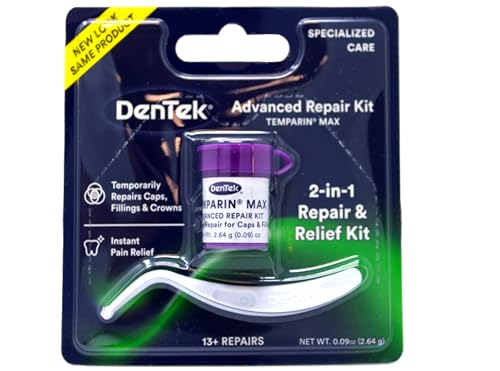
For a one step temporary repair, this kit covers lost fillings, caps, crowns, and inlays and includes a dual-ended applicator. The maker says it contains enough material for 10 or more applications and advises seeing a dental professional within 48 hours; it also says removal should be done by a dental professional. Unlike a permanent resin luting cement, this is a temporary repair material. Its small 2.64 g amount and temporary purpose make it unsuitable for someone seeking a permanent crown cementation procedure.
Bottom line: Choose this for a one step temporary repair when you can see a dental professional promptly.
How to choose crown cement by purpose
Choose first between a temporary repair and permanent cementation: those are different jobs, not interchangeable strengths of one material. Temporary materials can hold a loose crown or protect a lost filling briefly, while a permanent luting cement is selected for a prepared tooth and restoration. Resin cement may be light-cured, self-cured, or dual-cured; a dual-cure product offers both light and chemical curing modes. The right choice also depends on whether the restoration allows light through and what bonding protocol the dentist is using. Do not use a temporary repair kit to permanently cement a crown. If a crown has come off, keep it safe and contact a dentist; avoid household glue, which is not made for oral use.
Temporary crown repair versus permanent cement
A temporary repair kit is for a short interval before professional assessment, while permanent cementation is a clinical procedure. A loose crown can result from decay, a damaged restoration, or changes to the tooth, so simply sticking it back does not identify the cause. Temporary cement can also complicate later bonding: eugenol-containing materials may interfere with resin bonding, so tell the dentist what was used. Use the table to distinguish the product purpose, not to diagnose which material a particular crown needs.
| Need | Material category | Decision |
|---|---|---|
| Short-term loose crown repair | Temporary repair cement | Contact a dentist promptly |
| Permanent indirect restoration | Clinician-selected luting cement | Match cement to restoration and bonding plan |
With a crown that is painful, broken, or not seating fully, do not force it into place; seek dental advice instead.
What to do when a crown comes loose
When a crown comes loose, avoid chewing on that side and arrange dental care rather than treating a temporary cement as a permanent fix. A crown that no longer seats completely can leave the tooth exposed or trap food, and forcing it can damage the tooth or restoration. If using a temporary kit while waiting, follow its product directions and avoid applying excess material that could prevent proper seating. Keep the crown clean and bring it to the appointment. Severe swelling, fever, or rapidly worsening pain warrants urgent dental attention; temporary cement does not treat the underlying cause.
How crown cement compatibility affects the choice
Crown materials and tooth preparations determine which cement can bond reliably, so the same product is not right for every crown. Resin cement is often selected when adhesive bonding is needed, while conventional cements have different retention and handling properties; a dentist chooses based on restoration material and preparation shape. Eugenol-containing cement is a point to mention before planned resin bonding because it can interfere with resin adhesion. Shade and cure mode matter too: an A2 shade and dual-cure option are product-specific attributes, not guarantees that a cement suits every restoration. Confirm the cement choice with the treating dentist before using a permanent-cement kit.
Frequently Asked Questions
How long can I leave a loose crown unrepaired?
Arrange a dental appointment promptly rather than treating a temporary cement as a lasting repair. A loose crown can expose the tooth, and the cause may need treatment before the crown can be secured again.
Can I use super glue on a dental crown?
No; household super glue is not intended for use in the mouth. Use only a dental temporary repair material as directed while arranging professional care.
Should I brush after a crown comes off?
Yes, gently clean the exposed tooth with a soft toothbrush and water, avoiding force around a painful area. Do not scrub aggressively or try to reshape the tooth.
Can I eat with a temporarily cemented crown?
Avoid sticky or hard foods on the repaired side until a dentist checks the crown. One repair kit says eating is possible in as little as two hours, but that does not make the repair permanent.
What if a crown does not fit back in place?
Do not force a crown that will not seat fully; contact a dentist for assessment. A crown that sits high or crooked may not be properly aligned, and biting on it could damage the restoration or tooth.