
Differin Dark Spot Correcting Serum: 4 Options Compared

Differin Dark Spot Correcting Serum is the closest fit for acne-prone, sensitive skin, with 4% niacinamide and a formula designed for daily use. Choose a different serum if you want a tranexamic-acid blend or 10% niacinamide; the acne spot treatment is for active blemishes, not discoloration.
We earn a commission if you buy through links on this page. As an Amazon Associate I earn from qualifying purchases. Products are compared on manufacturer specifications, not hands-on testing.
- Best overall: Differin Dark Spot Correcting Serum – Its 4% niacinamide formula is specifically positioned for sensitive, acne-prone skin.
- Best for tranexamic acid: Good Molecules Discoloration Correcting Serum – Combines a stabilized tranexamic acid derivative with niacinamide.
- Best for 10% niacinamide: La Roche-Posay Mela B3 Serum – Pairs 10% niacinamide with Melasyl for dark spots.
| Product | Best for | Key ingredients | Skin or area fit | Size | Shop |
|---|---|---|---|---|---|
| Differin Dark Spot Correcting Serum | Acne-prone skin | 4% niacinamide, sea buckthorn oil | Sensitive, acne-prone skin | 1 fl oz | Check Price on Amazon |
| Good Molecules Discoloration Correcting Serum | Tranexamic acid | Tranexamate mesylate, niacinamide | All skin types | 1 fl oz | Check Price on Amazon |
| MAREE Dark Spot Corrector Serum | Face and body | TXA, vitamin C, niacinamide | Face and body | — | Check Price on Amazon |
| La Roche-Posay Mela B3 Serum | 10% niacinamide | 10% niacinamide, Melasyl | Face | 1 fl oz | Check Price on Amazon |
Differin dark spot correcting serum alternatives
Compare each formula’s active ingredients and intended use before choosing a spot-care product.
Differin Dark Spot Correcting Serum

Differin Dark Spot Correcting Serum is the direct match for acne-prone, sensitive skin, with 4% niacinamide and sea buckthorn berry oil. The brand says niacinamide is clinically proven to reduce the appearance of dark spots; the gel-like formula is intended to go on invisibly under makeup. Use it after cleansing daily as needed, morning or night, and do not rinse. The main limitation is that its purpose is discoloration rather than active pimples, so shoppers treating breakouts need a separate acne treatment. Use SPF 30 or higher when going outside.
Bottom line: Choose this for daily discoloration care suited to sensitive, acne-prone skin.
Good Molecules Discoloration Correcting Serum

Good Molecules Discoloration Correcting Serum stands apart with cetyl tranexamate mesylate, a stabilized tranexamic acid derivative, alongside niacinamide. The formula is suitable for all skin types, including sensitive skin, and is fragrance-free, vegan, and cruelty-free. Apply a few drops morning and night after toner, then follow with moisturizer; daytime use should include SPF.
Bottom line: Pick this if a tranexamic-acid derivative is the ingredient distinction you want.
MAREE Dark Spot Corrector Serum

MAREE Dark Spot Corrector Serum is the face-and-body option, combining tranexamic acid, vitamin C, and niacinamide rather than focusing on a single named active. The brand describes it as hydroquinone-free and includes hyaluronic acid and panthenol for hydration. Its use covers discoloration and melasma-prone areas as well as post-acne marks, freckles, age spots, and sun spots.
Bottom line: Choose this when you want a face-and-body serum with several brightening ingredients.
La Roche-Posay Mela B3 Serum
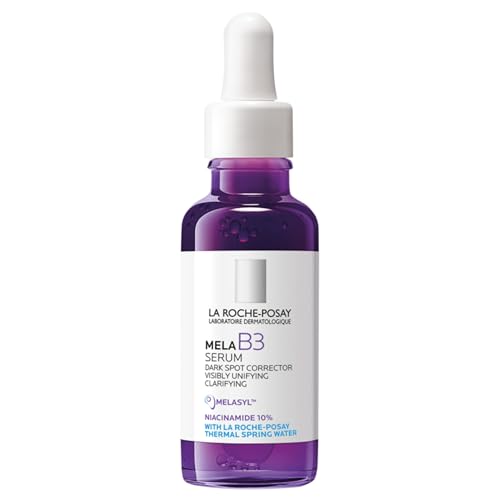
La Roche-Posay Mela B3 Serum has the highest niacinamide concentration among these discoloration serums: 10%, paired with Melasyl. It is positioned for sun spots, age spots, and post-acne marks, making it an alternative for shoppers who prioritize that ingredient combination. The brand claims visible correction of stubborn dark spots and describes the results as long-lasting. The main distinction from Differin is the 10% niacinamide concentration and Melasyl complex; shoppers set on a formula specifically identified for sensitive, acne-prone skin may prefer the closer match instead.
Bottom line: Pick this if you want 10% niacinamide paired with Melasyl.
How to choose a dark spot serum
Choose by ingredient, skin fit, and the kind of mark you want to address: these formulas range from 4% niacinamide to 10% niacinamide, while others pair niacinamide with tranexamic-acid derivatives or vitamin C. A practical rule is to start with the formula that matches your stated concern and skin fit rather than stacking several brightening products at once. Niacinamide is a form of vitamin B3 used in topical skincare; tranexamic acid is another ingredient used in discoloration-focused products. Neither ingredient choice guarantees a particular result. Introduce a new leave-on serum on a small area first, especially if your skin is reactive, and stop if irritation develops.
Daily use and sun protection
Daytime sunscreen matters when you are working on the appearance of discoloration: use broad-spectrum SPF 30 or higher and reapply about every 2 hours outdoors, or after swimming or sweating. UV exposure can darken existing marks and make tone look less even, so a serum alone is not a substitute for sun protection. Apply leave-on serums to clean skin according to their directions, then layer moisturizer; do not combine multiple new actives at once if you cannot tell which product is irritating your skin. Differin’s formula is specified for use after cleansing without rinsing, while Good Molecules is applied after toner. Follow the product’s own order when its routine differs.
Serum versus acne spot treatment
A dark spot serum addresses the appearance of discoloration, while a benzoyl peroxide spot treatment is intended for active acne blemishes. Benzoyl peroxide products are commonly sold at 2.5%, 5%, and 10%; higher strengths can increase irritation without necessarily improving results for everyone. A 10% product such as the acne treatment in this group belongs in an acne routine, not as a substitute for a dark spot serum. Benzoyl peroxide can bleach towels, pillowcases, and clothing, so let it dry fully and use white fabrics. Avoid applying it to broken or irritated skin, and follow its label carefully.
How long dark spots take to fade
Post-inflammatory dark marks often take months to fade, even after the original pimple has cleared; deeper or persistent discoloration may last longer. Daily sunscreen is important because UV exposure can prolong the visible contrast of spots. Avoid picking at acne, since skin injury can lead to additional marks, especially in skin that readily develops post-inflammatory hyperpigmentation. If a mark changes rapidly, bleeds, becomes raised, or does not resemble other spots, seek an evaluation from a dermatologist rather than treating it as routine discoloration. A new serum should be introduced gradually so irritation does not create another source of uneven tone.
Frequently Asked Questions
Can I use a dark spot serum with Differin Gel?
Some formulas can fit alongside adapalene, but introduce only one new product at a time and watch for dryness or irritation. Differin’s serum is specifically described as compatible with Differin Gel, while adapalene can increase skin sensitivity; use broad-spectrum SPF 30 or higher during the day.
Should I apply a dark spot serum in the morning or evening?
The Differin serum can be used morning or night, and Good Molecules gives directions for both morning and night use. Whichever time you choose, daytime use requires sunscreen, and layering moisturizer can help support the skin barrier.
How often should I use niacinamide serum?
Many niacinamide serums are designed for daily use, but start every other day if your skin is sensitive and increase only if comfortable. Discontinue a product that causes persistent burning, redness, or swelling.
Can benzoyl peroxide fade acne marks?
Benzoyl peroxide treats active acne rather than serving as a dedicated dark spot serum. Concentrations range from 2.5% to 10%, and the ingredient may irritate skin or bleach fabric; keep it targeted to blemishes and follow the label.