
Dog Deterrents for Lawns: 4 Types Compared

For a lawn that needs broad treated coverage, Nature’s MACE 6 lb Granules treat up to 3,500 square feet, while spray, smaller granules, sachets, and a motion-triggered device suit different setups. Choose a different format if you want a ready-to-use spray, prefer set-and-place sachets, or want motion activation rather than applying a treatment.
We earn a commission if you buy through links on this page. As an Amazon Associate I earn from qualifying purchases. Products are compared on manufacturer specifications, not hands-on testing.
- Best overall: Nature’s MACE 6 lb Granules – The 6 lb granule pack covers up to 3,500 square feet and calls for reapplication every two weeks or after rain.
- Best for spot spraying: Nature’s MACE 40 oz Spray – The ready-to-use spray covers up to 1,000 square feet and has a daily-to-weekly application schedule.
- Best for set-and-place use: EVSPWI Yard Repellent 12-Pack – The 12-pack uses sachets rather than a spray or spread treatment, with a maker-claimed duration of up to two months.
| Product | Best for | Format | Coverage | Upkeep | Shop |
|---|---|---|---|---|---|
| Nature’s MACE 6 lb Granules | Broad lawn coverage | Granules | 3,500 sq. ft. | Every 2 weeks or after rain | Check Price on Amazon |
| Nature’s MACE 2.5 lb Granules | Smaller treated areas | Granules | 1,400 sq. ft. | Every 1–2 weeks or after rain | Check Price on Amazon |
| Nature’s MACE 40 oz Spray | Ready-to-use treatment | Ready-to-use spray | 1,000 sq. ft. | Daily, then weekly | Check Price on Amazon |
| EVSPWI Yard Repellent 12-Pack | Set-and-place use | 12 sachets | — | Up to 2 months (maker claim) | Check Price on Amazon |
Dog Deterrents for Lawns Compared
Choose by the size of the problem area, the application style you prefer, and how often you are willing to refresh the treatment.
Nature’s MACE 6 lb Granules

For treating a larger outdoor area with granules, this 6 lb pack covers up to 3,500 square feet. Nature’s MACE says the scent-aversion formula helps discourage unwanted visits and digging, and directs users to clear dog waste before spreading it evenly. The maker recommends reapplying every two weeks or after rain. This format suits lawns, gardens, and flower beds where a spread treatment is practical. Its limitation is upkeep after rainfall; choose a lower-maintenance approach if refreshing a treatment is inconvenient.
Bottom line: Choose it for broad coverage when you can reapply after rain.
Nature’s MACE 2.5 lb Granules

For a smaller treated zone, this 2.5 lb granular option covers up to 1,400 square feet rather than the larger area of the 6 lb pack. Nature’s MACE says the scent-aversion approach helps make lawns, beds, patios, and paths less appealing to dogs. Clear waste or markings first, spread the granules evenly, and reapply every one to two weeks or after rain. It fits targeted problem spots without switching to a spray. The tradeoff is that larger lawns may need more than one treatment area or a larger pack.
Bottom line: Choose it for a contained lawn or garden area you can refresh regularly.
Nature’s MACE 40 oz Spray
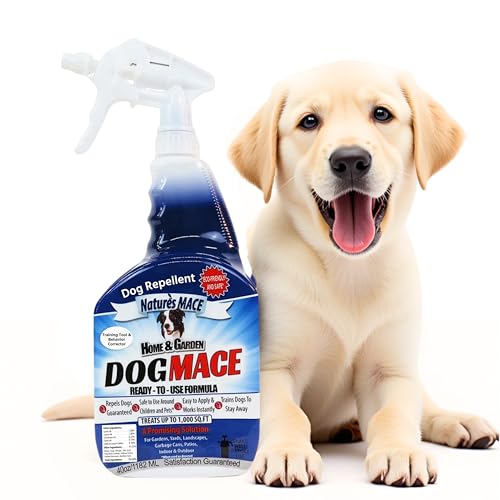
For buyers who prefer spraying over spreading granules, this ready-to-use 40 oz bottle covers up to 1,000 square feet. Nature’s MACE says scent aversion helps discourage marking, digging, defecating, and chewing; its schedule starts with daily application for 7–10 days, then twice a week, then weekly. Clear feces before applying. A spray can be convenient for focused areas and uneven edges where granules are harder to distribute. The frequent initial schedule makes it a less suitable choice if you cannot treat the area consistently during the first week.
Bottom line: Choose it for focused areas where a regular spray routine is manageable.
EVSPWI Yard Repellent 12-Pack

For a no-spray, no-spread format, EVSPWI provides 12 sachets intended for placement near doors, fences, or recurring problem spots. The maker says they last up to two months and are suitable for indoor and outdoor use. This approach suits someone who wants to place deterrents at specific entry points rather than apply a lawn-wide treatment. Unlike granules or spray, the specifications give no area coverage figure, so it is best considered for localized spots rather than planning treatment of a measured lawn. Its claimed duration is not the same as a coverage measurement.
Bottom line: Choose it for localized entry points when you prefer placing sachets to applying treatments.
How to choose dog deterrents for lawns
Start with the area and the upkeep you can sustain: measured coverage ranges from 1,000 square feet for the spray to 3,500 square feet for the larger granule pack. Granules suit spreading across a lawn or bed; spray suits targeted application, while sachets and a motion-sensing device avoid repeated liquid or granular application. Scent deterrents work through repeated exposure and avoidance learning, so a one-time application is not the same as a training routine. Clear waste first, then consider whether rain or frequent watering will disrupt your schedule. With a defined lawn problem area under 1,000 square feet, the spray’s coverage may be a practical match; for more area, compare coverage rather than relying on pack size alone.
How to apply lawn deterrents consistently
Consistency matters because scent-based deterrents rely on dogs encountering the treated area and deciding to avoid it. One Nature’s MACE spray schedule starts with daily use for 7–10 days before tapering, while the granular products call for refreshes every one to two weeks or after rain. Remove dog waste and visible markings before application, as the product directions specify; leaving familiar scent cues in place can undermine the purpose of a deterrent. Apply only to the intended area and keep people and pets from contacting a treatment until its label allows access. Rain, irrigation, lawn growth, and the dog’s repeated return can all change how often a treated boundary needs attention.
Compare lawn deterrent formats
Each format suits a different application routine, so use this table to narrow the choice by how the deterrent is deployed. Coverage figures are product claims; the device and sachet options do not give a lawn-area figure here.
| Format | Coverage or quantity | Typical upkeep approach |
|---|---|---|
| Granules | Up to 1,400 or 3,500 sq. ft. | Refresh every 1–2 weeks or after rain |
| Spray | Up to 1,000 sq. ft. | Daily initially, then taper |
| Sachets | 12 sachets | Maker claims up to 2 months |
| Motion-triggered device | 2 devices | Activates on detected movement |
Use dog deterrents safely around a lawn
Keep deterrent products away from food, water bowls, and areas where children or pets play until the product label says treated surfaces are ready for contact. A claim that a product is suitable around children, pets, or plants does not replace following its specific use directions. For a chemical or scented treatment, use the application method and avoid adding extra product to compensate for a dog returning; more is not automatically more effective or safer. For an ultrasonic device, position it so the sensor faces the area of concern and verify the sensing area before depending on it, since placement and obstacles can affect what it detects. Do not use deterrents as a substitute for supervision or a secure boundary.
Frequently Asked Questions
How often should I reapply dog deterrent granules?
The granular products here call for refreshes every one to two weeks, and the larger pack also says to reapply after rain. Rain and irrigation can wash or dilute a scent treatment, so inspect the treated boundary after wet weather.
Does dog repellent spray need daily application?
One spray schedule begins with daily application for 7–10 days, then shifts to twice weekly and weekly maintenance. That routine is intended as a consistent training aid, not a single-use barrier.
Should I clean dog waste before applying lawn deterrent?
Yes, the granular and spray directions say to clear dog waste or feces first. Removing waste and visible markings helps avoid leaving familiar scent cues in the area being treated.
Can I use lawn deterrents around children and pets?
Use a product only as its label directs, and keep children and pets away from treated areas until the label allows contact. For outdoor granules or sprays, prevent access to treated spots during application and any required settling period.
Do ultrasonic dog deterrents cover an entire lawn?
Coverage depends on the device’s sensing and activation area, and the device here is sold as a two-pack without a square-foot figure. Check the usable sensing area and position the sensor toward the approach path before relying on it for a lawn.