
Dowagers Hump Correction Brace Options Compared

For a dowager’s hump posture brace, the ComfyBrace is the clearest match because it specifically names neck-hump support and fits chest sizes from 30 to 43 inches. Choose a different style if you need neck support rather than shoulder straps, or if your hump is new, painful, or may involve a spinal condition.
A posture brace cues the shoulders and upper back toward a more upright position; it does not diagnose or correct every cause of a neck-base curve.
We earn a commission if you buy through links on this page. As an Amazon Associate I earn from qualifying purchases. Products are compared on manufacturer specifications, not hands-on testing.
- Best overall: ComfyBrace Posture Corrector – Its adjustable shoulder straps target neck-hump posture and fit chest sizes from 30 to 43 inches.
- Best for all-day wear: Whyte Lyon Upper Back and Neck Hump Corrector – The maker describes this lightweight shoulder brace as suitable for all-day wear.
- Best for neck stretching: iBWYM Cervical Traction Neck Stretcher – This is a cervical traction device rather than a strap-style posture brace.
| Product | Best for | Support style | Fit | Weight | Shop |
|---|---|---|---|---|---|
| ComfyBrace Posture Corrector | Adjustable shoulder support | Shoulder straps | 30–43 in chest | 0.29 lb | Check Price on Amazon |
| Whyte Lyon Upper Back and Neck Hump Corrector | Lightweight daily cueing | Shoulder-pull brace | One size | 0.28 lb | Check Price on Amazon |
| Vicorrect Upper Back Brace S/M | Small-medium fit | Adjustable upper-back brace | Small/Medium | 0.35 lb | Check Price on Amazon |
| iBWYM Cervical Traction Neck Stretcher | Neck stretching | Traction pillow | — | 0.50 lb | Check Price on Amazon |
| Rear-Support Neck Posture Corrector, Large | Cushioned neck support | Cervical collar | Large | 0.28 lb | Check Price on Amazon |
Dowagers Hump Correction Brace Options
Compare shoulder-posture braces with neck-focused alternatives, and match the support style to the area you want to address.
ComfyBrace Posture Corrector

Unlike a neck collar or traction pillow, this brace uses shoulder straps to cue upper-body posture and is the most direct match for shoppers seeking a hump-related posture brace. ComfyBrace says its breathable, adjustable design fits chest sizes from 30 to 43 inches and recommends beginning with 5–10 minutes of wear. That chest range is the key fit check; a poor fit can make straps dig in or restrict comfortable movement. The maker’s pain-relief language is not a guarantee, and a posture brace cannot establish what caused a visible curve.
Bottom line: Choose this if your chest measurement falls within its range and you want adjustable shoulder straps.
Whyte Lyon Upper Back and Neck Hump Corrector

This option specifically targets rounded shoulders and neck-hump posture, while the ComfyBrace gives a defined chest-size range. Whyte Lyon says the brace uses downward force to draw the shoulders back and is made from lightweight material for all-day wear. Its one-size format may suit someone who wants a simple strap-style cue, but sizing comfort still matters: shoulder straps should not cause numbness, skin irritation, or restricted breathing. The maker’s claims about pain relief should not be treated as a promise or as a substitute for evaluating a persistent or changing spinal curve.
Bottom line: Pick this for a lightweight shoulder-pull brace if one-size fit works for you.
Vicorrect Upper Back Brace S/M

This brace is identified by a Small/Medium size and clavicle support, making fit the main distinction from the one-size options. Vicorrect says its adjustable design pulls the shoulders open and recommends 1–2 hours of daily wear as part of a posture routine. Its measured dimensions are 30 inches long by 11 inches wide, but those dimensions alone do not replace checking whether the S/M size matches your body. The product is a general upper back posture brace, not specifically a neck-hump device, so choose it for clavicle and shoulder positioning rather than assuming it addresses every cause of a hump.
Bottom line: Choose this if you want an S/M upper back brace with clavicle support.
iBWYM Cervical Traction Neck Stretcher
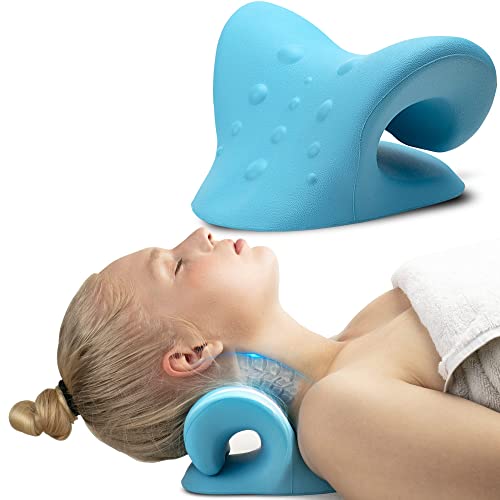
This is a cervical traction device, not a wearable shoulder brace, so it suits a different kind of support need than the strap-style options. iBWYM says the pillow gently stretches the neck and is intended to support cervical alignment and posture. Its compact dimensions are 7 by 6 by 4 inches. Because traction applies force to the neck, it is not interchangeable with a posture cue; people with neck injury, osteoporosis, neurologic symptoms, or recent surgery should ask a clinician before using a traction device. The product’s broad relief and correction claims should not be read as guaranteed outcomes.
Bottom line: Consider this only if you are seeking a neck-stretching device and have checked whether traction is appropriate.
Rear-Support Neck Posture Corrector, Large

This product supports the neck with a cushioned collar rather than pulling the shoulders back like the posture braces. The maker describes an extended rear-support area and 28 adjustment positions, grouped into low, medium, and high settings. That makes it a neck-positioning option for someone who wants collar-style support, but it is not a direct replacement for an upper back brace. Collar height and fit matter: a device that presses the jaw or makes swallowing or breathing uncomfortable should not be worn. Its posture and stiffness claims are maker claims, not assured results.
Bottom line: Choose this if you specifically want adjustable, cushioned support around the neck.
How to choose a dowager’s hump posture brace
Choose by the area the brace supports and the fit range, not by the word “corrector.” Shoulder-pull braces cue the upper back by drawing the shoulders back; collars support the neck, while traction devices apply a stretching force. These are different mechanisms and are not interchangeable. A practical rule is to select a shoulder brace only when your chest measurement falls inside its range; the ComfyBrace range is 30–43 inches. Start with brief wear rather than all-day use, then increase only if comfortable. Remove a brace if it causes numbness, tingling, skin damage, or restricted breathing. A brace may cue posture, but it cannot determine whether a spinal curve is postural or structural.
What can cause a curve at the base of the neck
A visible curve at the neck base can reflect posture, age-related spinal changes, or vertebral compression fractures, so a brace is not a diagnosis. Kyphosis is an excessive forward rounding of the upper back; a clinician can assess whether the curve is flexible or structural and whether imaging is needed. A new or rapidly changing hump, significant pain, height loss, numbness, weakness, or a history of osteoporosis warrants medical evaluation rather than self-treatment with a brace. Posture cues may help someone who habitually rounds the shoulders, but they do not rebuild compressed vertebrae. Avoid treating cosmetic appearance alone as proof of the cause.
Brace, collar, and traction device differences
Shoulder braces, neck collars, and traction pillows act on different areas, so match the mechanism to the need. The table separates their main function and a useful fit consideration; it does not imply that any style treats the underlying cause of a hump.
| Style | Main support area | Fit decision |
|---|---|---|
| Shoulder posture brace | Shoulders and upper back | Check chest range and strap comfort |
| Cervical collar | Neck | Check size and collar positioning |
| Cervical traction device | Neck stretch | Check medical suitability before use |
For a posture habit, a light cue is generally a closer match than traction. For neck pain or a changing curve, get guidance on the cause before choosing a device that applies force.
How to wear a posture brace safely
Brief, comfortable wear is a safer starting point than tightening a brace or wearing it continuously. A brace should cue an upright position without forcing the shoulders painfully backward; straps that restrict breathing or circulation are too tight. Alternate brace time with movement and strengthening rather than relying on passive support alone, since prolonged reliance can make normal movement less comfortable. Traction devices need separate caution because they apply a stretching force to the neck. People with osteoporosis, prior neck injury or surgery, or arm tingling should consult a clinician before traction or sustained collar use. Stop and seek care for new weakness, numbness, severe pain, or breathing or swallowing difficulty.
Frequently Asked Questions
Can a posture brace remove a dowager’s hump?
A posture brace can cue shoulder position, but it cannot be assumed to remove a visible hump. A curve related to vertebral changes or compression fractures needs clinical assessment, especially with osteoporosis, new pain, or height loss.
How long should I wear a posture corrector at first?
Start with a short period, such as 5–10 minutes, if the brace maker recommends that interval, and stop if it causes discomfort. Increase time gradually only when the fit remains comfortable; all-day wear is not a sensible starting point.
Should I use neck traction for a neck hump?
Traction is a neck-stretching intervention, not the same as a shoulder posture brace. Ask a clinician before using it if you have osteoporosis, a neck injury, prior surgery, numbness, or weakness.
When should a neck-base hump be medically checked?
Arrange an evaluation for a new or rapidly changing curve, significant pain, height loss, numbness, or weakness. Osteoporosis raises concern because vertebral compression fractures can change spinal shape.
How should a shoulder posture brace fit?
The shoulder straps should cue a more upright position without digging in, causing tingling, or restricting breathing. Measure the chest and compare it with the brace’s range before choosing a size.