
Downspout Splash Block Extra Long: 4 Options Compared

For a longer runoff path, choose 38-Inch Channel Guard Splash Block, whose 38-inch channel is the longest option here and measures 12 inches wide. Choose a shorter splash block if your downspout area is tight or you prefer rubber construction; the other options measure 22 to 24 inches long.
A splash block is a ground-level channel that guides water away from a downspout. Check that the channel fits beneath your downspout outlet and that its path directs water away from the house.
We earn a commission if you buy through links on this page. As an Amazon Associate I earn from qualifying purchases. Products are compared on manufacturer specifications, not hands-on testing.
- Best overall: 38-Inch Channel Guard Splash Block – Its 38-inch length gives runoff a longer channel than the other options.
- Best for linked sections: Naacoo 24-Inch PP Splash Block – Its 24-inch PP sections are designed to connect for a longer path.
- Best for recycled rubber: Sekcen 22-Inch Rubber Splash Block – Its rubber construction uses recycled tire material and needs no anchoring.
| Product | Best for | Length | Width | Material | Shop |
|---|---|---|---|---|---|
| 38-Inch Channel Guard Splash Block | Longer runoff path | 38 in | 12 in | — | Check Price on Amazon |
| Naacoo 24-Inch PP Splash Block | Connectable sections | 24 in | — | PP | Check Price on Amazon |
| Sekcen 22-Inch Rubber Splash Block | Recycled rubber | 22 in | 10 in | Recycled tire rubber | Check Price on Amazon |
| Rubberific 22-Inch Recycled Rubber Splash Block | Textured appearance | 22 in | 10 in | Recycled rubber | Check Price on Amazon |
Extra-long downspout splash blocks
Compare the available lengths, channel widths and materials to find a suitable runoff path.
38-Inch Channel Guard Splash Block

At 38 inches long, 38-Inch Channel Guard Splash Block provides the longest channel among these options. Its 12-inch width gives the channel a broader footprint, and the maker says its design guides downspout water away from the foundation and landscaping. The channel is made to slide together for a fitted setup, according to the maker. Choose it when you need more reach than a roughly 2-foot block can provide. Its wider channel and 3-inch listed height may take up more ground space, so it may not suit a narrow bed or walkway.
Bottom line: Pick this when a longer, wider runoff channel is the priority.
Naacoo 24-Inch PP Splash Block
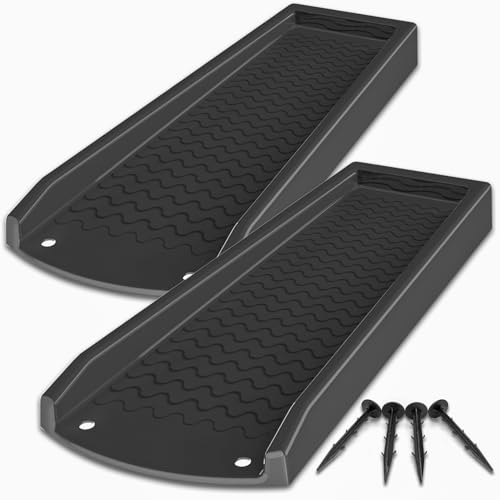
Unlike the single longer channel, Naacoo 24-Inch PP Splash Block is a 24-inch PP splash block designed to splice with another section. The maker says its sloped, ladder-style surface directs water along the block and helps avoid collecting dirt or water; it also describes the material as UV-resistant. Two sections can offer a longer route where a single block would fall short, while the package includes four fixing nails. The individual section is still shorter than 38-Inch Channel Guard Splash Block, so it is less suited to buyers who want the longest single channel without joining pieces.
Bottom line: Choose this if you want the option to connect sections into a longer path.
Sekcen 22-Inch Rubber Splash Block

Sekcen 22-Inch Rubber Splash Block stands apart for its recycled tire-rubber construction and simple placement without stakes or anchoring. It measures 22 inches long and 10 inches wide, with a 2-inch height. The maker says its sloped surface spreads runoff away from the foundation and minimizes standing water, and that the rubber is intended to withstand weather without cracking or decomposing.
Bottom line: Choose this for a shorter rubber block that needs no anchoring.
Rubberific 22-Inch Recycled Rubber Splash Block

Rubberific 22-Inch Recycled Rubber Splash Block pairs a 22-inch length with a stone-textured surface, making its appearance the main distinction from the plain channel options. The block is 10 inches wide and 2 inches high, and the maker says it is made in the USA from 100% recycled material. It installs by positioning it beneath the downspout, with no additional setup described. The textured finish may suit a visible landscaping edge, but its 22-inch reach is short compared with 38-Inch Channel Guard Splash Block and may not carry water far enough on its own.
Bottom line: Choose this for a compact recycled-rubber block with a decorative texture.
How to choose a downspout splash block
Choose by the distance water needs to travel, the ground available and the route to a safe discharge point. A splash block guides water at ground level; it does not replace a buried drain or correct a grading problem. As a practical starting point, aim to discharge runoff at least 4 to 6 feet from the foundation, then check that the ground continues to slope away rather than toward the house. Length alone does not guarantee that distance if the outlet or block points sideways. With less than 4 feet of clear ground, consider a longer channel or another drainage approach rather than directing water into a walkway, neighbor’s lot or low spot. Check the downspout outlet fit before choosing a block.
Length, width and runoff path
A longer block gives water more guided travel along the ground, while width affects how much area the channel covers. For context, the options here range from 22 to 38 inches long and 10 to 12 inches wide. These dimensions describe the block, not the final distance water will travel across soil. A common grading guideline is a fall of about 6 inches over the first 10 feet from the foundation; compacted soil, flat spots and landscaping can change the actual flow. Place the outlet so the channel follows the downhill route, and avoid aiming water toward a basement window, stairwell or neighboring property. If runoff still pools at the end, a splash block alone may not solve the drainage issue.
Plastic and rubber splash blocks compared
Plastic blocks are generally lighter and easier to move, while rubber blocks tend to be heavier and stay in place more readily; exact weight and durability vary by design. Rubber products may use recycled tires, while polypropylene is a common plastic used outdoors. The product materials distinguish the options here: Naacoo 24-Inch PP Splash Block uses PP, while Sekcen 22-Inch Rubber Splash Block and Rubberific 22-Inch Recycled Rubber Splash Block use recycled rubber; 38-Inch Channel Guard Splash Block does not provide a material in its specifications. A wider or longer channel can occupy more lawn or bed space, so measure the route before selecting one. No material removes the need to check the outlet alignment or observe where water travels after a storm.
Placement and seasonal checks
Set the block directly beneath the downspout outlet and keep its open channel pointed along the intended drainage route. A small shift can send runoff toward siding or a foundation, so inspect the path during a rain event and reposition the block if water escapes the sides. Clear leaves, mulch and sediment from the channel at least seasonally and after heavy storms; debris can slow flow and cause ponding. Freeze-thaw conditions, lawn equipment and foot traffic can move or damage a block, so check its position after winter and mowing. Do not route downspout flow onto a public sidewalk or a surface where it can create a slippery hazard.
Frequently Asked Questions
How far should a downspout splash block extend?
A practical target is to discharge water at least 4 to 6 feet from the foundation. The block’s own length is only part of the route, so the slope and direction of the ground also matter.
Should a splash block slope away from a house?
Yes, position the channel so water travels away from the foundation and toward lower ground. A common grading guideline is about 6 inches of fall over the first 10 feet, though surface conditions can affect runoff.
Can two splash blocks be connected together?
Some designs are made to connect, but not every splash block has that feature. Naacoo 24-Inch PP Splash Block is described by its maker as spliceable; align connected sections so water can flow through without a gap or raised edge.
How often should I clean a downspout splash block?
Check and clear the channel at least once each season and after heavy storms. Leaves, mulch and sediment can obstruct flow or cause water to spill toward the house.
Can a splash block stop basement water?
A splash block can guide roof runoff away from the foundation, but it cannot guarantee a dry basement. Persistent pooling, inward grading or water entry may require a broader drainage or foundation assessment.