
Dried Vegetables for Ramen: 5 Mixes Compared

For most ramen bowls, Real Naturals Ramen Toppings, 5.83 oz is the most flexible pick because its mix combines seven vegetables with ramen seasoning. Choose Wakame & Vegetable Mix, 11 oz instead if you want wakame, or 12-Veggie Mushroom & Goji Mix, 14 oz if mushrooms and tofu are the priority.
Dried ramen vegetables are shelf-stable ingredients that absorb liquid in hot broth; their cut and mix affect the bowl’s texture and flavor.
We earn a commission if you buy through links on this page. As an Amazon Associate I earn from qualifying purchases. Products are compared on manufacturer specifications, not hands-on testing.
- Best overall: Real Naturals Ramen Toppings, 5.83 oz – Its seven-vegetable mix includes seasoning and suits ramen as well as other dishes.
- Best for wakame: Wakame & Vegetable Mix, 11 oz – The five-ingredient blend pairs seaweed with cabbage, carrot, bok choy and chives.
- Best for mushrooms: 12-Veggie Mushroom & Goji Mix, 14 oz – Its mix includes tofu, shiitake and button mushrooms, plus goji.
| Product | Best for | Ingredient focus | Package size | Prep time | Shop |
|---|---|---|---|---|---|
| Real Naturals Ramen Toppings, 5.83 oz | Seasoned veggie mix | 7 vegetables, seasoning | 5.83 oz | — | Check Price on Amazon |
| Wakame & Vegetable Mix, 11 oz | Seaweed-forward bowls | Wakame, cabbage, carrot, bok choy, chives | 11 oz | 3–5 minutes | Check Price on Amazon |
| Ramen Toppers Mixed Vegetables | Bulk-style topping | Peas, corn, carrots, cabbage, green onions | — | — | Check Price on Amazon |
| SXETBEAN Dehydrated Vegetables, 8.8 oz | Simple vegetable flakes | Green stem vegetables, carrots, cabbage | 8.8 oz | — | Check Price on Amazon |
| 12-Veggie Mushroom & Goji Mix, 14 oz | Mushrooms and tofu | Tofu, shiitake, button mushrooms, goji | 14 oz | 3 minutes | Check Price on Amazon |
Dried Vegetables for Ramen Compared
Compare each blend’s ingredients and prep notes to find a topping mix that fits your broth and bowl.
Real Naturals Ramen Toppings, 5.83 oz
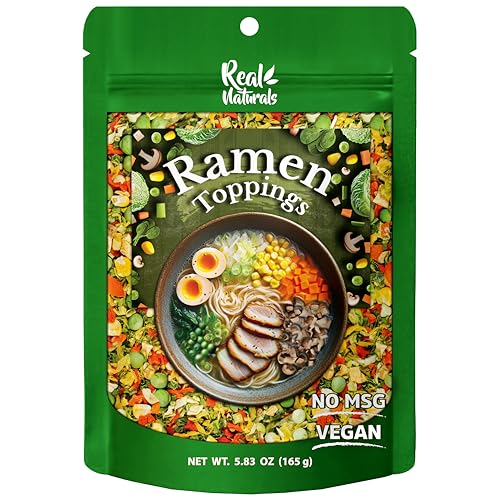
Real Naturals Ramen Toppings, 5.83 oz stands out for combining vegetables with ramen seasoning, while several alternatives focus on vegetables or seaweed alone. The mix includes cabbage, spinach, chive, carrot, corn, green pea and shiitake mushroom. Real Naturals says it is made with natural ingredients and can be used in ramen, soup, rice, stir-fry and noodle bowls.
This suits shoppers who want a seasoned blend for more than one dish. The seasoning is a limitation if you prefer to control every component of your broth; taste the broth before adding extra salt or seasoning.
Bottom line: Pick this if you want a multi-vegetable ramen mix that already includes seasoning.
Wakame & Vegetable Mix, 11 oz

Wakame & Vegetable Mix, 11 oz is the only blend here centered on wakame seaweed, with cabbage, carrot, bok choy and chives rounding out its five ingredients. The maker recommends adding it to hot water, broth or noodle soup and allowing 3–5 minutes to rehydrate.
This Japanese-style mix suits miso soup, udon and ramen when you want seaweed in the bowl. Its ingredient list is narrower than a broad mixed-vegetable blend, so choose another option if you want additions such as peas, corn or multiple mushrooms.
Bottom line: Choose this for ramen or soup where wakame is a key part of the bowl.
Ramen Toppers Mixed Vegetables

Ramen Toppers Mixed Vegetables differs by including green onions with peas, corn, carrots and cabbage, giving the mix a familiar vegetable-topping profile. Its features also mention pork, so it is not a strictly plant-based choice despite the vegetable-focused name.
The maker says the sealed product has a shelf life of 2 years or longer and describes a rehydrated yield of over 2 pounds. Those are maker claims rather than guarantees for every storage condition. This option suits shoppers considering a larger-format topping, but the conflicting package-size figures make package quantity worth confirming before ordering.
Bottom line: Pick this if green onions and a bulk-style mix appeal, and pork is acceptable.
SXETBEAN Dehydrated Vegetables, 8.8 oz

SXETBEAN Dehydrated Vegetables, 8.8 oz keeps its vegetable list simple: green stem vegetables, carrots and cabbage. The maker says the blend has no colorings or additives and can be added to ramen, soups, rice, udon, stir-fries, stews and casseroles.
This suits cooks who want a straightforward vegetable-flake mix for several recipes. The mix does not include the seaweed, mushroom or seasoning focus found in some alternatives, so it is less suited to shoppers seeking those specific flavors. Add it to broth early enough to soften, then adjust the timing to the texture you prefer.
Bottom line: Choose this for a simple cabbage-and-carrot style mix that can go beyond ramen.
12-Veggie Mushroom & Goji Mix, 14 oz

12-Veggie Mushroom & Goji Mix, 14 oz has the strongest mushroom-and-tofu focus in this group, with shiitake, button mushrooms, tofu, goji and greens among its ingredients. The maker recommends adding it to boiling water and steeping for 3 minutes alongside the noodles.
This suits ramen bowls where a more varied, savory mix is the goal. It is not the choice for someone who wants a short, familiar list of vegetables such as cabbage, carrot and corn. The maker describes the blend as vegan and gluten-free; check the package if those attributes are essential to your meal.
Bottom line: Choose this when mushrooms and tofu matter more than a basic vegetable mix.
How to Choose Dried Vegetables for Ramen
Choose a mix by its ingredients first, then its seasoning and cut. Wakame brings a seaweed element; mushrooms and tofu make a different kind of topping from cabbage, carrot, corn and peas. A seasoning blend can add flavor as well as vegetables, but it also reduces how much control you have over the broth. For a short ingredient list, compare the named ingredients rather than relying on a broad term such as “vegetable mix.”
Use a measurable decision rule: if you want a seaweed-forward bowl, choose a blend that names wakame; if you want mushrooms, look for shiitake or button mushrooms in the ingredient list. Add toppings to hot broth and give them time to hydrate; thicker pieces generally need more time than fine flakes.
How to Rehydrate Ramen Toppings
Rehydrate dried toppings in hot broth or water, and use the package’s timing when it gives one. One blend here recommends 3–5 minutes, while another recommends a 3-minute steep alongside the noodles. Those times are product-specific, not a universal rule for every dried vegetable. Check a piece for softness before serving and allow more time if it remains firm.
Small flakes can soften quickly, while larger pieces and seaweed may need a longer soak. Adding toppings too late can leave them chewy; adding them early gives them more contact with liquid. If the broth becomes too concentrated, add hot water gradually and taste as you go rather than seasoning automatically.
Ramen Vegetable Mix Types Compared
Ingredient focus is the quickest way to distinguish ramen topping mixes. Seaweed blends, mushroom-forward mixes and familiar mixed vegetables each change the bowl in different ways. Some mixes also include seasoning, which can influence the broth beyond the texture of the toppings.
Use this guide to match the mix to the bowl you want. Package size alone does not tell you how much finished food a dry mix makes; dried ingredients take up less room than rehydrated ones, and the amount used per bowl varies.
| Need | Look for | What it adds |
|---|---|---|
| Seaweed in the bowl | Wakame | Seaweed alongside vegetables |
| Mushroom and tofu focus | Shiitake, button mushrooms, tofu | A more varied topping mix |
| Familiar vegetables | Cabbage, carrot, peas or corn | Classic mixed-vegetable additions |
| Seasoned topping | A mix that includes ramen seasoning | Vegetables plus seasoning |
Storage and Dietary Checks for Dried Vegetables
Keep dried vegetables tightly sealed in a cool, dry place; moisture can soften dried pieces and compromise their quality. Close the package promptly after each use, and use a clean, dry scoop rather than introducing water or steam into the container. Discard food if it develops visible mold or an unusual odor.
Ingredient lists matter for dietary choices: some mixes include seaweed, tofu, seasoning or pork, while a vegetable-forward name alone does not confirm that a product is vegan or free of a particular allergen. Check the package before serving anyone with an allergy or strict dietary requirement. Follow the cooking directions for the noodles and broth, and serve the finished bowl hot.
Frequently Asked Questions
How long do dried ramen vegetables take to rehydrate?
Rehydration time depends on the cut and blend. The mixes here give examples of 3 minutes or 3–5 minutes; check a piece for softness and allow more time if needed.
Can I add dried vegetables while ramen cooks?
Yes, dried vegetables can be added to hot broth while the noodles cook. Small flakes may soften quickly, while larger pieces can need more time, so check the texture before serving.
Do dried ramen vegetables need to be rinsed first?
Most dried vegetable toppings are added directly to hot broth or water rather than rinsed. If the package gives a different preparation step, use that direction, and keep the dry mix away from moisture during storage.
Are dried ramen vegetable mixes vegan?
Some are vegetable-only or described by their makers as vegan, but ingredients differ. Check for animal-derived ingredients such as pork and review the package if vegan ingredients are essential.
How should I store an opened bag of dried vegetables?
Reseal the package tightly and store it somewhere cool and dry. Keep moisture and steam out of the container, since dampness can soften the vegetables and compromise their quality.