
Drill Attachments for Grinding: 3 Stone Bit Sets Compared

For drill attachments for grinding, start with the shank and the shape you need: DEWALT DWA4972 Grinding Point is a single aluminum oxide point for ferrous-metal deburring, shaping, or grooving, while Luo ke 8-Piece Grinding Stone Set offers multiple shapes and uses a 1/4-inch hex shank. Choose a different set if you need a range of shapes or plan to work with materials beyond ferrous metal.
Grinding points are abrasive bits held in a drill chuck or rotary-tool collet; check shank compatibility before ordering, especially when a set’s sizing is inconsistent.
We earn a commission if you buy through links on this page. As an Amazon Associate I earn from qualifying purchases. Products are compared on manufacturer specifications, not hands-on testing.
- Best overall: DEWALT DWA4972 Grinding Point – Its 1/4-inch hex shank pairs with a single aluminum oxide point specified for ferrous-metal deburring, shaping, and grooving.
- Best for varied shapes: Luo ke 8-Piece Grinding Stone Set – Eight 80-grit aluminum oxide bits include cone, cylinder, and T shapes, with a 1/4-inch hex shank.
- Best for mixed materials: Luo ke 6-Piece Grinding Stone Set – Six assorted grinding stones cover three shapes and are described for materials including metal, glass, stone, and ceramics.
| Product | Best for | Shank | Abrasive | Count and shapes | Shop |
|---|---|---|---|---|---|
| DEWALT DWA4972 Grinding Point | Ferrous metal | 1/4-inch hex | Aluminum oxide | 1 point | Check Price on Amazon |
| Luo ke 8-Piece Grinding Stone Set | More bit shapes | 1/4-inch hex | 80-grit aluminum oxide | 8; cone, cylinder, T | Check Price on Amazon |
| Luo ke 6-Piece Grinding Stone Set | Mixed materials | 1/4-inch name; 6 mm feature | 80-grit corundum | 6; wheel, cylinder, cone | Check Price on Amazon |
Drill Attachments for Grinding
Compare the shank, abrasive, and shape range to match a grinding attachment to your drill and workpiece.
DEWALT DWA4972 Grinding Point
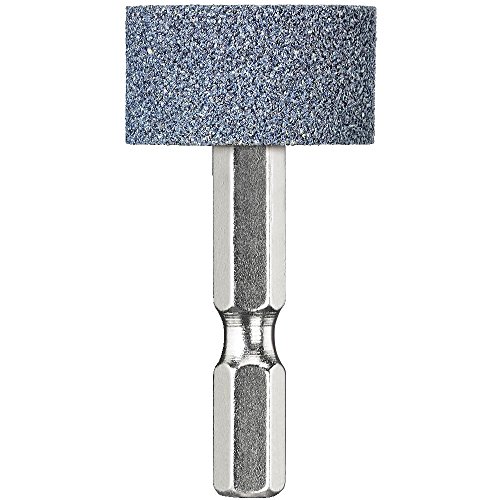
Unlike the assorted sets, this DEWALT attachment is a single grinding point intended for ferrous metal. Its aluminum oxide tip and 1/4-inch hex shank are suited to deburring, shaping, and grooving when you want one defined point rather than several profiles. The product specifies metal work, so it is the clearest fit here for those tasks.
The limitation is its narrow scope: one point gives less shape choice than a multi-bit set, and its application is ferrous metal. Choose another set if you need a collection of head shapes or work on materials outside that use.
Bottom line: Pick this if your work is ferrous-metal deburring, shaping, or grooving.
Luo ke 8-Piece Grinding Stone Set

This set stands apart with eight assorted 80-grit aluminum oxide bits and three named profiles: cone, cylinder, and T shape. Its 1/4-inch hex shank is specified for a drill, die grinder, or other rotary tool, making the set useful when a single-point bit would not provide the profile needed for a particular edge or surface.
The applications include aluminum, agate, steel, alloy, metal, and nonmetal grinding and sharpening. The product recommends water for dust prevention during dry-or-wet use; that recommendation does not replace suitable eye protection or checking tool and accessory compatibility.
Bottom line: Choose this when you want several bit profiles and a 1/4-inch hex shank.
Luo ke 6-Piece Grinding Stone Set
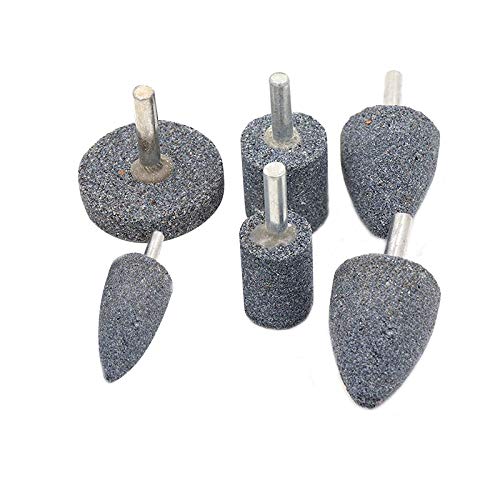
This set is distinguished by six stones in wheel, cylinder, and cone shapes, and its material range goes beyond metal to include glass, stone, gems, and ceramics. The product calls the abrasive corundum sand and recommends water when using the stones to help prevent dust.
There is a shank-size discrepancy to resolve before purchase: the name says 1/4 inch, while the maker says 6 mm. Those sizes are close but not identical, so confirm which shank is supplied and whether it fits your drill chuck or rotary-tool collet. Fully insert and clamp the shank before operating.
Bottom line: Pick this for varied materials after confirming the shank size.
How to choose a grinding attachment for a drill
Choose first by the material and task: an abrasive point can deburr, shape, or groove, while a broad or pointed profile reaches different areas. Aluminum oxide is a common abrasive for general-purpose grinding on ferrous metals; the included products specify aluminum oxide or corundum and 80 grit for two sets. Grit describes abrasive coarseness: lower numbers generally remove material more aggressively, while higher numbers leave a finer finish.
Then match the shank to the tool. A 1/4-inch hex shank is intended for a compatible drill chuck, while rotary tools may require a collet sized to the shank. For tight corners, choose a cone or cylinder; for broader contact, a wheel-shaped stone may suit the geometry better.
How to match grinding bit shapes to a job
Bit shape determines where abrasive contact happens: cones reach narrow recesses, cylinders work along straight edges, and wheel profiles expose a broader face. Choose a point that fits the surface without forcing the bit into a corner; excessive pressure can load the abrasive and reduce control. The assorted sets here use different shape combinations, so compare the included profiles against the workpiece rather than choosing by count alone.
Keep the drill speed within the accessory’s rated limit; never exceed the lower of the drill’s and bit’s maximum RPM. The specifications do not give an RPM rating, so verify the limit for the specific bit before use. Secure the workpiece, hold the drill firmly, and wear eye protection; grinding can throw abrasive particles and fragments. Avoid loose sleeves, jewelry, and hair near the rotating shank.
Drill shank fit and setup for grinding stones
Confirm the shank diameter and type match the drill chuck before installing a grinding stone. A 1/4-inch hex shank is not the same as a 6 mm shank, even though their sizes are close; a mismatch can prevent secure clamping. Insert the shank fully into the chuck and tighten it firmly, as the set guidance also emphasizes full insertion and clamping.
Before powering up, rotate the bit by hand to check that it is seated straight and clear of the workpiece. Start at a controlled speed and let the abrasive do the work instead of pressing hard. Stop if the bit wobbles, the workpiece shifts, or the stone becomes damaged. Use a dust mask where grinding dust is generated and keep bystanders clear of the grinding area.
Frequently Asked Questions
Can a regular drill use grinding stone bits?
A drill can use a grinding bit when the shank fits its chuck and the bit is rated for the drill’s speed. A 1/4-inch hex shank is specified for a drill on one set here; verify the fit and RPM limit for the exact bit before use.
What does 80 grit mean on a grinding stone?
An 80-grit abrasive is relatively coarse and generally removes material faster than a finer grit, with a rougher finish. Use light pressure and test on a noncritical area when finish quality matters.
Should I use water with grinding stone attachments?
The two assorted sets recommend water during use to help prevent dust, and one says the stones can be used dry or wet. Use water only if the tool, workpiece, and accessory setup are suitable for wet grinding; keep water away from electrical parts.
How do I keep a grinding bit from wobbling?
Seat the shank fully and clamp it securely in a chuck that matches its size. Stop immediately if the bit wobbles, then inspect the shank and chuck fit before restarting.
What safety gear should I use with drill grinding bits?
Wear eye protection because abrasive particles and fragments can be thrown during grinding. Secure the workpiece, keep hands and loose clothing away from the rotating bit, and use respiratory protection when dust is present.