
Durable Crystal Elastic Cord: 4 Options Compared

For most bracelet makers, JULIMAIDONG 0.8 mm, 200 ft is the most direct choice because its 0.8 mm clear cord balances a fine profile with bead compatibility. Choose a different option if you need multiple diameters, a longer roll, or 1 mm cord for larger bead holes.
Crystal elastic cord is stretchable string for threading beads into bracelets and other jewelry without a clasp.
We earn a commission if you buy through links on this page. As an Amazon Associate I earn from qualifying purchases. Products are compared on manufacturer specifications, not hands-on testing.
- Best overall: JULIMAIDONG 0.8 mm, 200 ft – One 200-foot roll of 0.8 mm clear cord suits common bracelet and bead projects.
- Best for varied bead sizes: FIVEIZERO 6-Roll Elastic Cord Set – Six rolls cover diameters from 0.4 mm through 1 mm.
- Best for longer projects: Paxcoo 0.8 mm, 120 m – Its single roll provides 120 meters of 0.8 mm cord.
- Best for thicker cord: LUSTEMBER 1 mm, 2 Rolls – Two rolls provide 1 mm cord for beads with wider holes.
| Product | Best for | Diameter | Length (ft) | Pack | Shop |
|---|---|---|---|---|---|
| JULIMAIDONG 0.8 mm, 200 ft | Everyday bracelets | 0.8 mm | 200 ft | 1 roll | Check Price on Amazon |
| FIVEIZERO 6-Roll Elastic Cord Set | Mixed bead holes | 0.4–1 mm | — | 6 rolls | Check Price on Amazon |
| Paxcoo 0.8 mm, 120 m | Longer projects | 0.8 mm | 131.2 ft | 1 roll | Check Price on Amazon |
| LUSTEMBER 1 mm, 2 Rolls | Larger bead holes | 1 mm | 656.2 ft | 2 rolls | Check Price on Amazon |
Durable Crystal Elastic Cord Options
Compare cord diameter and roll quantity against your bead holes and expected project use.
JULIMAIDONG 0.8 mm, 200 ft

JULIMAIDONG 0.8 mm, 200 ft offers the straightforward 0.8 mm, 200-foot format, while the other choices add more diameters, more length, or thicker cord. The cord is clear elastic polyester spandex, and the maker says it is easy to tie and fine enough to hide knots. Its craft uses include bracelets, necklaces, and beading.
The single diameter is useful when your bead holes already suit 0.8 mm cord. It is less flexible for mixed bead-hole sizes than a multi-diameter set, so measure the smallest hole before choosing.
Bottom line: Choose this if a single 0.8 mm roll is the size your beads need.
FIVEIZERO 6-Roll Elastic Cord Set

FIVEIZERO 6-Roll Elastic Cord Set is the only option here with six cord diameters, ranging from 0.4 mm to 1 mm, making it suited to projects with different bead-hole sizes. The set includes one roll of each diameter and uses clear round elastic string. The maker says its material resists abrasion and aging, including yellowing from sunlight and wet conditions.
Choose the thinnest cord that passes cleanly through each bead, then check that knots can be secured. The roll length is not provided, so this set is a weaker match when a known amount of cord is essential.
Bottom line: Choose this when one craft stash needs several cord thicknesses.
Paxcoo 0.8 mm, 120 m
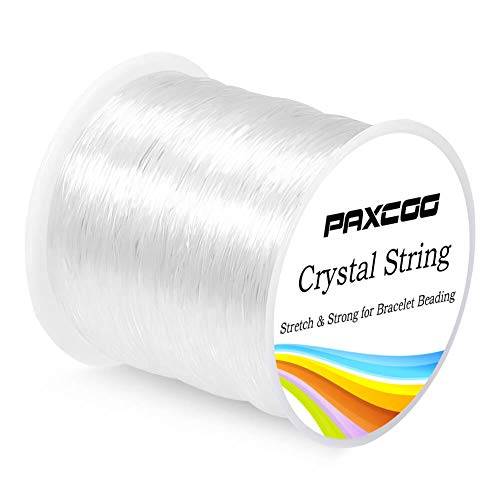
Paxcoo 0.8 mm, 120 m provides 120 meters of 0.8 mm cord, more length than the 200-foot single rolls in this comparison. Its clear elastic plastic rubber cord is intended for bracelets, necklaces, bead weaving, and crafts, including projects with seed, gemstone, or glass beads.
The single 0.8 mm size suits makers who know their beads accept that diameter and want a longer continuous roll. The maker says the string is stretchy and hard to break, but cord strength still depends on bead edges and knot quality; inspect sharp-edged beads before stringing.
Bottom line: Choose this for a longer supply of 0.8 mm cord.
LUSTEMBER 1 mm, 2 Rolls
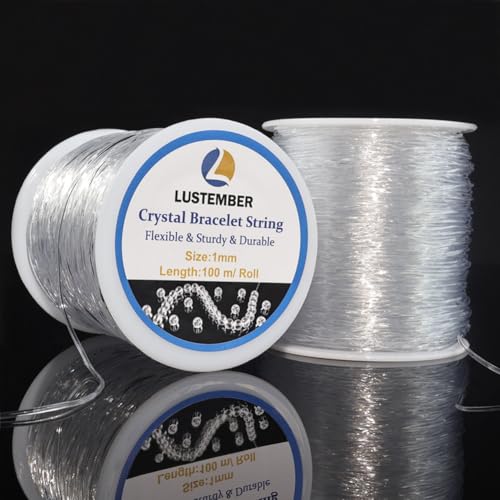
LUSTEMBER 1 mm, 2 Rolls is the thickest single-diameter choice at 1 mm and comes as two rolls totaling 200 meters. The maker says its clear elastic string is abrasion-resistant and rebounds after stretching. It is intended for bracelets, necklaces, beading, and jewelry making.
The thicker diameter can suit beads with larger holes or designs where a more substantial cord is wanted. It will not pass through as many small-hole beads as 0.8 mm or thinner cord, so verify the smallest bead opening before committing to a project.
Bottom line: Choose this when your bead holes comfortably accept 1 mm cord.
How to choose crystal elastic cord thickness
Match cord diameter to the narrowest bead hole in the design, not just the largest beads. A practical starting point is 0.5 to 0.8 mm for many small-to-medium beads and 0.8 to 1 mm for larger-hole beads; actual hole sizes vary by bead style and maker. The cord should pass without force, since pulling elastic through a tight opening can nick or stretch it before wear begins.
Leave enough room for the cord to pass through twice if the design needs a doubled strand or a concealed knot. If a bead hole is under 1 mm, use a test bead and a short cord offcut before stringing the full bracelet. For mixed beads, use the smallest-hole bead as the sizing limit.
How cord material and bead edges affect wear
Elastic cord wears fastest where it rubs against rough bead holes, sharp edges, or repeated knots. Smooth glass and polished stone generally create less abrasion than beads with burrs or chipped openings, so inspect every hole with a fingernail or magnifier before stringing. For rough holes, a thinner elastic cord can be more vulnerable to cutting even when it fits easily.
Polyester-spandex and plastic-rubber elastic are both represented in these choices, but the material names alone do not establish a universal lifespan. Avoid over-stretching a finished bracelet when putting it on: rolling it over the hand puts less repeated strain on the same section than pulling it wide by the ends. Retire cord that shows whitening, fuzzing, or a persistent loss of rebound.
How to secure elastic bracelet cord
Elastic cord needs a knot that stays compact and does not slip through the bead opening. A surgeon’s knot adds an extra wrap on the first pass compared with a basic overhand knot; pull both ends evenly, then test the knot with several firm tugs before trimming. Leaving short tails until the knot has passed that check reduces the chance of cutting too close.
Use a bead or knot cover only if its opening fits the cord and the finished knot. A tight knot cover can pinch elastic, while a cover that is too large may not conceal the knot. For jewelry worn daily, avoid placing the knot against a sharp bead edge, and keep the stretch moderate rather than using the bracelet as a handle.
Crystal elastic cord size and project match
Use this quick match to narrow the cord type by bead-hole range and project need; always check the actual opening because bead dimensions vary.
| Bead-hole situation | Starting diameter | Tradeoff |
|---|---|---|
| Very small holes | 0.4–0.6 mm | Fits more beads but can be more delicate |
| Mixed everyday beads | 0.7–0.8 mm | Useful middle range, but may not pass tiny holes |
| Larger holes | 1 mm | Thicker feel, requires wider openings |
With bead holes below 0.7 mm, choose a thinner cord rather than forcing a thicker one through. For a bracelet with mixed holes, pick based on the smallest bead in the strand and test the knot fit as well as the cord fit.
Frequently Asked Questions
How do I measure a bead hole for elastic cord?
Use a bead reamer gauge or drill-bit shank to estimate the hole opening, without forcing a tool into the bead. Leave a small clearance beyond the cord diameter; for example, a 0.8 mm cord should slide through a hole larger than 0.8 mm.
Can 0.8 mm elastic cord fit seed beads?
Some seed beads have openings too small for 0.8 mm cord, while larger-hole varieties may accept it. Test a bead first, and use 0.4 to 0.6 mm cord when a 0.8 mm strand binds.
How much cord should I cut for a stretch bracelet?
Cut about 12 to 14 inches for an adult bracelet, allowing roughly 2 to 3 inches for handling and tying. Bead size, wrist circumference, and whether the strand is doubled change the amount needed.
How can I keep an elastic bracelet knot from slipping?
Tie a surgeon’s knot with an extra wrap on the first pass, then pull both ends firmly and evenly. Test it with several firm tugs before trimming the tails or hiding the knot.
When should elastic bracelet string be replaced?
Replace it when the cord looks fuzzy, whitened, nicked, or no longer returns to its original length. Frequent stretching and abrasion from rough bead holes can shorten its useful life, so inspect regularly.