
Earpieces for Walkie Talkies: 3 Styles Compared

For a named radio match with a C-shaped ear fit and adjustable volume, choose Retevis Volume-Adjust C-Shape Earpiece; its compatibility includes RT22, RT68, RT21, and H777.
We earn a commission if you buy through links on this page. As an Amazon Associate I earn from qualifying purchases. Products are compared on manufacturer specifications, not hands-on testing.
- Best overall: Retevis Volume-Adjust C-Shape Earpiece – C-shaped fit, volume adjustment, and compatibility with several named Retevis radios.
- Best for long wear: Retevis 2-Pin D-Type Earpiece, 10-Pack – The D-shaped earhook stays outside the ear canal, and the cable measures 135 cm.
| Product | Best for | Wearing style | Controls | Shop |
|---|---|---|---|---|
| Retevis Volume-Adjust C-Shape Earpiece | Volume adjustment | C-shaped | Volume adjustment | Check Price on Amazon |
| LUITON 10-Pack Acoustic-Tube Earpieces | Team bundles | Acoustic tube | Remote PTT mic | Check Price on Amazon |
| Retevis 2-Pin D-Type Earpiece, 10-Pack | Over-ear comfort | D-shaped earhook | Remote PTT button | Check Price on Amazon |
Earpieces for Walkie Talkies Compared
Match the radio or speaker-mic connection first, then choose the wearing style and controls that suit your work.
Retevis Volume-Adjust C-Shape Earpiece
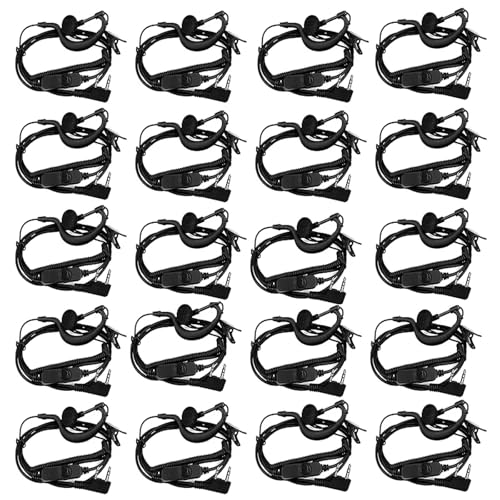
Retevis Volume-Adjust C-Shape Earpiece stands apart with a volume-adjustment control on a C-shaped surveillance earpiece. It is compatible with RT22, RT68, RT21, and H777 radios, as well as Pxton, Baofeng, and Kenwood models; confirm the exact radio model and connector before ordering. The maker positions it for noisy settings such as event security, schools, and hospitality work. The standard-size fit may suit buyers who want an earbud-style shape, but anyone who prefers an over-ear hook should choose a different style.
Bottom line: Pick it if you want an adjustable-volume C-shaped earpiece and your radio is compatible.
LUITON 10-Pack Acoustic-Tube Earpieces

LUITON 10-Pack Acoustic-Tube Earpieces comes as a 10-pack and uses an acoustic tube with a remote microphone and push-to-talk button. Its compatible radios include Baofeng UV-5R and 888S, Retevis H-777, R21 and RT22, plus Kenwood models; verify the exact model and connector, since compatibility can vary by radio version. The remote PTT lets a wearer transmit from the headset mic rather than handling the radio microphone. This choice suits teams needing several matching headsets, but it does not offer the volume adjustment found on Retevis Volume-Adjust C-Shape Earpiece.
Bottom line: Choose it when you need a multi-unit set with remote push-to-talk.
Retevis 2-Pin D-Type Earpiece, 10-Pack

Retevis 2-Pin D-Type Earpiece, 10-Pack uses a D-shaped earhook rather than an in-ear acoustic tube, keeping the earpiece outside the ear canal. The maker specifies a 135 cm cable, with 35 cm from the D-ring to the PTT and 100 cm from the PTT to the connector; the cable is PU wire. Its two-pin K-style connector is compatible with H777, RT22, RT21, RT68, Pxton, Baofeng, and Kenwood radios. The 10-pack suits a group, while the fixed earhook shape may be less suitable for someone who wants an in-ear fit.
Bottom line: Pick it for an over-ear design and a 135 cm cable, after confirming the two-pin match.
How to Choose Earpieces for Walkie Talkies
Start with the radio model and connector, then choose the ear fit and controls. A headset can use a two-pin radio plug, a model-specific connector, or a 3.5 mm jack on a speaker mic; those connections are not interchangeable simply because brands overlap. Push-to-talk headsets transmit through a remote button and microphone, while listen-only earpieces receive audio without transmitting. If you have under 2 inches of clearance between a shoulder mic and your collar, check the cable routing and clip placement before choosing a wired style.
| Need | Choose a style | Key check |
|---|---|---|
| Adjust listening volume | C-shaped with volume control | Radio model compatibility |
| Keep the ear canal clear | D-shaped earhook | Two-pin connector |
| Listen from a speaker mic | Receive-only acoustic tube | 3.5 mm audio jack |
Acoustic Tube, C-Ring, and D-Style Fits
Acoustic tubes route sound through a flexible tube to an earpiece, while C-rings and D-shaped hooks hold a speaker near or in the ear. In-ear tubes can keep conversations less exposed to people nearby, but fit and comfort depend on the ear mold and how long the headset is worn. An over-ear D-style avoids putting the earpiece in the canal, which may be preferable for extended shifts. Match the wearing style to the job’s duration and movement, and route the cable so it cannot snag on clothing or equipment.
Radio Compatibility and Connector Checks
Compatibility should be confirmed by exact radio model and plug type, not brand alone. A headset that names Baofeng or Kenwood may still fit only certain radio families or connector layouts; two-pin plugs can differ in spacing and wiring. Speaker-mic listen-only headsets add another connection point: the speaker mic must have a 3.5 mm audio jack. A practical check is to compare the radio’s model number and connector with the headset’s compatible models before ordering. For workplace radios, also confirm that the radio’s side accessory port is available and that the mic can be clipped where the wearer can reach its PTT without pulling the cable.
Safe Use and Care for Radio Earpieces
Keep the earpiece, cable, and connector dry unless the specific headset is rated for water exposure; water ingress can damage wired audio gear. Inspect cables and plugs before each shift for cracks, exposed wire, or loose connections, and remove damaged equipment from service. Clean reusable ear molds according to their material and workplace hygiene rules; do not share inserts without cleaning them. Secure excess cable under clothing or with a clip to reduce snagging during movement.
Frequently Asked Questions
Can a walkie-talkie earpiece fit any radio brand?
No; connector layout and wiring can differ even between radios from the same brand. Match the exact radio model and plug type, especially for two-pin headsets.
What does push to talk mean on an earpiece?
Push to talk means a button activates the microphone for transmitting. Remote PTT lets the wearer speak without using the radio’s built-in microphone, but the headset must match the radio’s accessory port.
Are listen-only earpieces able to transmit?
No; a listen-only headset receives audio and does not provide a transmit microphone or PTT control. A 3.5 mm speaker-mic jack is required for the receive-only style described here.
How can I reduce cable snags during a shift?
Clip the cable to clothing and route slack beneath a jacket or uniform. Inspect the cable before each shift, since cracked insulation or loose plugs can interrupt communication.