
Elbow Splint for Ulnar Nerve: 4 Options Compared

For a nighttime elbow splint with adjustable straps, TISMOD Elbow Brace, One Size is the most straightforward choice; choose by how much positioning control and fit adjustment you need. An elbow splint limits bending that can irritate the ulnar nerve near the elbow.
Choose a different option if you want removable splints or preset angle controls, or if you need a clearly identified size range.
We earn a commission if you buy through links on this page. As an Amazon Associate I earn from qualifying purchases. Products are compared on manufacturer specifications, not hands-on testing.
- Best overall: TISMOD Elbow Brace, One Size – Its adjustable straps and one size design offer a straightforward fit for nighttime support.
- Best for angle control: Multi-Angle Cubital Tunnel Brace, M – It offers fixed settings at 120°, 150° and 180°, plus a range-limiting mode.
- Best for removable splints: 3-in-1 Cubital Tunnel Brace, 12–17 in – Two removable metal splints provide three configurations, and its fit range is 12–17 inches.
| Product | Best for | Size or fit | Positioning | Construction | Shop |
|---|---|---|---|---|---|
| TISMOD Elbow Brace, One Size | Adjustable fit | One size | Adjustable straps | Lightweight material | Check Price on Amazon |
| Multi-Angle Cubital Tunnel Brace, M | Angle control | Medium | 120° / 150° / 180°; range-limiting mode | Lever-adjustable | Check Price on Amazon |
| 3-in-1 Cubital Tunnel Brace, 12–17 in | Three configurations | 12–17 inches | 180° / 150° / 90° modes | Two removable metal splints | Check Price on Amazon |
| Hurmoya Night Elbow Brace, Medium | Removable splints | Medium | Two removable metal splints | Compression sleeve | Check Price on Amazon |
Elbow Splints for Ulnar Nerve Support
Compare the fit and positioning approaches before choosing a splint for nighttime or daytime wear.
TISMOD Elbow Brace, One Size
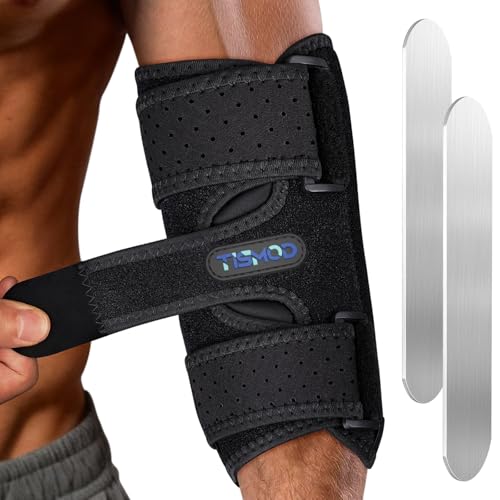
TISMOD Elbow Brace, One Size uses an adjustable, one size design rather than removable splints or angle settings. Its breathable, lightweight material and secure straps are intended to provide elbow support while allowing a full range of motion. The design is described for cubital tunnel and ulnar nerve concerns as well as sports and activity use.
This option suits someone who wants a simple adjustable brace. Its positioning is less controlled than a splint with fixed angles, so it may not suit someone specifically seeking a set elbow position during sleep.
Bottom line: Choose this if you want a one size brace with adjustable straps and no angle-control mechanism.
Multi-Angle Cubital Tunnel Brace, M

Multi-Angle Cubital Tunnel Brace, M stands apart with a lever that selects fixed positions at 120°, 150° or 180°, or limits movement across a 120°–180° range. That gives it more explicit positioning control than a general adjustable-straps brace. The medium-size model is described for night sleeping and daytime work, and the design is intended for either arm.
It may suit buyers who want a specific position or controlled movement.
Bottom line: Pick this if selecting a fixed elbow angle or limiting movement is your priority.
3-in-1 Cubital Tunnel Brace, 12–17 in

3-in-1 Cubital Tunnel Brace, 12–17 in changes configuration by removing either or both of its two metal splints: the maker describes straight fixation at 180° with both in, a 150° position with one removed, and 90° mobility with both removed. It also has two hook-and-loop straps and interior anti-slip strips. Its fit range is 12–17 inches.
This design suits someone who wants one support for several positions and activities. The angle options depend on splint removal, rather than a lever that sets or limits movement, so it may be less convenient if frequent adjustment without removing components matters.
Bottom line: Choose this if you want removable splints and the 12–17-inch fit range works for you.
Hurmoya Night Elbow Brace, Medium
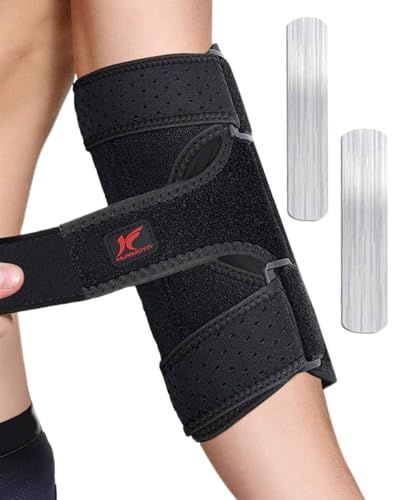
Hurmoya Night Elbow Brace, Medium combines a compression sleeve with two removable metal splints, which the maker says help align and straighten the elbow. Removing the splints changes the brace into a protective support for everyday activities and sports. That removable construction distinguishes it from designs that rely on adjustable straps or a lever to control positioning.
The medium size may suit someone who wants a sleeve-style brace with a splinted and unsplinted mode. Buyers who need a specific circumference range or a precise angle setting should compare those requirements before choosing, since this model is identified only as medium.
Bottom line: Pick this if you want a medium compression sleeve that can be worn with or without its two splints.
How to choose an elbow splint for ulnar nerve support
Choose based on whether you need a simple brace, removable splints or a set limit on elbow movement. Cubital tunnel symptoms can be aggravated by prolonged elbow bending, so nighttime support commonly aims to prevent deep flexion rather than force a painful position. For a chosen angle, Multi-Angle Cubital Tunnel Brace, M gives preset positions; for multiple configurations, 3-in-1 Cubital Tunnel Brace, 12–17 in and Hurmoya Night Elbow Brace, Medium use removable splints. A strap-based design such as TISMOD Elbow Brace, One Size offers a simpler fit but no stated angle setting.
For an elbow that becomes painful or numb in a particular position, do not force it into that position with a brace. Stop wearing a splint that causes new numbness, skin color change or increasing pain, and seek medical advice if symptoms persist or weakness develops.
How elbow angle and sleep position affect fit
A useful nighttime fit limits deep bending without creating pressure or discomfort. Holding the elbow fully straight is not necessary for everyone, and a position that is too tight can cause problems of its own. Multi-Angle Cubital Tunnel Brace, M provides fixed angle choices; 3-in-1 Cubital Tunnel Brace, 12–17 in describes different positions through its removable splints, while Hurmoya Night Elbow Brace, Medium also has removable splints without the same angle choices provided in its features.
Keep the wrist and hand relaxed, and avoid tightening straps until they cause tingling, swelling or skin irritation. If symptoms worsen when the elbow is straight or a brace shifts during sleep, stop and reassess the fit rather than adding more tension. A clinician can help determine a tolerable position when symptoms are persistent or severe.
Compare elbow splint adjustment styles
The main difference is how each design changes fit or positioning. Use this table to match the adjustment method to the kind of control you want; size and fit still need to suit your arm.
| Adjustment need | Design to consider | What changes |
|---|---|---|
| Basic adjustable fit | TISMOD Elbow Brace, One Size | Straps adjust; no angle setting given |
| Selectable fixed angles | Multi-Angle Cubital Tunnel Brace, M | Lever offers 120°, 150°, 180° or range limiting |
| Multiple removable-splint modes | 3-in-1 Cubital Tunnel Brace, 12–17 in or Hurmoya Night Elbow Brace, Medium | Splints can be removed |
Removable components can change how a brace feels and how much movement it allows, so confirm every splint is seated securely before wearing it. Do not assume that a product’s angle guarantees the same elbow position on every arm.
When to seek care for ulnar nerve symptoms
Persistent numbness in the ring and little fingers, hand weakness, or worsening symptoms deserve medical evaluation rather than relying on a brace alone. The ulnar nerve travels around the inner elbow, and prolonged pressure or bending can irritate it. A splint may help limit a position that triggers symptoms, but it does not establish the cause or replace diagnosis.
Seek prompt care for sudden major weakness, a significant injury, or a hand that becomes pale, blue or unusually cold. Keep straps loose enough to avoid numbness or skin marks that remain after removal. If nighttime symptoms continue despite changing elbow position, a clinician can assess whether additional treatment or a different support is appropriate.
Frequently Asked Questions
What elbow position helps reduce ulnar nerve irritation?
Avoid holding the elbow deeply bent for long periods, especially during sleep. A tolerable, less-flexed position may help reduce pressure, but do not force a position that increases pain or numbness.
Can I wear an elbow splint all night?
Many elbow splints are designed for nighttime use, but fit matters: straps should not cause tingling, swelling or persistent skin marks. Stop wearing the splint if symptoms worsen or the hand changes color or temperature.
How tight should an elbow splint feel?
An elbow splint should feel secure without squeezing the arm. Loosen or remove it if you develop new numbness, tingling, swelling, skin discoloration or increasing pain.
When should numb fingers be checked by a clinician?
Arrange an evaluation if ring- or little-finger numbness persists, worsens or comes with hand weakness. Sudden major weakness, a significant injury, or a cold or discolored hand calls for prompt care.
Can an elbow brace replace medical treatment?
No; a brace can limit elbow movement or pressure, but it cannot determine why symptoms are occurring. Persistent numbness, worsening pain or weakness should be assessed by a clinician.