
Epsom Salt Foot Gel: 5 Options Compared by Format

For an Epsom salt foot gel in a single 4-ounce container, Heal&Rescue is the closest match, with 83% aloe vera and peppermint and wintergreen ingredients; choose another format if you want a two-pack rub, lotion or warming booties.
Epsom salt is magnesium sulfate, and a topical gel or lotion is applied to skin rather than dissolved in a foot bath.
We earn a commission if you buy through links on this page. As an Amazon Associate I earn from qualifying purchases. Products are compared on manufacturer specifications, not hands-on testing.
- Best overall: Heal&Rescue Epsom Salt Foot Gel, 4 oz – A 4-ounce foot gel with 83% aloe vera and cooling peppermint and wintergreen.
- Best for two-pack supply: PROcure Epsom Salt Rub Gel, 2-Pack – Two 6-ounce containers of aloe vera and essential-oil rub for feet or muscles.
- Best for fragrance-free care: EPSOM-IT Calming Foot Magnesium Lotion, 3.5 oz – A 3.5-ounce magnesium sulfate lotion with urea that is fragrance-free.
| Product | Best for | Format | Container size | Notable ingredients | Shop |
|---|---|---|---|---|---|
| Heal&Rescue Epsom Salt Foot Gel, 4 oz | On-the-go foot gel | Gel | 4 oz | 83% aloe vera; peppermint, wintergreen | Check Price on Amazon |
| PROcure Epsom Salt Rub Gel, 2-Pack | Feet and muscles | Rub gel | 12 oz total | Aloe vera; essential oils | Check Price on Amazon |
| Dr. Scholl’s Tired, Achy Feet Foot Mask, 3 Pair | Warming booties | Warming foot mask | 3 pairs | Epsom salt; menthol; shea butter | Check Price on Amazon |
| EPSOM-IT Calming Foot Magnesium Lotion, 3.5 oz | Fragrance-free lotion | Lotion | 3.5 oz | 20% magnesium sulfate; urea | Check Price on Amazon |
| Pro cure S Epsom Salt Rub, 6 oz | Single-container rub | Rub | 6 oz | — | Check Price on Amazon |
Epsom Salt Foot Gel and Related Foot Treatments
Compare the topical gel with rubs, lotion and warming foot masks by format and ingredients.
Heal&Rescue Epsom Salt Foot Gel, 4 oz

For a foot gel rather than a soak or bootie mask, this 4-ounce option combines Epsom salt with 83% aloe vera. The formula also includes peppermint oil and wintergreen leaf extract, and its directions call for massaging a nickel-sized amount onto clean, dry feet. That makes it a fit for someone seeking a targeted application without a foot basin. The limitation is its single 4-ounce container; buyers wanting a larger multi-container supply or a lotion texture should consider a different format.
Bottom line: Choose this if a single-container foot gel with aloe is your priority.
PROcure Epsom Salt Rub Gel, 2-Pack
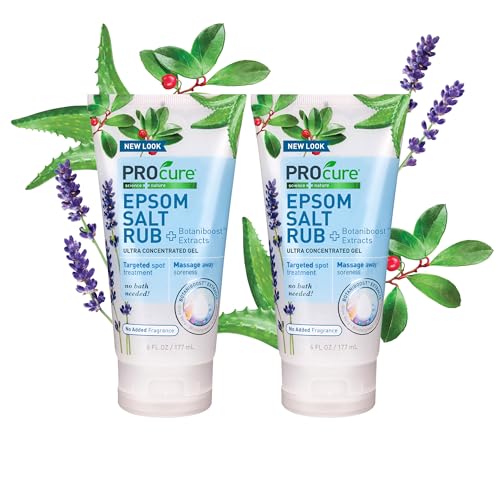
Unlike the foot-specific gel, this rub is presented for both feet and muscles, with two 6-ounce containers. PROcure says the formula combines Epsom salt, organic aloe vera and essential oils, and is intended for muscle tension, tightness, aches and soreness. The two-pack may suit someone who wants to keep topical rub available for more than one use area. Its limitation is the broader rub format: shoppers specifically looking for the Heal&Rescue gel’s 83% aloe figure or its peppermint and wintergreen ingredients will not find those same features here.
Bottom line: Pick this for a two-container rub intended for feet or muscles.
Dr. Scholl’s Tired, Achy Feet Foot Mask, 3 Pair

For a warming, enclosed treatment instead of a rub-in gel, this option comes as three pairs of self-heating booties. The maker describes the foot masks as containing Epsom salt, menthol, shea butter, lavender and peppermint essential oils. That format may suit someone who wants foot coverage and warmth rather than a targeted gel application. The tradeoff is that booties are not a quick massage-in product, and the features do not give a wear duration; anyone needing a defined treatment time should verify it before use.
Bottom line: Choose these if you prefer warming booties over applying gel.
EPSOM-IT Calming Foot Magnesium Lotion, 3.5 oz

This is a lotion rather than a gel, with a 20% concentration of magnesium sulfate and added urea. It is fragrance-free and described as non-greasy, so it is the alternative here for buyers avoiding fragrance or seeking a lotion texture. EPSOM-IT says its magnesium sulfate lotion is 30 times more potent than a traditional Epsom salt soak; treat that as the maker’s comparison, not a direct measure of results. The limitation is that the featured formula is a foot lotion, not a peppermint- or wintergreen-scented gel.
Bottom line: Choose this if fragrance-free lotion matters more than gel texture.
Pro cure S Epsom Salt Rub, 6 oz

This 6-ounce container is identified as an Epsom salt rub and as a convenient spot treatment, making it a simpler alternative to a foot gel with named botanical ingredients. It may suit someone who wants a single-container product for targeted application rather than the two-pack format.
Bottom line: Pick this for a single 6-ounce spot-treatment rub.
How to Choose an Epsom Salt Foot Gel
Choose by application format first: gel and rub are massaged onto skin, lotion adds a different texture, and booties cover the feet. Magnesium sulfate is the chemical name for Epsom salt; a topical product is not the same as dissolving salt in bath water. Compare only like quantities: the Heal&Rescue container is 4 ounces, the single PROcure rub is 6 ounces, and the two-pack totals 12 ounces. For a direct gel match, select a gel; choose a lotion or mask only when that texture or warming format is the point. Ingredient sensitivities also matter: peppermint, wintergreen, lavender, menthol and fragrance-free are distinct formulation cues, not interchangeable promises about effect.
Gel, Rub, Lotion and Foot Mask Formats
Topical formats differ most in how they contact the foot. Gel and rub are spread by hand, lotion is also applied to skin but has a lotion texture, and a bootie mask encloses the foot and may add warmth. The products here include a 4-ounce gel, 6-ounce rubs, a 3.5-ounce lotion and three pairs of booties; those units should not be compared as equal applications because the mask is counted by pair. Use this decision rule: if you want to avoid a foot basin and apply product only where needed, choose a gel or rub; if warmth and full-foot coverage are your priority, consider booties. Do not assume a topical product works like a soak.
| Need | Format to consider | Example distinction |
|---|---|---|
| Massage onto selected areas | Gel or rub | Gel versus spot-treatment rub |
| Fragrance-free lotion texture | Lotion | Magnesium sulfate with urea |
| Warming enclosed coverage | Foot mask booties | Self-heating format |
Foot Gel Application and Skin Safety
Apply topical foot gel only to intact skin and keep it away from eyes and other sensitive areas; stop using it if irritation develops. The Heal&Rescue directions call for a nickel-sized amount on clean, dry feet, while the specifications do not establish a dose for every other format. Essential oils, menthol and wintergreen can irritate sensitive skin, so check the ingredient packaging before use if you have a known sensitivity. A topical gel is not a substitute for medical evaluation of persistent foot pain, swelling or injury. If a person has diabetes, reduced foot sensation or circulation concerns, ask a healthcare professional before starting a new foot product.
How to Compare Package Size and Ingredients
Compare package size in ounces and count masks by pairs: a 12-ounce two-pack contains two 6-ounce units, while a 3-pair mask is not measured in fluid ounces. Ingredient claims can distinguish formulas more usefully than broad comfort language: one gel states 83% aloe vera, another product gives a 20% magnesium sulfate concentration and urea, and the booties include menthol and essential oils. The 20% figure is a concentration, not a promise of a particular outcome. If you need to avoid a specific ingredient or require a specific concentration, confirm the actual package label before ordering rather than infer it from product type.
Frequently Asked Questions
Is Epsom salt foot gel the same as a foot soak?
No. Foot gel is applied directly to the skin, while a soak dissolves magnesium sulfate in water.
How much foot gel should I apply?
The Heal&Rescue directions call for a nickel-sized amount on clean, dry feet. That amount should not be assumed for other formulas; use the package directions for each product.
Can I use foot gel on irritated or broken skin?
Avoid applying a topical foot product to broken or irritated skin unless a healthcare professional advises otherwise. Stop use if irritation occurs, especially with formulas containing essential oils or menthol.
What is the difference between magnesium sulfate and Epsom salt?
Magnesium sulfate is the chemical name for Epsom salt. A product’s concentration, such as the 20% stated for the lotion here, is a separate specification from the ingredient name.