
Exhaust Pipe Noise Makers: 3 Whistles Compared by Fit

For a single XL exhaust pipe noise maker, Car Muffler Turbo Whistle XL Red is the clearest match if your vehicle has a straight tailpipe and an exhaust inlet no wider than 2.5 inches. These clamp-on whistles use exhaust flow to create a turbo-like sound, not to add a functioning turbocharger.
Choose DEVMO XL Turbo Whistle, 2-Pack if you want two XL whistles, or Ponpon Turbo Whistle, 3 Sizes if you need a small, medium and large assortment; check the tailpipe shape and dimensions before choosing either alternative.
We earn a commission if you buy through links on this page. As an Amazon Associate I earn from qualifying purchases. Products are compared on manufacturer specifications, not hands-on testing.
- Best overall: Car Muffler Turbo Whistle XL Red – A single XL whistle with a fit limit of 2.5-inch exhaust inlet diameter and straight pipes.
- Best for a pair: DEVMO XL Turbo Whistle, 2-Pack – Includes two XL whistles and two wrenches for installation.
- Best for size options: Ponpon Turbo Whistle, 3 Sizes – Includes small, medium and large whistles in one assortment.
| Product | Best for | Whistle size | Material | Pack count | Shop |
|---|---|---|---|---|---|
| Car Muffler Turbo Whistle XL Red | Single XL whistle | 12 × 3.5 cm | Aluminum alloy | 1 whistle | Check Price on Amazon |
| DEVMO XL Turbo Whistle, 2-Pack | Two XL whistles | 12 × 6.5 cm | Aluminum alloy | 2 whistles | Check Price on Amazon |
| Ponpon Turbo Whistle, 3 Sizes | Size assortment | 10–11.5 cm long | Aluminum | 3 whistles | Check Price on Amazon |
Exhaust Pipe Noise Makers Compared
Compare the whistle dimensions and included quantities, then match the attachment to your tailpipe before installing.
Car Muffler Turbo Whistle XL Red

Car Muffler Turbo Whistle XL Red is the single XL option with an explicit upper exhaust-inlet limit: 2.5 inches. The red aluminum-alloy whistle measures about 12 × 3.5 cm and clamps to a straight tailpipe with a screw; the package includes one whistle and screws. The maker recommends it for engines of at least 2.4 liters and says sound intensity depends on exhaust thrust. That makes it a fit to consider for a straight outlet and a buyer seeking one accessory, not a real turbo or performance upgrade. It is unsuitable for curved pipes or larger inlets.
Bottom line: Pick this if your straight tailpipe meets the 2.5-inch limit and you need one XL whistle.
DEVMO XL Turbo Whistle, 2-Pack
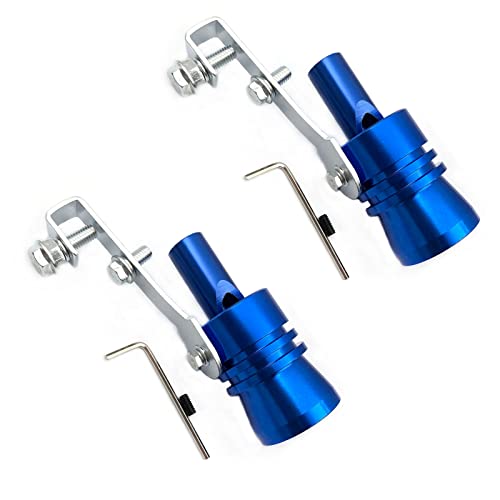
DEVMO XL Turbo Whistle, 2-Pack stands out by including two XL aluminum-alloy whistles, two wrenches and two screws. Each whistle measures 4.72 × 2.56 inches, so compare those dimensions with the tailpipe rather than relying on the word “universal.” Installation uses a bolt: loosen it, insert the whistle into the tailpipe, then tighten it. The maker says sound is more noticeable with larger-displacement vehicles, but does not give a specific engine threshold. This set suits someone who wants a pair; buyers who need a choice of sizes should consider an assortment instead.
Bottom line: Choose this if you want a two-piece XL set and the tailpipe accepts its dimensions.
Ponpon Turbo Whistle, 3 Sizes
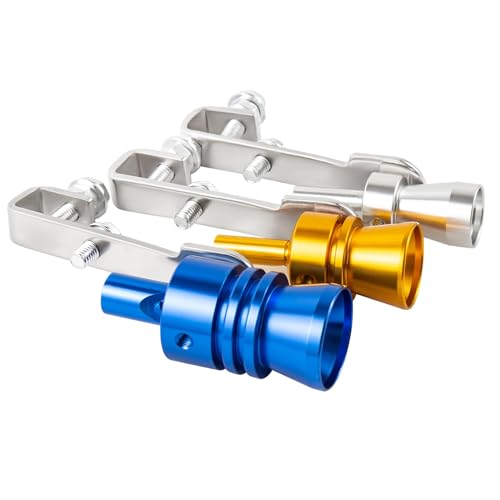
Ponpon Turbo Whistle, 3 Sizes is the only assortment here, with small, medium and large aluminum whistles rather than a single XL size. Their lengths run from 10 to 11.5 cm, and widths range from 5.5 to 6.8 cm; colors are random. Each attaches by loosening and tightening a bolt, and the package contains three pieces. This set is useful when you want more than one size to compare against a tailpipe, but the dimensions alone do not establish compatibility with every outlet. Measure the opening and ensure the whistle can sit securely without obstructing exhaust flow.
Bottom line: Pick this if you want three sizes and can match one securely to your tailpipe.
How to Choose an Exhaust Pipe Noise Maker
Choose by tailpipe shape, opening size and the whistle’s physical dimensions, not by “universal” wording alone. A clamp-on whistle needs a straight section of outlet that can accept its body and screw attachment; a curved outlet may prevent secure placement. The three options here range from a single 12 cm XL unit to a set with pieces 10 to 11.5 cm long. Measure the exhaust tip where the accessory will sit, including available insertion depth and clearance around the outlet. A useful decision rule: if the tailpipe is curved, skip the model that explicitly excludes curved pipes; if it is straight, compare its opening with the fit limits and whistle dimensions before installing. Sound depends on exhaust flow, so fit alone cannot promise a particular volume or tone.
How Turbo Whistle Exhaust Noise Makers Work
A turbo whistle accessory uses passing exhaust flow to make a sound; it does not create boost or turn a naturally aspirated engine into a turbocharged one. Greater exhaust flow can make the sound more noticeable, and one maker specifically ties sound intensity to exhaust thrust. The attachment sits in or at the tailpipe and uses a tightened screw or bolt to stay in place. Because the outlet still needs to discharge exhaust, never install a loose accessory or one that blocks the opening. A wrongly sized or unsecured piece can shift while driving, and any change that causes an exhaust leak or restriction needs prompt attention. Expect a sound effect rather than a mechanical change in engine power.
Installing an Exhaust Whistle Safely
Install an exhaust whistle only after the exhaust is cool: metal tailpipes can remain hot enough to burn skin after a drive. Loosen the accessory’s fastener, seat it in the compatible straight outlet, and tighten the screw or bolt firmly; avoid forcing a part into an opening that is too small. Before driving, check that the piece cannot slide out and that the tailpipe remains unobstructed. Recheck the fastener after the first short drive, since vibration can loosen hardware. Exhaust gases contain carbon monoxide, which is odorless and can be fatal; never run a vehicle in an enclosed garage, and do not operate it if the attachment causes fumes to enter the cabin.
Exhaust Whistle Sizes and Fit Differences
These exhaust pipe noise makers differ more in their sizes and quantities than in material: each uses aluminum or aluminum alloy. The single XL’s maker gives a 2.5-inch maximum inlet and excludes curved pipes; the two-piece XL provides dimensions but no explicit vehicle-specific cutoff. The three-piece set spans small through large, but does not define a universal tailpipe fit. Compare actual opening diameter and straight insertion space with the accessory before purchase. Do not treat “XL” or “universal” as a standard dimension: the two XL products are not the same width. For a vehicle with a nonstandard outlet, measure carefully and confirm the accessory can attach without narrowing or obstructing the exhaust path.
Frequently Asked Questions
Does an exhaust whistle make a car faster?
No, a tailpipe whistle is a sound accessory and does not add a turbocharger or increase engine power. Its sound can vary with exhaust flow, so a louder note is not evidence of added performance.
Can an exhaust whistle fit a curved tailpipe?
A curved outlet can prevent a clamp-on whistle from seating securely. The red XL model explicitly excludes curved pipes, so use a straight, compatible section rather than forcing the attachment onto a bend.
How do I know which whistle size fits?
Measure the tailpipe opening and the straight insertion space, then compare both with the whistle’s dimensions and any fit limit. For example, one XL model specifies a maximum inlet diameter of 2.5 inches; the word “universal” does not replace measuring.
Should I install an exhaust whistle while the car is warm?
No; wait until the exhaust is cool because the tailpipe can cause a burn after driving. Tighten the fastener only once the part is correctly seated, then verify it remains secure and does not obstruct the outlet.
Can an exhaust whistle cause an exhaust leak?
A poorly seated or loose accessory can interfere with the exhaust outlet, so keep the opening unobstructed and check the fastener before driving. Exhaust fumes can contain carbon monoxide; never run a vehicle in an enclosed garage.