
Eyejusters Self Adjustable Glasses: 4 Options Compared

For a product-type search, Lfjcspp Intelligent Auto Smart Glasses is the closest match because its name explicitly promises self-adjusting near-and-far glasses and its features add photochromic lenses. Eyejusters is not among these options, so compare the alternatives by pack count and verify that an advertised autofocus lens suits your prescription needs.
These are marketed as autofocus glasses, a claim that should not be confused with a standard prescription lens made for an individual’s measured correction.
We earn a commission if you buy through links on this page. As an Amazon Associate I earn from qualifying purchases. Products are compared on manufacturer specifications, not hands-on testing.
- Best overall: Lfjcspp Intelligent Auto Smart Glasses – Its near-and-far self-adjusting claim is paired with photochromic lens claims.
- Best for a three-pack: Auto Focus Glasses, 3-Pair Set – The name specifies three pairs and its features give a 100°–700° range.
- Best for frame materials: AQOYNQ Automatic Zoom Glasses – It specifies PC lenses with a TR-and-metal frame.
| Product | Best for | Pack count | Lens or frame material | Adjustment claim | Shop |
|---|---|---|---|---|---|
| Lfjcspp Intelligent Auto Smart Glasses | Near-to-far use | 2 pairs | HD resin | Near and far; autofocus claim | Check Price on Amazon |
| Auto Focus Glasses, 3-Pair Set | Three-pair set | 3 pairs | — | 100°–700° adaptive claim | Check Price on Amazon |
| Auto Focus Glasses, Silver Single Pair | Single-pair choice | 1 pair | HD lenses | Near and far; autofocus claim | Check Price on Amazon |
| AQOYNQ Automatic Zoom Glasses | Material comparison | 2 pairs | PC lens; TR and metal frame | Autofocus claim | Check Price on Amazon |
Self adjustable glasses compared
Compare the pack sizes and lens claims before choosing an autofocus-style pair.
Lfjcspp Intelligent Auto Smart Glasses

Lfjcspp Intelligent Auto Smart Glasses stands out for combining a near-and-far autofocus claim with photochromic lenses. The product features also claim up to 95% blue-light filtering and describe a frameless design, while the pack is 2 pairs. That mix may appeal to someone seeking one style of lens for indoor and outdoor transitions. The autofocus and light-adaptation language is a maker claim, not a substitute for a prescription assessment. The frame material and any prescription range are not established here, so buyers who need a specific correction should confirm compatibility before choosing.
Bottom line: Choose this if you want a two-pair set with advertised photochromic lenses.
Auto Focus Glasses, 3-Pair Set
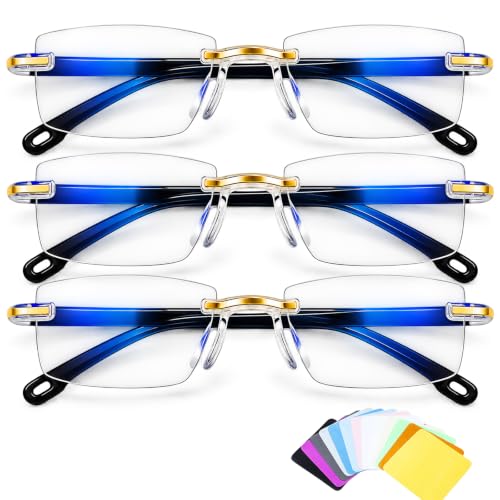
Auto Focus Glasses, 3-Pair Set is the only option that gives a numeric adjustment span: 100°–700°, alongside a three-pair pack. Its features describe smart lenses for near-to-far use and claim up to 95% blue-light blocking, making the pack count and adjustment range its main differentiators. Those numbers are maker claims; they do not establish that the glasses correct a particular wearer’s refractive error. Lens material is not established here, so this choice is less useful to buyers comparing lens construction or seeking a verified prescription fit. Confirm that the adjustment claim matches your vision needs before relying on it for distance or close work.
Bottom line: Pick this when a three-pair quantity and stated adjustment span matter most.
Auto Focus Glasses, Silver Single Pair

Auto Focus Glasses, Silver Single Pair differs from the multi-pair choices by offering a single silver pair. Its features describe progressive near-to-far focusing and claim up to 95% blue-light blocking, but the maker gives no numeric adjustment span. This may suit a buyer who wants one pair rather than a set, provided the advertised autofocus approach is appropriate. The frame and lens materials are not established, which limits comparison for durability and fit. Anyone who needs a particular prescription should not assume the smart-focus claim provides individualized correction; confirm suitability with an eye-care professional.
Bottom line: Choose this if you prefer one silver pair and do not need a range.
AQOYNQ Automatic Zoom Glasses

AQOYNQ Automatic Zoom Glasses is the clearest choice for buyers comparing construction: its features specify PC lenses and a TR-and-metal frame, and the pack includes two glasses, two cases, and two lens cloths. The maker describes automatic focusing for reading, computer use, and television; no numeric adjustment span is provided. Check the actual frame dimensions and prescription suitability before choosing if either is essential.
Bottom line: Pick this if stated lens and frame materials are your priority.
How autofocus glasses differ from prescription lenses
Autofocus language describes a claimed lens behavior, not a personalized prescription. A conventional prescription is based on measured sphere, cylinder, axis, and, when needed, near addition; those values should match the wearer and intended use. A numeric range such as 100°–700° does not by itself explain how the lens performs or whether it corrects astigmatism. Treat near-to-far and blue-light claims as maker claims, and choose a product only if its correction method suits your vision needs. For persistent blur, headaches, or difficulty switching focus, an eye-care professional can determine whether a standard prescription or another solution is appropriate.
Choosing lenses for indoor and outdoor use
Photochromic lenses are designed to darken in response to ultraviolet exposure, but many do not darken fully behind a car windshield because glass blocks much of the UV that activates them. For driving, check that the lens category is suitable for the intended conditions rather than assuming an outdoor tint will work in a vehicle. Blue-light filtering percentages do not tell you visible-light transmission, UV protection, or prescription strength. Choose a lens by the activity first: reading distance, screen distance, and far vision are different tasks, and an autofocus claim does not confirm equal clarity at all three.
Frame fit and measurement checks
Frame fit depends on lens width, bridge width, and temple length, usually measured in millimeters on the inside of an eyeglass arm; none of these figures can be inferred from an overall size in inches. If you already own comfortable glasses, compare those three stamped dimensions with the candidate frame before ordering. A number such as 5.71 inches is not useful for fit unless the measurement is clearly identified as frame width or another dimension. Frames that slide, pinch at the bridge, or press behind the ears can make otherwise suitable lenses difficult to wear, so prioritize explicit frame measurements over a color or pack-count match.
When to seek an eye exam
An eye exam is the right next step when vision changes suddenly, one eye sees differently, or near and far focus remain blurred. Sudden vision loss, flashes with many new floaters, or a curtain-like shadow needs urgent medical attention rather than an eyewear experiment. For routine correction, adults commonly have eye exams every 1 to 2 years, though age, health, and existing conditions can change that schedule. Glasses advertised as self-adjusting should not be used to delay evaluation of a new vision problem. Prescription measurements also help distinguish refractive error from other causes of blurred sight.
Frequently Asked Questions
Can autofocus glasses replace prescription glasses?
Not necessarily; autofocus wording does not establish a personalized sphere, cylinder, axis, or near-add prescription. If you have a current prescription or need correction for astigmatism, confirm suitability with an eye-care professional before relying on these glasses.
Do photochromic lenses darken behind a windshield?
Often they darken less behind a windshield because automotive glass blocks much of the ultraviolet light that activates many photochromic lenses. Check the lens’s driving suitability if you need tint while driving.
How should I check whether glasses fit my face?
Compare lens width, bridge width, and temple length in millimeters with a pair that already fits you. An overall size in inches is not enough unless it clearly identifies a specific frame dimension.
When should sudden blurry vision be checked urgently?
Sudden vision loss, flashes accompanied by many new floaters, or a curtain-like shadow warrants urgent medical attention. Routine gradual blur can be assessed during an eye exam, but should not be managed by assuming autofocus glasses address its cause.