
Fabric Dye Pen for Bleach Stains: 5 Options Compared

For a small bleach mark on a light garment, Gain-Art Black Dual-Tip Fabric Markers is the closest match here because its black ink and two tip sizes can handle fine lines or broader coverage. These products are fabric markers, not dyes that restore the original color; choose a different method if you need to recolor a large area or match a dark fabric.
We earn a commission if you buy through links on this page. As an Amazon Associate I earn from qualifying purchases. Products are compared on manufacturer specifications, not hands-on testing.
- Best overall: Gain-Art Black Dual-Tip Fabric Markers – Black ink and fine and brush tips suit controlled coverage on a small mark.
- Best for fine lines: Sharpie Rub-A-Dub Laundry Marker – Its fine black tip is designed for thin, detailed fabric marks.
- Best for colorful designs: U.S. Art Supply 20 Dual-Tip Fabric Markers – Twenty colors and fine and chisel points provide color and line-width options.
| Product | Best for | Color | Tip style | Pack count | Shop |
|---|---|---|---|---|---|
| Gain-Art Black Dual-Tip Fabric Markers | Black spot coverage | Black | Fine and brush | 5 markers | Check Price on Amazon |
| Sharpie Rub-A-Dub Laundry Marker | Fine black lines | Black | Fine point | 1 marker | Check Price on Amazon |
| Zenacolor 20 Fine-Point Fabric Markers | Light fabric colors | Multicolor | Fine point | 20 markers | Check Price on Amazon |
| ARTISTRO 24 Dual-Tip Fabric Markers | Mixed-width artwork | Multicolor | Fine and brush | 24 markers | Check Price on Amazon |
| U.S. Art Supply 20 Dual-Tip Fabric Markers | Light fabric designs | Multicolor | Fine and chisel | 20 markers | Check Price on Amazon |
Fabric dye pens for bleach stains
These fabric markers can add color to cloth, but a marker may not reproduce the garment’s original dye or blend evenly across a bleach spot.
Gain-Art Black Dual-Tip Fabric Markers

Black ink and two tip sizes distinguish this set for small, dark marks that need both precise edges and some fill. Each marker has a 1 mm fine tip and a brush tip, giving you more control over narrow lines than a single-tip pen. The maker describes the pens as permanent fabric markers for cloth, canvas, and textiles. This set is a reasonable fit when black is close to the garment color; it is not a color-matching solution for colored or patterned fabric, and the features do not establish machine-wash performance.
Bottom line: Choose this set for a black garment and a mark small enough to cover with a marker.
Sharpie Rub-A-Dub Laundry Marker

The fine black tip makes this single laundry marker a straightforward choice for labeling or drawing narrow marks, rather than filling a wider bleach spot. It is intended for cloth and synthetic fabrics, and its ink is described as lasting through washing and dry cleaning. A thin line gives control on a small mark but can require repeated strokes for broader coverage, which may leave an uneven-looking patch. It offers only black ink, so it suits a garment whose color is close to black, not a garment that needs a different shade.
Bottom line: Pick this for a narrow black mark or fabric labeling, not a wide spot.
Zenacolor 20 Fine-Point Fabric Markers

Twenty fine-point colors make this set more adaptable to a light garment with a colorful bleach mark than a black-only marker. The maker says the ink dries in 24 hours without heat and can be machine washed in cold water; it also cautions that the pens do not work on black fabric. Fine points favor small outlines and detail, so filling a large bleached area may take time and still fail to match surrounding cloth. Try a discreet spot first, since fabric color and texture can affect the appearance.
Bottom line: Choose this when a small mark is on light fabric and a near-match color is available.
ARTISTRO 24 Dual-Tip Fabric Markers

A 24-color selection paired with fine and flexible brush tips makes this set suited to combining detail with broader decorative strokes. The maker says the colors are designed to resist fading and repeated washing, and the markers are intended for fabric projects such as clothing, bags, and canvas. More colors may help when a bleach spot is not black, but they cannot guarantee a match to a garment’s original dye. The dual tips are useful beyond pinpoint marks, though using a brush to cover a stain can make the repair read as a deliberate design.
Bottom line: Pick this for turning a small mark into a multicolor fabric design.
U.S. Art Supply 20 Dual-Tip Fabric Markers
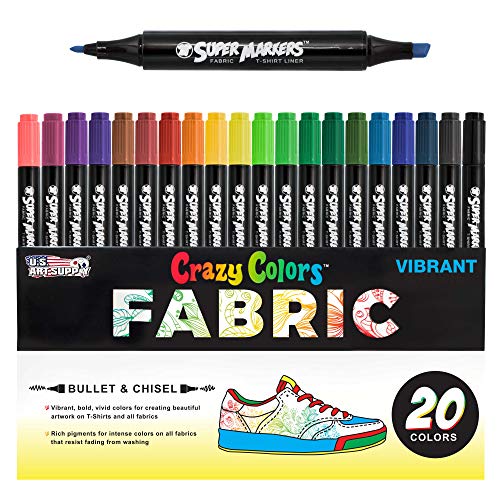
Fine and chisel points give this 20-color set a different way to handle edges and wider strokes than the brush-tip options. The maker says the markers dry permanently and resist fading from washing, while also warning that they are not visible on dark garments. That makes the set most applicable to a small mark on white or light cloth when one of the colors is a reasonable visual match. The chisel point can cover more area than a fine tip, but markers are still poorly suited to blending a large bleach-damaged section into surrounding fabric.
Bottom line: Choose it for a small spot on light-colored cloth where chisel strokes are useful.
How to choose a fabric marker for a bleach spot
Start by matching the garment’s color and the size of the mark, not by choosing the largest color set. Markers deposit pigment on the surface; bleach removes or alters the fabric dye, so a pen may camouflage a small spot without restoring the original color or texture. Fine tips work for narrow marks, while brush or chisel tips can cover broader strokes. On a mark larger than a few inches, a visible design or a fabric-dye process that recolors a larger area is often more realistic than trying to blend a single marker shade.
Test a hidden seam or interior hem before drawing on the stain. Fabric weave, stretch, and finish can change how ink spreads, and color can appear different after drying. For any garment that must be washed, allow the ink to dry fully and follow the specific marker’s care directions.
Which marker tip suits a bleach stain
A fine tip gives the most control on tiny marks, while a broad tip can lay down color faster but is harder to keep inside a small spot. Dual-tip pens add options, but the wider end can make a repair look like a patch or intentional graphic. Use the guide below to match the mark to the tool.
| Mark or goal | Useful tip | Tradeoff |
|---|---|---|
| Thin line or pinpoint | Fine-point | Slow for wide coverage |
| Small solid area | Brush or chisel | May extend beyond the spot |
| Large or uneven faded area | Fabric dye or design approach | A marker may not blend with surrounding cloth |
With a mark wider than about 2 inches, consider a deliberate motif or recoloring approach instead of repeated overlapping marker strokes; layered ink can look darker than the surrounding fabric.
Why bleach stains can resist color matching
Bleach marks are difficult to disguise because the chemical may have removed the garment’s dye, and the exposed fibers can take new pigment differently from undamaged fabric. A marker shade that looks close in its cap is not a guaranteed match once it dries on the textile. White or pale fabric also reflects added marker color differently from a dark base, and a marker can remain visible as an outline.
For best control, place a washable barrier behind a single layer of cloth so ink does not transfer to the back. Work in short strokes from the edge toward the center, then let the mark dry before deciding whether it needs another pass. Avoid using a marker on clothing while it is being worn; fabric pens are not substitutes for skin-safe products.
How to keep a fabric-marker repair from spreading
Keep ink from spreading by placing the garment flat and testing the pen on a hidden section first. A tightly woven, smooth fabric generally gives a cleaner line than a loose knit, where fibers can wick ink sideways. Put scrap cardboard or another washable barrier under the target layer, especially on shirts, tote bags, and other doubled fabric.
Allow the product’s drying period before handling or laundering; for the Zenacolor markers, the maker gives 24 hours. Washing guidance differs by marker, so do not assume every fabric pen tolerates the same water temperature or cleaning method. If the fabric is valuable, delicate, or has a finish that could be damaged, a professional textile cleaner is safer than experimenting on the visible area.
Frequently Asked Questions
Can a fabric marker restore a bleached shirt color?
A fabric marker can add pigment over a small spot, but it cannot restore dye that bleach removed. A close color match and a hidden-area test matter because the ink may dry differently from the surrounding cloth.
Should I wash fabric after using a marker?
Wait until the marker is fully dry before washing, and use that pen’s care guidance rather than assuming all inks behave alike. The Zenacolor maker gives a 24-hour drying time and specifies cold machine washing.
Do fabric markers work on black clothes?
Some markers will not show on black cloth; the Zenacolor and U.S. Art Supply features specifically warn against dark fabric. Check visibility on a hidden area before trying to cover a stain.
How do I stop fabric marker ink from bleeding through?
Slide cardboard or a washable barrier beneath the target layer before marking. Test on a hidden seam first, especially with loose knits that can wick ink farther than the pen tip.
Can I use a marker on a large bleach stain?
A marker is more manageable on a small mark than a large patch; beyond roughly 2 inches, broad strokes may look uneven or darker where they overlap. A deliberate graphic or larger-area fabric dye treatment may give a more coherent result.