
Face Guard for Broken Nose: 4 Fit Options Compared

For a face guard after a broken nose, choose by cheekbone measurement first; HIAARO QK03B Matte Nose Guard gives a fit range of 3.5–4.8 inches and a matte, glare-free finish. Choose another model if your measurement falls outside its range or you prefer a clear shield.
A sports face guard is a rigid shield worn over the nose and cheeks, but it does not heal or stabilize a fracture. Get medical clearance before returning to contact sports.
We earn a commission if you buy through links on this page. As an Amazon Associate I earn from qualifying purchases. Products are compared on manufacturer specifications, not hands-on testing.
- Best overall: HIAARO QK03B Matte Nose Guard – Its 3.5–4.8-inch cheekbone range and matte finish make fit and visibility easier to assess.
- Best for clear coverage: MUELLER Adjustable Clear Face Mask – The clear guard gives a cheekbone range of 3.75–5.25 inches and foam padding.
- Best for teens and adults: HIAARO QK01B Adjustable Nose Guard, Size M – The size is identified for teens and adults, with adjustable straps and optional soft pads.
| Product | Best for | Cheekbone fit | Material / finish | Color | Shop |
|---|---|---|---|---|---|
| HIAARO QK03B Matte Nose Guard | Matte finish | 3.5–4.8 in | Polycarbonate, matte | Black | Check Price on Amazon |
| MUELLER Adjustable Clear Face Mask | Clear coverage | 3.75–5.25 in | Polycarbonate, clear | Clear | Check Price on Amazon |
| HIAARO QK01B Adjustable Nose Guard, Size M | Teen and adult sizing | Size M; range not given | Polycarbonate | Black | Check Price on Amazon |
| HIAARO BK01C Clear Nose Guard | Clear adjustable fit | — | Polycarbonate | Clear | Check Price on Amazon |
Face Guards for a Broken Nose
Compare the fit ranges and construction, then choose a guard that matches your cheekbone measurement and visibility preference.
HIAARO QK03B Matte Nose Guard

The matte finish and stated 3.5–4.8-inch cheekbone range distinguish this guard. Its high-strength polycarbonate shell is scratch-resistant, odorless and described by the maker as glare-free; two sets of soft pads are included, and adjustable straps help secure the fit. Measure between your cheekbones before choosing it, since a measurement outside that range may make another size more suitable. The pads may be attached or left off, so their placement is adjustable to preference. The maker describes the guard as dispersing impact energy, but a face shield cannot guarantee protection from another injury.
Bottom line: Choose this if your cheekbone measurement is within range and you want a matte black shield.
MUELLER Adjustable Clear Face Mask

The broad stated cheekbone range and clear shell set this guard apart from the black options. The shatterproof medical-grade polycarbonate design has foam padding and an adjustable fit; the maker gives a 3.75–5.25-inch cheekbone range for its one-size-fits-most design. Measure cheekbone spacing rather than relying on the one-size label, and pick a different guard if your measurement is outside that interval. This option is also described for use during recovery and in sports including basketball, baseball and softball. Its clear finish may suit buyers who prefer not to have a dark shield across the face.
Bottom line: Choose this if you want a clear shield and your cheekbone spacing is 3.75–5.25 inches.
HIAARO QK01B Adjustable Nose Guard, Size M
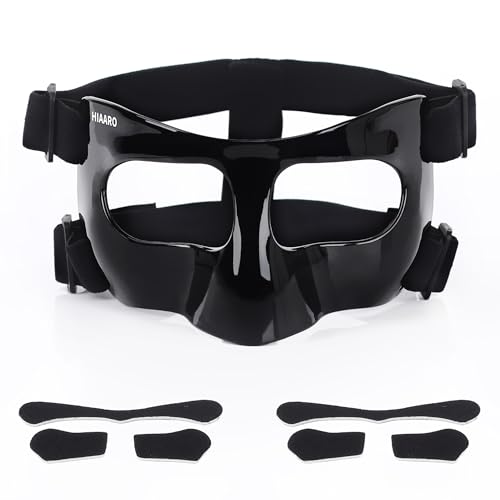
The high-strength polycarbonate shell is flexible, and two sets of soft pads provide cushioning and slip resistance; the pads are optional to attach. Adjustable straps accommodate different head sizes, but head-size adjustability does not replace checking cheekbone spacing. The maker specifically advises measuring before purchase, so compare your face with the guard itself before choosing it. This model is a reasonable option when the size designation suits you and a black shield is preferred, but buyers needing a fit interval may favor another option.
Bottom line: Choose this if size M for a teen or adult suits you and you prefer black.
HIAARO BK01C Clear Nose Guard

The clear shell and side openings distinguish this guard for buyers prioritizing visibility and airflow. The polycarbonate shield measures 4.1 by 5.6 inches, comes with two sets of optional pads and uses adjustable straps. Its overall dimensions do not establish cheekbone fit, so measure your face and compare the spacing with the guard before choosing it. The maker describes it as breathable and designed to cushion impact; those claims do not establish that it prevents injury or makes contact play safe. Consider a model with a cheekbone interval if you need a specific fit range to guide the decision.
Bottom line: Choose this if you want a clear shield with side openings and can verify the fit.
How to choose a face guard for a broken nose
Start with cheekbone spacing, not the product’s one-size label. These guards give different fit guidance: one gives a 3.5–4.8-inch range, another 3.75–5.25 inches, while other size descriptions do not provide a numeric interval. Measure across the cheekbones as the maker directs and compare that measurement with the guard’s range. If the measurement falls outside a range, select a different fit rather than assuming adjustable straps can compensate. Then choose clear or black, and consider whether a matte finish or foam pads matter to you. A sports shield covers the face but does not stabilize a broken nose or guarantee against reinjury; get a clinician’s clearance before returning to contact play.
How cheekbone fit affects coverage
Cheekbone spacing is the key fit check because an adjustable strap changes retention, not the width of the rigid shell. Measure the widest spacing across your cheekbones and use the interval when one is provided. A measurement under 3.5 inches or over 5.25 inches falls outside every numeric interval supplied for these options, so do not assume those models will fit. Overall shield dimensions, such as 4.1 by 5.6 inches, are not a substitute for a face-fit range. The shell should sit securely without relying on pressure over the injured nose. If the guard shifts, pinches or contacts the injury, stop and ask a clinician about fit before sports use.
Clear and black face guards compared
Clear guards prioritize an unobstructed appearance, while black guards make the shield more visually distinct; color alone does not determine protection. The matte black option is described by its maker as glare-free, and the clear options use transparent polycarbonate. Polycarbonate is a rigid plastic used for impact shields, but a maker’s material or impact language is not a promise that injury cannot occur. Padding and fit are separate choices: two models include optional pad sets, while another specifies foam padding. Check that padding does not push the guard into a healing nose or obstruct vision. The table summarizes the useful distinction when narrowing by finish and stated fit.
| Choice | Consider it when |
|---|---|
| Clear | You prefer a transparent shield; check the fit interval separately. |
| Matte black | You want a matte finish and your cheekbone spacing is in range. |
| Black, size M | The teen/adult size designation suits you; verify cheekbone fit. |
Returning to sports after a nose fracture
A face guard is not medical clearance to resume contact sports. A clinician should assess whether the fracture has healed enough for play and whether the shield’s fit avoids pressure on the injured area. The maker describes these products for sports use, but impact-absorbing language does not establish a safe return date or eliminate fracture risk. Contact sports can expose the face to another collision, and a rigid shield can still shift or transmit force. Do not use the guard to mask pain or swelling, and stop play if symptoms worsen. Ask the treating clinician whether a specific sport, activity level and fit are appropriate before returning.
Frequently Asked Questions
How do I measure for a broken nose face guard?
Measure the spacing across your cheekbones and compare it with the guard’s fit range. For example, one option gives a 3.5–4.8-inch interval; a measurement outside that range calls for another fit.
Can I play basketball with a broken nose guard?
Only after a clinician clears you to return. A guard covers the nose and cheeks but does not guarantee against another fracture or make an unhealed injury safe for contact.
Does an adjustable strap mean one size fits everyone?
No. Straps adjust retention, but the rigid shell still has a physical width. Use the cheekbone measurement where a range is provided, such as 3.75–5.25 inches for one model.
Are clear nose guards safer than black ones?
Color does not establish safety. Both clear and black options here use polycarbonate; cheekbone fit, padding placement and medical clearance matter more than color.