
Faraday Cage for Smart Meter: 4 Covers Compared

Smart Meter Guard Cover is the named smart meter Faraday cage cover, and its maker says it fits US and Canadian smart meters; confirm compatibility and utility approval before installation. Choose another cover if you need a defined metal grade or stated dimensions, since those differences matter for material and physical fit.
We earn a commission if you buy through links on this page. As an Amazon Associate I earn from qualifying purchases. Products are compared on manufacturer specifications, not hands-on testing.
- Best overall: Smart Meter Guard Cover – The maker identifies it as a smart meter cover for US and Canadian meters and says installation requires no assembly.
- Best for 316 stainless steel: 316 Stainless Smart Meter Cover – Its cover uses 316 stainless steel and measures 7.25 inches at the bottom by 4.75 inches deep.
- Best for supplied fit aids: OMPERIO 316 Stainless Mesh Cover – It combines 316 stainless steel construction with two adhesive foam strips and an installation guide.
| Product | Best for | Material | Dimensions | Fit aids | Shop |
|---|---|---|---|---|---|
| Smart Meter Guard Cover | Broad meter compatibility | — | — | Instructions included | Check Price on Amazon |
| 316 Stainless Smart Meter Cover | Specified base dimensions | 316 stainless steel | 7.25 in base; 4.75 in deep | Two adhesive foam strips | Check Price on Amazon |
| OMPERIO 316 Stainless Mesh Cover | Guided installation | 316 stainless steel sheets and mesh | 7.25 in base; 4.75 in deep | Two adhesive foam strips; guide | Check Price on Amazon |
| 304 Stainless Steel Smart Meter Cover | 304 steel construction | 304 stainless steel sheets and mesh | Size 1A | — | Check Price on Amazon |
Faraday Cage Covers for Smart Meters
Compare the materials and dimensions, then verify that a cover is allowed for your specific meter and installation.
Smart Meter Guard Cover
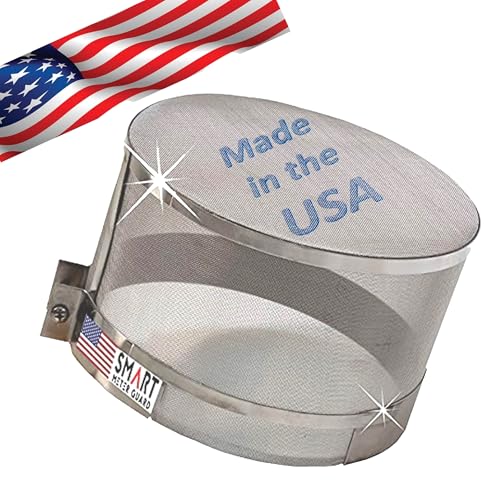
Smart Meter Guard Cover stands apart by claiming compatibility with all smart meters in the US and Canada, while the other covers give dimensions or material grades. The maker says the silver cover needs no assembly, takes minutes to install, and comes with picture instructions. That broad fit claim may appeal if the meter model is unknown, but verify the physical fit and get utility approval first. The metal grade and dimensions are not provided, so buyers who need those specifications should consider a more dimensioned option.
Bottom line: Choose this if broad US and Canadian compatibility matters more than a size or metal grade.
316 Stainless Smart Meter Cover

316 Stainless Smart Meter Cover is the option with a named 316 stainless steel grade and explicit bottom dimensions: 7.25 inches across and 4.75 inches deep. The maker says it is intended for most smart meters in the US and Canada and includes two extra adhesive foam strips to support installation. Those measurements help screen for a physical match, but they do not guarantee clearance around every meter, conduit, or mounting surface. Measure the available area and check utility rules before choosing it; the dimensions given do not include height for comparing vertical clearance.
Bottom line: Choose this when the 316 stainless steel grade and base dimensions are useful for fit screening.
OMPERIO 316 Stainless Mesh Cover

OMPERIO 316 Stainless Mesh Cover pairs a 7.25-inch base and 4.75-inch depth with 316 stainless steel sheets and mesh. The maker says the cover fits most US smart meters and supplies two adhesive foam strips plus an installation guide. The maker also says the enclosure is designed to contain signals, but gives no attenuation figure, so buyers should not assume a particular reduction. The fixed base and depth still require a clearance check, and the utility should approve any cover on its equipment.
Bottom line: Choose this if the installation guide and stated stainless sheets-and-mesh construction suit your needs.
304 Stainless Steel Smart Meter Cover

304 Stainless Steel Smart Meter Cover differs from the other covers by identifying 304 stainless steel sheets and mesh rather than 316 stainless steel. The maker makes health-effect claims that are not a sound basis for choosing a cover; a material description alone does not establish a specific signal reduction or health benefit. Confirm dimensions, fit, and permission with the utility before considering this cover.
Bottom line: Choose this only if 304 stainless steel is your preferred material and you can confirm its dimensions.
How to Choose a Smart Meter Faraday Cage
Start with utility approval, then compare physical fit and material rather than relying on broad shielding language. Smart meters are utility equipment, and an added cover can affect access, servicing, or wireless communication; ask the utility whether a cover is allowed before installation. For a size check, measure the meter face and the space around it, including clearance to conduit and the meter socket. A 7.25-inch base and 4.75-inch depth are useful only if those areas are available on your setup. Metal grade is another comparison point: 304 and 316 stainless steel are different grades, but neither specification alone tells you how much signal a finished enclosure attenuates. Look for a measured attenuation value at relevant frequencies if that performance is essential.
Smart Meter Cover Fit and Clearance
Use the cover’s base and depth measurements to screen for fit, but do not treat “universal” or “most meters” as a guarantee. Meter housings vary, and nearby conduit, trim, or mounting surfaces can prevent a cover from sitting correctly. A useful decision rule is to choose a cover with explicit dimensions when your available clearance is tight; if any edge would press against wiring or block the meter face, do not install it. Fit aids such as adhesive foam strips may help with placement, but they do not replace a correct size or utility approval. Make sure the meter remains accessible for reading and service, and do not remove utility seals or alter the meter or its socket.
What Faraday Cage Claims Mean for Smart Meters
A Faraday cage is a conductive enclosure intended to reduce electromagnetic fields inside it, but real-world shielding depends on the enclosure’s seams, openings, contact, and frequency. A mesh or metal cover’s material name does not by itself establish an attenuation level. Smart meters may use wireless communication to send readings, so enclosing one can interfere with the signal the utility relies on. Product claims about signal containment should be treated separately from measured performance: if a reduction figure matters, seek test results that identify the frequency range and measurement method. Never infer a health benefit from a cover’s material or from a general Faraday cage claim.
| Buyer priority | Useful specification | What to verify |
|---|---|---|
| Physical fit | Base and depth in inches | Clearance around the actual meter and conduit |
| Material grade | 304 or 316 stainless steel | Grade alone does not establish shielding performance |
| Signal reduction | Attenuation by frequency | Utility communication and access requirements |
Frequently Asked Questions
Can a cover fit every smart meter?
No cover should be assumed to fit every meter based only on a broad compatibility claim. Compare its base and depth in inches with the installed meter and available clearance, then confirm with the utility.
Could a metal cover affect smart meter communication?
Yes, a conductive enclosure can reduce wireless signal transmission, which may interfere with the meter’s communication path. Ask the utility before installation because the meter may rely on radio communication for readings.
Does stainless steel grade prove shielding strength?
No, 304 or 316 stainless steel identifies the material grade, not the cover’s signal attenuation. Shielding depends on the enclosure’s seams, openings, and frequency, so look for a measured attenuation value if that number is important.
Should I remove a utility meter seal to fit a cover?
No; do not remove utility seals or alter the meter or socket to install a cover. Keep the meter accessible for service and ask the utility to handle any work involving its equipment.