
Finger Protectors for Sewing: 3 Types Compared

For hand sewing, the FIVEIZERO metal thimble kit is the closest match because it provides seven metal thimbles in assorted sizes for sewing, embroidery, and quilting. Choose flexible rubber or silicone covers instead if you want a light sleeve for handling materials or craft work, rather than a rigid needle-pushing surface.
We earn a commission if you buy through links on this page. As an Amazon Associate I earn from qualifying purchases. Products are compared on manufacturer specifications, not hands-on testing.
- Best overall: FIVEIZERO 7-Piece Metal Thimble Kit – Seven metal thimbles provide a firm surface for hand sewing, embroidery, and quilting.
- Best for size variety: 20-Piece Rubber Finger Covers, 5 Sizes – Twenty rubber covers come in five sizes, from S to XL.
| Product | Best for | Material | Count | Size range | Shop |
|---|---|---|---|---|---|
| FIVEIZERO 7-Piece Metal Thimble Kit | Hand sewing | Metal | 7 thimbles | Various sizes | Check Price on Amazon |
| 20-Piece Rubber Finger Covers, 5 Sizes | Size variety | Rubber | 20 covers | S to XL | Check Price on Amazon |
| Zonon 20-Piece Rubber Thimbles | Textured grip | Rubber | 20 tips | XS to XL | Check Price on Amazon |
Finger protectors for sewing
Compare the protection style and sizing before choosing a finger cover or thimble for your handwork.
FIVEIZERO 7-Piece Metal Thimble Kit

The FIVEIZERO kit is the only option here made entirely of conventional metal thimbles for hand sewing. It includes seven sizes and colors in a transparent storage box, with uses named for embroidery and quilting as well as stitching. Metal offers a firmer surface to push a needle than a flexible finger sleeve, which suits sewists who want a traditional thimble form. The tradeoff is that a rigid thimble may feel less flexible than rubber or silicone covers; choose a sleeve if finger mobility and broad material handling matter more than pushing needles.
Bottom line: Choose this kit for a traditional, rigid thimble in assorted sizes.
20-Piece Rubber Finger Covers, 5 Sizes

The 20-piece rubber set stands out for offering five sizes, S through XL, and multiple colors. Its micro-vent holes and roll-on design are intended to make the covers easier to wear, including for people with long nails. The maker positions them for hand sewing, quilting, knitting, embroidery, paperwork, and crafts, so they suit buyers who want a flexible cover for different small tasks. A rubber cover is not a rigid metal thimble, however, so it may not suit someone seeking a hard needle-pushing surface.
Bottom line: Pick this set when several sizes and flexible covers matter most.
Zonon 20-Piece Rubber Thimbles
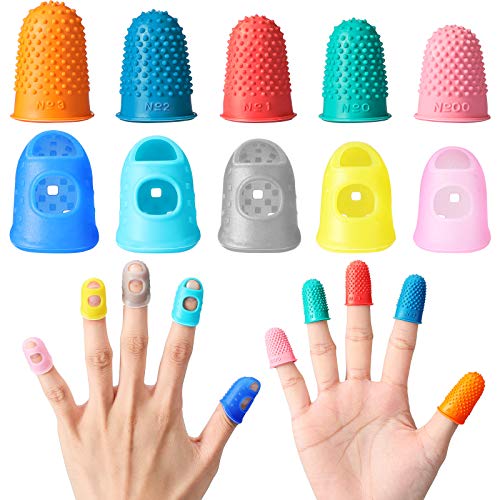
The Zonon set differentiates itself with raised texture intended to improve grip on needles, fabric, paper, and small items. It includes 20 flexible rubber tips in five sizes—XS, S, M, L, and XL—and the maker describes them for sewing, knitting, paperwork, carving, and crafts. The size range extends down to XS, unlike the S-to-XL range of another rubber set here, making it a reasonable option when a smaller tip may fit better. Its light barrier is not a substitute for a rigid metal thimble when pushing needles is the priority.
Bottom line: Choose these when textured grip and an XS option are useful.
How to choose a finger protector for sewing
Choose by how you push the needle: a rigid metal thimble protects the fingertip while pushing, while flexible rubber and silicone covers prioritize mobility and grip. Traditional closed thimbles usually sit on the middle finger, where the side or pad can push a needle through fabric; coin-style protectors place a reinforced disc at the contact point while leaving more of the fingertip open. If you regularly push needles through dense quilting layers, favor a metal surface; for light stitching or handling small craft materials, a flexible cover may feel less restrictive.
Fit matters more than a broad size count: the thimble should stay on during movement but not constrict the finger. A cover that rotates or slips can make needle control harder, so check the intended finger and size range against your own measurements before buying.
Rubber covers, silicone caps, and metal thimbles
Rubber and silicone sleeves stretch around the finger, while metal thimbles provide a harder surface for pressing a needle. Flexible materials can offer grip and general handling protection, but they do not have the same rigid push surface. Metal thimbles are more purpose-built for hand sewing; leather coin-style protectors combine a flexible backing with a metal disc at the needle contact point.
This guide separates the common formats by their practical tradeoff.
| Type | Useful when | Main tradeoff |
|---|---|---|
| Metal thimble | Pushing needles through fabric | Less flexible than a sleeve |
| Rubber or silicone cover | Grip and flexible handling | Not a rigid push surface |
| Leather coin style | Targeted needle contact with an open fingertip | Less fingertip coverage |
How a sewing thimble should fit
A sewing thimble should stay put without pinching, and its shape should leave enough room for comfortable finger movement. Closed thimbles are often worn on the middle finger, but technique and personal preference affect placement; some sewists use a thimble on the thumb or index finger for particular stitches. For a closed style, compare the inner diameter or size guidance to the finger that will wear it. For open coin styles, width and disc placement matter because the protector covers only part of the fingertip.
When the package gives a size range rather than exact diameters, treat the range as a starting point and verify the fit before sewing for long stretches. A loose protector can shift at the moment of pressure, while a tight one can become uncomfortable.
Safe use and care for finger protectors
Finger protectors reduce direct contact with needles, but they do not make sewing injury-proof: keep the needle pointed away from fingers and pause if a thimble slips. A metal thimble can have edges or openings that catch thread, so check the inside and rim for burrs before use. Flexible covers can also shift or tear, so inspect them before relying on them during detailed work.
Clean reusable covers after contact with adhesives, wax, resin, or other craft materials, using a method compatible with the material. The maker does not establish a cleaning method for every material, so verify care guidance before using solvents or heat. Store metal thimbles dry to limit corrosion risk, particularly if they are not stainless steel.
Frequently Asked Questions
Which finger usually wears a sewing thimble?
Many hand-sewing techniques use a thimble on the middle finger, which pushes the needle through fabric. Placement can change with stitch style and hand preference, so the thimble should fit the finger doing the pushing.
Do rubber finger covers work for quilting?
Flexible rubber covers can be used for quilting, and one set here includes quilting among its intended uses. For pushing a needle through dense quilt layers, a rigid metal thimble usually provides a firmer contact surface.
Can silicone finger caps be used with hot glue?
The Mr. Pen caps are marketed for hot glue and other craft materials, as well as occasional sewing. Silicone does not mean heat-proof at every temperature, so keep skin away from the glue nozzle and molten glue.
What is a coin thimble used for?
A coin-style thimble places a small metal disc where the needle contacts the finger while leaving more of the fingertip open. Its fit depends on disc placement and width, making it different from a closed thimble that surrounds the fingertip.