
Fishing Bags for Rods: 4 Cases Compared by Capacity

ReeMoo 48.4-Inch Rod Bag suits most anglers choosing a fishing bag for rods because it carries up to five rods and reels and measures 48.4 inches long. Choose a different case if your rods are longer than that compact bag can accommodate or you need a 76- to 96-inch case for longer rods.
Fishing rod bags are soft carriers with pockets or compartments for rods and related gear; measure your longest rod in its transport configuration before choosing a case.
We earn a commission if you buy through links on this page. As an Amazon Associate I earn from qualifying purchases. Products are compared on manufacturer specifications, not hands-on testing.
- Best overall: ReeMoo 48.4-Inch Rod Bag – Carries up to five rods and reels, with two side pockets and a large inner pocket.
- Best for longer rods: Booms Fishing PB4 76–96-Inch Case – Adjusts from 76 to 96 inches and holds two to three rods and reels.
- Best for reinforced carry: Wowelife 48.4-Inch Rod Bag – Has a reinforced base and double-stitched, foam-padded shoulder straps.
| Product | Best for | Rod capacity | Bag length | Material | Shop |
|---|---|---|---|---|---|
| ReeMoo 48.4-Inch Rod Bag | Multi-pocket storage | Up to 5 | 48.4 in | 600D Oxford fabric | Check Price on Amazon |
| Wowelife 48.4-Inch Rod Bag | Reinforced carry | 5 outside | 48.4 in | 600D fabric | Check Price on Amazon |
| Allnice 48-Inch Rod and Reel Bag | Simple rod organization | 5 outside | 48 in | Polyester | Check Price on Amazon |
| Booms Fishing PB4 76–96-Inch Case | Longer rod storage | 2–3 | 76–96 in | Nylon | Check Price on Amazon |
Fishing Bags for Rods
Compare rod capacity, case length and carrying features to match a bag to your gear.
ReeMoo 48.4-Inch Rod Bag

Compared with the longer, narrower-purpose case, this 48.4-inch bag carries up to five rods and reels while adding two side pockets and a large inner pocket. Its 600D Oxford fabric and adjustable padded shoulder strap suit anglers carrying several pieces of gear on trips. The foldable design makes it a compact option, but its 48.4-inch length is the key constraint: measure the rods as you plan to transport them, and choose a longer case if they exceed that length.
Bottom line: Pick this for several compact rods and extra pocket storage.
Wowelife 48.4-Inch Rod Bag

Reinforced carrying features distinguish this 48.4-inch bag: it has double-stitched shoulder straps, foam padding and a reinforced bottom. Wowelife says its waterproof zipper helps keep the interior dry. The bag holds five rods and reels outside, with room inside for small tackle, gear and a chair, making it suited to anglers who prioritize carrying support and extra equipment. Its compact length is a limitation for long rods, so confirm your rod transport length fits before choosing it.
Bottom line: Choose this if reinforced, padded shoulder straps matter most.
Allnice 48-Inch Rod and Reel Bag
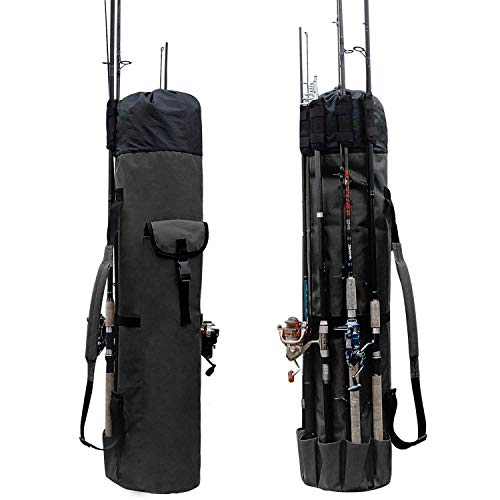
This bag pairs five outside rod-and-reel positions with additional interior space for rods, reels, tackle and equipment. Its adjustable shoulder strap and 48-inch height make it a straightforward carry option for anglers organizing a compact setup. The product features identify its material as heavy-duty high-tech polyester. The main tradeoff is that the interior capacity has no stated rod count, so buyers who need a defined number of extra inside positions may prefer a bag with specific pocket counts. Measure longer rods before selecting this size.
Bottom line: Pick this for five outside rod positions and flexible interior storage.
Booms Fishing PB4 76–96-Inch Case

Unlike the 48-inch carriers, this case extends from 76 to 96 inches to accommodate longer rods and holds two to three rods and reels. It includes built-in cushioning foam and rod-fixing straps, with an extended design for adjusting the stored length. The nylon outer fabric suits anglers seeking a longer protective case for transport or indoor storage. Its capacity is lower than the five-rod bags, and the maker advises against storing surf or ocean rods in it; choose another bag for those rods.
Bottom line: Choose this when your rods need a case longer than 48 inches.
How to choose a fishing bag for rods
Start with the longest rod you plan to carry, then compare that measurement with the bag’s usable length. A rod that is longer than its case cannot lie fully inside, so leave room for tip and handle clearance rather than relying on a close match. Next, count rods with reels attached: outside pockets and inner storage may have different capacity, and a bag’s total gear space is not necessarily its rod capacity. For a compact setup, a 48-inch case is suited to shorter or travel-configured rods; choose a 76- to 96-inch case when your rods require that added length. A 48-inch bag that holds five rods may be the wrong choice for one long rod.
Rod length and bag fit
Measure each rod in the exact configuration you intend to carry, including any collapsed sections or removable components. One-piece rods require a case at least as long as the rod, while multi-piece rods can fit a shorter case when taken apart; allow extra room for handles, tips and closures. Rods with reels attached also need enough width and depth to avoid pressing against neighboring gear, so a rod count alone does not guarantee a comfortable fit. A practical rule is to choose a bag longer than your longest transport-ready rod, not equal to or shorter than it. Confirm the usable interior length if a close fit is unavoidable.
Soft rod bags versus longer cases
Soft bags organize rods with pockets and compartments, while longer cases focus on accommodating rods that exceed compact-bag length. A bag with several outer rod pockets makes quick organization easier, but it can leave less protected space for bulky tackle. A longer case with cushioning foam and rod-fixing straps keeps rods separated inside, but may carry fewer rods overall. Compare carrying capacity, total length and internal restraint features rather than treating all rod bags as interchangeable. A table helps match the common need to the format.
Use the intended rod length and gear load to narrow the choice.
| Need | Useful case feature | Tradeoff |
|---|---|---|
| Several compact rods | Multiple outside pockets | Limited length |
| Longer rods | 76–96-inch case | Lower rod capacity |
| Extra tackle and gear | Side and inner pockets | Bulkier packed load |
Carrying and protecting rods
Separate rods so tips and guides do not rub against other gear during transport; built-in straps can help keep rods from shifting inside a case. Reels add bulk, so compare the bag’s real pocket layout with whether you plan to carry reels attached or separately. For a shoulder-carried load, padded straps can spread pressure more comfortably, but the total weight still increases with every rod and tackle item. Avoid forcing a rod into a full pocket or closing a case over a bent tip. After trips, let damp gear air out before storing it to reduce trapped moisture on rods and tackle.
Frequently Asked Questions
How long should a fishing rod bag be?
Choose a bag longer than the longest rod in its transport configuration. A 48-inch bag suits rods that fit within that space, while longer rods call for a case sized to their measured length.
Can a fishing rod bag hold reels too?
Some bags include outside pockets sized for rods and reels, while others use internal space. Reels increase the width and bulk of a packed setup, so compare the pocket arrangement with whether you will carry reels attached.
How many rods fit in a typical fishing bag?
Capacity varies by design: compact carriers commonly organize several rods, while longer cases may hold fewer. These options range from two to three rods in the long case to five in the compact carriers.
Are soft fishing rod bags protective?
Soft bags can help organize rods, and some add cushioning foam and fixing straps to limit movement. They are not rigid shells, so avoid stacking heavy gear on top or allowing rod tips to press against hard objects.
How should I store a fishing rod bag after use?
Air out damp rods, tackle and the bag before storing them. Keeping wet gear enclosed for long periods can trap moisture against equipment; dry the interior fully before packing it away.