
Fishing Glasses to See Through Water: 5 Picks Compared

OUKEMAX Polarized Fishing Sunglasses is the straightforward choice for fishing glasses to see through water because its polarized lenses are designed to reduce surface glare and the glasses weigh 18 grams. Choose a multi-lens set instead if you regularly move between bright sun and overcast conditions.
Polarized sunglasses filter reflected glare; they can improve the view beneath the surface, but water clarity and viewing angle still affect what you can see.
We earn a commission if you buy through links on this page. As an Amazon Associate I earn from qualifying purchases. Products are compared on manufacturer specifications, not hands-on testing.
- Best overall: OUKEMAX Polarized Fishing Sunglasses – Polarized lenses target water-surface glare, and the glasses weigh 18 grams.
- Best for changing light: Fishing Glasses Pro Kit – Four interchangeable lenses include blue, green, amber and gray.
- Best for water sports: maivnz Floating Polarized Sunglasses – The maker says its TPX frame floats, and the glasses weigh 20 grams.
| Product | Best for | Lens options | Frame material | Weight | Shop |
|---|---|---|---|---|---|
| OUKEMAX Polarized Fishing Sunglasses | Lightweight simplicity | Polarized; Ice Blue | PC | 18 g | Check Price on Amazon |
| Fishing Glasses Pro Kit | Changing conditions | Blue, green, amber, gray | TR-90 | — | Check Price on Amazon |
| Pro Fishing Glasses, Army Green | Four tint choices | Blue, green, amber, gray | TR-90 | — | Check Price on Amazon |
| maivnz Floating Polarized Sunglasses | Water sports | Blue mirror | TPX | 20 g | Check Price on Amazon |
| Fishoholic Polarized Fishing Sunglasses | Side-glare coverage | Blue mirror | — | — | Check Price on Amazon |
Fishing glasses to see through water
Compare lens choices and frame features to match the sunglasses to your fishing conditions.
OUKEMAX Polarized Fishing Sunglasses

At 18 grams, these OUKEMAX sunglasses are the lightest option here with a weight. Their polarized lenses are designed for fishing and their medium-size frame comes in Ice Blue. The maker says the lenses eliminate 99.9% of surface glare; polarization can help reveal underwater structure when glare is the main obstacle, but it cannot make murky water clear. Choose these for a simple, lightweight pair rather than a kit for switching tints as sunlight changes.
Bottom line: Pick these if low weight and one polarized lens setup matter more than tint changes.
Fishing Glasses Pro Kit
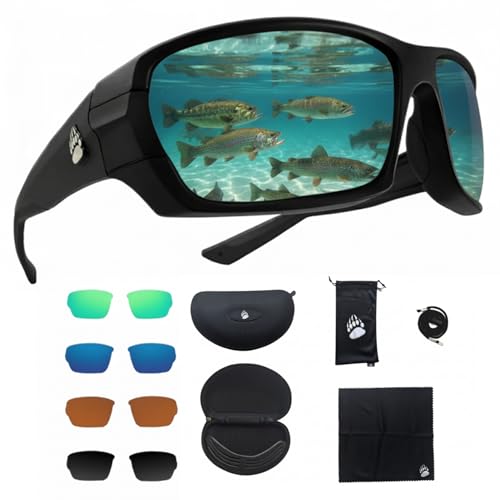
Four interchangeable lenses make this kit more adaptable than a single-tint pair: it includes blue, green, amber and gray lenses in a black TR-90 frame. The maker says the polarized lenses reduce glare and improve visibility across bright sun, shallow water and overcast conditions. That range suits anglers who fish in varied light and want to swap lenses rather than carry several pairs. The tradeoff is the need to change lenses when conditions shift; choose a fixed-lens pair if simplicity matters more.
Bottom line: Choose this kit when you want four lens tints for changing light.
Pro Fishing Glasses, Army Green

The Army Green frame distinguishes this four-lens set from the black-framed kit, while both offer blue, green, amber and gray interchangeable lenses. Its polarized lenses are designed to reduce distracting surface glare and improve contrast for spotting fish and underwater details. The set is aimed at varied settings, from rivers and lakes to offshore fishing, so it suits an angler who wants tint options in one package. The frame is TR-90; choose another option if a weight is essential to your decision.
Bottom line: Pick this set if an Army Green frame and four tint choices fit your needs.
maivnz Floating Polarized Sunglasses
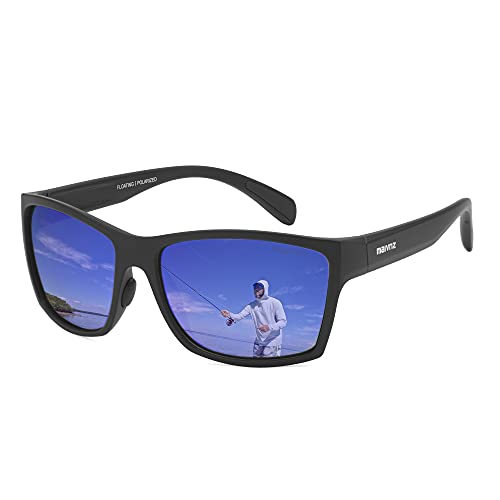
A floating TPX frame sets these maivnz sunglasses apart for boating, kayaking and fishing around water. The blue-mirror polarized lens is intended for bright open-water conditions, and the glasses weigh 20 grams. The maker says the lenses provide UV400 protection, block 100% of UVA and UVB, and that the frame floats. A single blue-mirror lens is less adaptable than a multi-tint kit when clouds or shade change the light, so this pair best suits consistently bright outings.
Bottom line: Choose these for bright water sports where a floating frame is useful.
Fishoholic Polarized Fishing Sunglasses
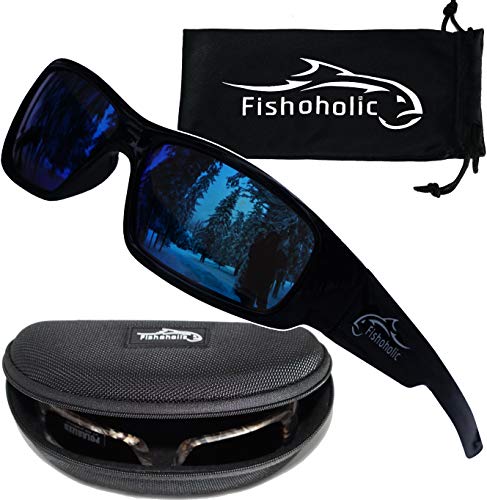
Wide sides are the distinguishing feature of these Fishoholic sunglasses, which are designed to reduce glare entering from the sides. They have a gloss-black frame, blue-mirror lens, UV400 protection and a one-size-fits-most design. The maker says the lenses provide 100% UV protection and reduce glare on water. This is a single-lens option rather than an interchangeable set, so it suits anglers who want a simple pair with broader side coverage, not those who need to change tint with the weather.
Bottom line: Pick these if wide side coverage matters more than interchangeable lenses.
How polarized fishing glasses improve the view
Polarized fishing glasses filter much of the horizontally reflected light that creates surface glare. With less glare reaching the eye, contrast below the surface can become easier to pick out, especially when the sun is high and the water is relatively clear. Polarization does not magnify fish or make opaque, muddy water transparent; viewing angle, depth, waves and suspended sediment all affect visibility. A useful decision rule is to prioritize a polarized lens when reflected glare is the main problem, and a multi-tint kit when changing light is the bigger challenge. No lens tint can replace checking water clarity and watching for hazards around boats, rocks and hooks.
Choosing a lens tint for fishing light
Gray lenses preserve a more neutral appearance in bright light, while amber tints can increase perceived contrast in duller conditions. Green and blue tints are also common fishing choices, but tint preference depends on light, water color and personal vision; a mirror finish does not by itself tell you how dark a lens is. The four-tint kits here include blue, green, amber and gray, while the single-lens options are blue or blue mirror. Use this guide as a starting point, not a guarantee of visibility:
| Need | Lens direction |
|---|---|
| Bright, changing settings | Consider a multi-tint set |
| Neutral view in bright sun | Gray is a common choice |
| More contrast in subdued light | Amber is a common choice |
For frequent shifts between sun and cloud, interchangeable lenses can be more useful than choosing one tint for every outing.
Fit and frame features for time on the water
A secure fit matters when casting, paddling or looking down from a boat. Look for a frame that sits steadily on the nose and temples without pinching; a frame that slides can leave gaps where side glare enters. The options here range from an 18-gram pair to a 20-gram floating frame, while the lens kits use TR-90 frames and the floating pair uses TPX. Only one listed model gives a specific size category: medium. If fit is uncertain, confirm the frame dimensions before ordering, because labels such as medium or one size fits most do not establish exact temple or lens width. For water sports, a floating frame can help keep dropped sunglasses at the surface.
UV protection and safe use near water
UV400 denotes coverage through wavelengths up to 400 nanometers, encompassing UVA and UVB; check that claim separately from polarization, since glare reduction and ultraviolet filtering are different lens functions. Water reflects sunlight, and exposure can remain strong on cloudy days, so coverage matters beyond the hours of peak brightness. A wraparound shape or wide sides can reduce light entering around the lens, but no sunglasses replace a brimmed hat or shade during long exposure. Polarized lenses may also make some LCD screens harder to read, so check a boat display before relying on it. Keep lenses clean with a soft cloth to avoid scratches that can interfere with a clear view.
Frequently Asked Questions
Can fishing glasses really let you see fish underwater?
Polarized lenses can reduce reflected surface glare and make underwater contrast easier to see when water is clear enough. They cannot reveal fish hidden by murky water, depth, waves or an obstructed view.
Are polarized lenses the same as UV protection?
No; polarization reduces reflected glare, while UV protection blocks ultraviolet wavelengths. UV400 indicates coverage through 400 nanometers, so look for that rating when UV coverage is a priority.
Which fishing lens color works best on cloudy days?
Amber is a common choice for subdued light because it can increase perceived contrast. Actual visibility also depends on water color, cloud cover and personal vision, so interchangeable lenses offer more flexibility.
Do floating fishing sunglasses stay easy to find?
A floating frame can remain on the surface after a drop, making recovery easier than with a sinking frame. Waves, current and distance still matter, so a floating design does not guarantee retrieval.
Can polarized sunglasses make boat screens hard to read?
Yes, some polarized lenses can reduce the visibility of LCD screens depending on the screen and viewing angle. Check the boat’s display through the sunglasses before heading out.