
Flavanol Rich Cocoa Powder: 3 Concentrated Options

For a concentrated flavanol-rich cocoa powder, Black Forest High Flavanol Cocoa is the clearest fit because its maker gives a per-serving flavanol figure and describes several ways to mix it. Choose Organic High Flavanol Cocoa Powder, 250 g if organic is a priority; consider High Flavanol Cocoa Powder, 200 g only after confirming its conflicting flavanol figures and serving size.
We earn a commission if you buy through links on this page. As an Amazon Associate I earn from qualifying purchases. Products are compared on manufacturer specifications, not hands-on testing.
- Best overall: Black Forest High Flavanol Cocoa – Its maker gives a 600 mg flavanol amount per serving and names drinks and oatmeal as uses.
- Best for organic: Organic High Flavanol Cocoa Powder, 250 g – Its product name identifies an organic formula and gives a 250-gram package size.
- Best for unsweetened drinks: High Flavanol Cocoa Powder, 200 g – Its features describe an unsweetened powder for coffee, milk, or smoothies.
| Product | Best for | Package size | Claimed flavanols per serving | Format | Shop |
|---|---|---|---|---|---|
| Black Forest High Flavanol Cocoa | Concentrated drinks | 244 g | 600 mg | 10X concentrated extract | Check Price on Amazon |
| High Flavanol Cocoa Powder, 200 g | Unsweetened drinks | 200 g | — | Concentrated cocoa extract | Check Price on Amazon |
| Organic High Flavanol Cocoa Powder, 250 g | Organic formula | 250 g | 1,200 mg | 10X concentrated extract | Check Price on Amazon |
Flavanol Rich Cocoa Powders
Compare the package sizes and product claims, then choose based on whether you want a concentrated drink add-in or cocoa for broader kitchen use.
Black Forest High Flavanol Cocoa
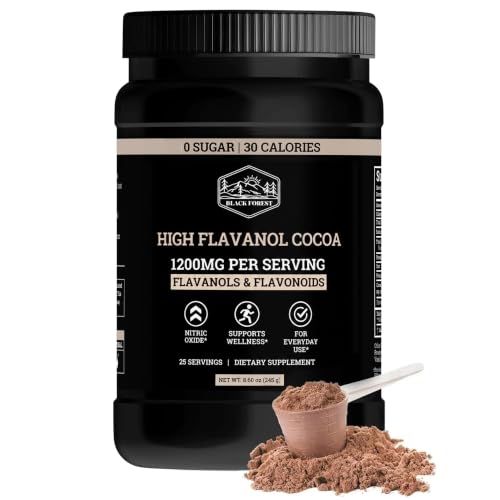
Black Forest High Flavanol Cocoa is the only option here whose features distinguish 600 mg of flavanols from 600 mg of flavonoids while also giving a package size. The powder is described as a 10X concentrated dark cocoa extract, with a smooth dark chocolate taste intended for smoothies, coffee, oatmeal, and pre-workout drinks. That concentrated format suits buyers who want a small amount as a beverage add-in rather than a general-purpose cocoa for recipes. The product name includes wellness claims, but those should not be treated as a guaranteed outcome. The maker does not give a serving size, so confirm the amount to use before ordering.
Bottom line: Pick this if you want a concentrated cocoa add-in and a flavanol amount.
High Flavanol Cocoa Powder, 200 g

High Flavanol Cocoa Powder, 200 g is framed specifically as an unsweetened powder for coffee, milk, or smoothies, making it a closer match for daily drinks than sweetened hot cocoa. Its features describe a concentrated cocoa profile and an intense taste; the package is identified as 200 g. However, the name says 1,500 mg of flavanols while the features say 1,200 mg of cocoa flavanols per serving, so the advertised amount is inconsistent. This makes it a less straightforward choice for anyone comparing doses. Confirm the serving facts and amount before deciding, and expect a more bitter flavor than a sweet cocoa mix.
Bottom line: Pick this for unsweetened drinks only if its per-serving amount checks out.
Organic High Flavanol Cocoa Powder, 250 g
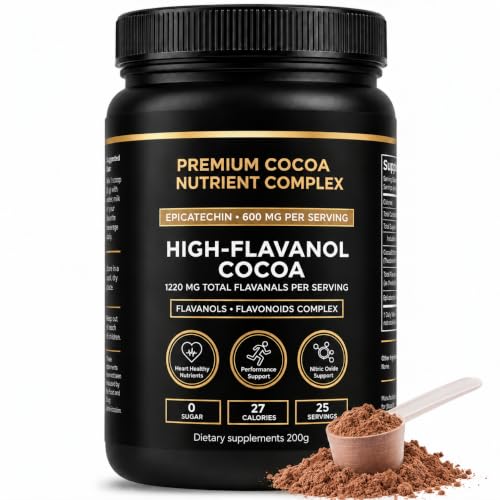
Organic High Flavanol Cocoa Powder, 250 g stands out for naming an organic formula and a 250-gram package, while its features describe a 10X concentrated extract with 600 mg of epicatechin per serving. The product is presented for smoothies, hot drinks, oatmeal, and baking, so it offers more stated kitchen uses than the drink-focused option. That breadth may suit someone who wants one cocoa product for both beverages and recipes. Concentrated extracts can behave differently from ordinary cocoa in baking, where cocoa contributes bulk as well as flavor; this powder may not substitute measure-for-measure in a recipe. Check the amount per serving before comparing it with another product.
Bottom line: Pick this if an organic formula and multiple kitchen uses matter most.
How to choose flavanol rich cocoa powder
Start with the product’s processing and intended use: natural cocoa and Dutch-process cocoa are not interchangeable in every recipe, and alkalizing typically reduces cocoa flavanols. A concentrated extract is also different from ordinary cocoa powder because it is intended to deliver a more concentrated cocoa profile, not necessarily the same bulk or behavior in a batter. Compare the per-serving amount only when the serving sizes are clear; a milligram figure without a defined serving is hard to use consistently. For a beverage add-in, prioritize a clear serving amount and a flavor profile you can tolerate unsweetened. For baking, choose a powder specifically suited to the recipe rather than assuming that a concentrated extract can replace regular cocoa one-for-one. Confirm the serving amount before ordering any of these options.
Natural cocoa, Dutch-process cocoa, and extracts
Natural cocoa is acidic, while Dutch-process cocoa is treated with alkali to mellow its flavor and darken its color; the difference matters when a recipe relies on baking soda for lift. Extract powders are a separate format, so use the recipe’s specified cocoa type when baking. This table summarizes the practical distinction rather than ranking the forms by health effect.
| Form | Typical use | What to consider |
|---|---|---|
| Natural cocoa | Recipes using baking soda | Acidic flavor |
| Dutch-process cocoa | Recipes calling for alkalized cocoa | Milder flavor; processing reduces flavanols |
| Concentrated extract | Small beverage additions | May not substitute evenly in baking |
Using concentrated cocoa in drinks and recipes
For drinks, start with a small amount and blend it into a little warm liquid before adding the rest; cocoa disperses more evenly when it is wetted before dilution. A whisk or sealed shaker can break up dry clumps, but never shake a hot liquid in a sealed container because steam pressure can build. Concentrated cocoa may taste more intense than sweetened cocoa mixes, which usually contain sugar and other ingredients. In baking, cocoa contributes both flavor and dry material, so a high-concentration extract may change the recipe even if its chocolate flavor seems similar. When a recipe specifies natural or Dutch-process cocoa, preserve that distinction unless the recipe itself offers a substitution.
Reading flavanol amounts and serving sizes
Compare cocoa products by the same unit and the same basis: milligrams per serving are meaningful only when the serving measure is also clear. A product’s total flavonoids are not automatically the same measure as its flavanols, so avoid adding separately named figures together. Cocoa flavanol content can vary with bean variety and processing, and alkalizing tends to reduce it; a concentrated claim does not by itself tell you how much powder to use. The product amounts here are product claims, not a standardized measure of the final drink. If you use cocoa regularly, measure servings consistently and avoid assuming that a larger scoop means proportionally more flavanols when the serving definition is unclear.
Frequently Asked Questions
Does Dutch-process cocoa have fewer flavanols?
Dutch-process cocoa is alkalized, and alkalizing typically reduces its flavanol content compared with natural cocoa. The amount of reduction varies with processing, so color alone cannot tell you the flavanol level.
Can concentrated cocoa powder replace baking cocoa?
Not reliably measure-for-measure, because concentrated extracts may provide less bulk than ordinary cocoa powder. Keep the recipe’s specified cocoa type when it depends on baking soda or a particular cocoa amount.
How can I mix cocoa powder without clumps?
Make a smooth paste by stirring the powder into a small amount of warm liquid first, then add the remaining liquid. A whisk or shaker helps disperse dry cocoa, but do not shake a hot drink in a sealed container.
Are cocoa flavanols and flavonoids the same measurement?
Flavanols are a group within the broader flavonoid family, so separately stated flavanol and flavonoid amounts should not automatically be added together. Compare products using the same specific measure and serving basis.
What matters when comparing cocoa amounts per serving?
Check both the claimed milligrams and the serving measure, such as grams or scoops. Two products cannot be compared reliably when one amount is unclear or the figures conflict.