
Fleck Water Softeners: 4 Sizes Compared

For many households, DuraWater Fleck 5600 SXT 48,000-Grain Black is a practical starting point, with 48,000 grains of capacity and a metered Fleck 5600 SXT controller; water hardness and daily use decide whether 32,000 or 80,000 grains is a better fit. Choose a different size when your calculated daily demand calls for less or more capacity.
A water softener exchanges hardness minerals such as calcium and magnesium for sodium or potassium ions; it needs a drain, brine tank and regular salt replenishment.
We earn a commission if you buy through links on this page. As an Amazon Associate I earn from qualifying purchases. Products are compared on manufacturer specifications, not hands-on testing.
- Best overall: DuraWater Fleck 5600 SXT 48,000-Grain Black – Pairs 48,000-grain capacity with 1.5 cubic feet of preloaded resin and a metered controller.
- Best for smaller demand: DuraWater Fleck 5600 SXT 32,000-Grain – Its 32,000-grain capacity and 1.0 cubic foot of resin suit lower calculated demand.
- Best for higher demand: Fleck 5600 SXT 80,000-Grain Black – Its 80,000-grain capacity targets larger homes with greater softening demand.
| Product | Best for | Capacity | Resin volume | Shop |
|---|---|---|---|---|
| DuraWater Fleck 5600 SXT 48,000-Grain Black | Midrange capacity | 48,000 grains | 1.5 cu ft | Check Price on Amazon |
| DuraWater Fleck 5600 SXT 32,000-Grain | Lower demand | 32,000 grains | 1.0 cu ft | Check Price on Amazon |
| Fleck 5600 SXT 80,000-Grain Black | Higher demand | 80,000 grains | — | Check Price on Amazon |
| DuraWater Fleck 5600 SXT 48,000-Grain 10×54 | On-demand operation | 48,000 grains | 1.5 cu ft | Check Price on Amazon |
Fleck water softeners compared
Compare capacity and resin volume first, then size the system to your household’s measured hardness and water use.
DuraWater Fleck 5600 SXT 48,000-Grain Black
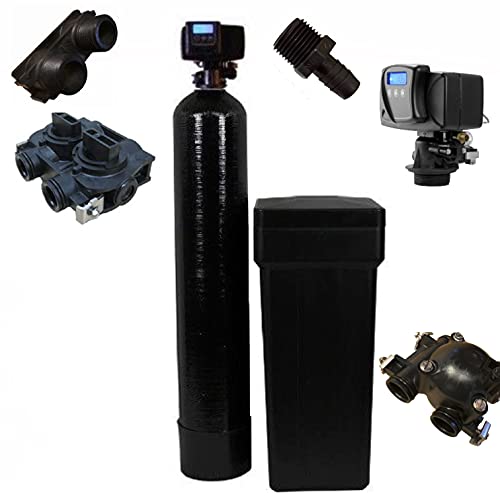
DuraWater Fleck 5600 SXT 48,000-Grain Black combines a 48,000-grain rating with 1.5 cubic feet of high-capacity resin, placing it between the smaller 32,000-grain option and the 80,000-grain system. Its Fleck 5600 SXT controller meters water use and triggers regeneration on demand, and the system includes a brine tank with a safety float, bypass and 1-inch yoke. The maker says ion exchange removes calcium and magnesium. This size may suit a household whose calculated demand falls in the middle range; it can be oversized for low hardness or light use, wasting salt and water during regeneration.
Bottom line: Choose this when your hardness-and-use calculation supports a midrange capacity.
DuraWater Fleck 5600 SXT 32,000-Grain
DuraWater Fleck 5600 SXT 32,000-Grain is the smallest-capacity option here, with 32,000 grains and 1.0 cubic foot of 10% cross-linked cation resin. Its package includes a Fleck 5600 SXT metered controller, preloaded resin, a 14-by-36-inch brine tank with float and a 1-inch bypass valve. The maker says the 10% resin is designed for greater durability than standard resin. A smaller capacity can better match a household with lower hardness or water use, but it may regenerate more often if actual demand exceeds its usable capacity. Calculate daily hardness load before choosing it.
Bottom line: Pick this when measured hardness and household use point to lower capacity.
Fleck 5600 SXT 80,000-Grain Black
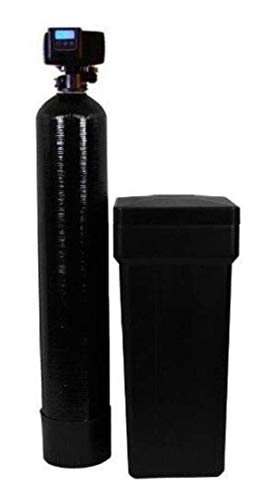
Fleck 5600 SXT 80,000-Grain Black has the highest capacity at 80,000 grains and is positioned by its maker for larger homes. The specifications identify an on-demand Fleck 5600 SXT metered controller and upgraded 10% resin, but do not give a resin volume or package components, so compare those before planning installation. The higher capacity can suit a high calculated hardness load; it is not automatically the best choice for a large house, since occupancy, hardness and water use all affect demand. If those factors are modest, a smaller system may regenerate more appropriately instead of carrying unused capacity.
Bottom line: Choose this only when the calculated demand justifies the largest capacity.
DuraWater Fleck 5600 SXT 48,000-Grain 10×54
DuraWater Fleck 5600 SXT 48,000-Grain 10×54 is another 48,000-grain Fleck 5600 SXT system, with 1.5 cubic feet of high-capacity resin and a 1-inch plastic bypass. Its components include a 10-by-54-inch mineral tank and a 14-by-36-inch brine tank with safety float. Unlike the 32,000-grain option, this package is specified with more resin; like the other 48,000-grain model, it uses metered on-demand regeneration. The maker says this operation regenerates as needed to reduce salt and water use. Confirm plumbing connections and available installation space before choosing this system.
Bottom line: Choose this 48,000-grain configuration when its tank dimensions and fittings suit your installation.
How to size a Fleck water softener
Size a water softener from measured hardness and daily household water use, not home size alone. Multiply hardness in grains per gallon by gallons used per day to estimate the grains the system must remove each day; for example, 10 grains per gallon at 300 gallons per day equals 3,000 grains daily. A commonly used planning estimate is about 75 gallons per person per day, but actual use can differ. Compare your calculated load with usable capacity between regenerations rather than treating the printed grain rating as a target to exhaust. A too-small unit regenerates frequently; an oversized unit can waste salt and water. If water contains iron, account for it separately: many softener-sizing guides use roughly 3 to 5 additional grains per gallon for each 1 ppm of dissolved iron, subject to the equipment’s limits.
What the grain rating means
A grain-capacity number describes how much hardness a resin bed can capture under specified conditions, not a guarantee that every gallon will be softened for a fixed period. Salt dose affects usable capacity and salt efficiency: lower salt settings commonly provide less capacity per regeneration but can use salt more efficiently. Metered controls track water use and regenerate when the programmed reserve is reached, unlike timer controls that regenerate on a fixed schedule. Fleck 5600 SXT models in this group are described as metered, but programming still matters: enter the correct hardness, capacity and reserve. For example, a 48,000-grain rating does not mean 48,000 grains should be removed between cycles at every salt setting. Check local water testing and the control’s setup requirements before programming.
Installation space and plumbing fit
Check the softener’s tank footprint, service access, drain route and pipe connection before installation. The 48,000-grain system with specified dimensions has a 10-by-54-inch mineral tank and a 14-by-36-inch brine tank, so allow extra room to remove the valve head and add salt. A softener needs a drain with an air gap where required by local plumbing rules, plus a bypass so water can be isolated during service. The included 1-inch bypass or yoke does not prove compatibility with every home’s piping; match it to pipe size and connection type. Keep the brine tank accessible, level and protected from freezing. Confirm the installation location and fittings before ordering if space is tight or plumbing is unusual.
Salt, regeneration and routine care
Check salt level about once a month as a practical starting point, and keep the brine tank roughly one-third to two-thirds full without packing salt to the lid. Humidity can cause a hard salt crust, or bridge, that leaves an empty gap above the water and prevents brine formation; break up a bridge carefully rather than adding more salt on top. Use salt intended for water softeners, such as evaporated pellets or solar salt, and avoid rock salt with excess sediment. The resin bed does not need routine replacement on a fixed annual schedule; service life depends on water chemistry, chlorine exposure and maintenance. If softened water turns hard, check salt and the bypass position first, then verify the control settings and regeneration cycle.
Frequently Asked Questions
How many grains of capacity does my household need?
Estimate daily load by multiplying hardness in grains per gallon by daily water use in gallons. At 10 grains per gallon and 300 gallons daily, the load is 3,000 grains per day; choose capacity that handles the intended interval between regenerations with a reserve.
How often should a metered softener regenerate?
A metered system regenerates after its programmed capacity or reserve is reached, so frequency follows water use and hardness. With 3,000 grains of daily hardness load, a system set for 24,000 usable grains would regenerate about every eight days before accounting for reserve.
Does a water softener remove iron from well water?
Some conventional softeners can reduce small amounts of dissolved ferrous iron, but performance depends on iron level, pH and other water chemistry. At about 1 ppm iron, many sizing methods add roughly 3 to 5 grains per gallon of equivalent hardness; test water and check the unit’s limits.
How much salt should I put in the brine tank?
Keep salt around one-third to two-thirds of the brine tank’s height as a practical operating range, leaving room to inspect for a bridge. Check monthly because salt use changes with hardness, household consumption and the programmed regeneration setting.
Can I install a softener on every drinking water tap?
A typical whole-house softener treats water at the home’s main supply, while outside hose bibs are often left untreated to avoid using softened water for irrigation. If sodium intake or drinking-water taste is a concern, consider a separate drinking-water treatment setup and ask a clinician about dietary restrictions.